

Top 7 Destinations to Visit on Your India Golden Triangle Adventure
The India Golden Triangle—linking Delhi, Agra and Jaipur—is the classic introduction to North India and one of the country’s most travelled routes for a reason. In just a few days, you move from Mughal forts and chaotic bazaars to marble mausoleums and royal palaces, seeing how India’s history, culture and daily life all intertwine. Yet the real magic of a Golden Triangle adventure unfolds when you go slightly beyond the standard three‑city loop and add nearby destinations that bring in wildlife, spirituality, village life and desert landscapes. Places like Fatehpur Sikri, Ranthambore National Park, Mathura–Vrindavan and Pushkar fit naturally into the route and turn a good itinerary into a great one, without requiring huge extra travel time. By combining these seven destinations, you experience not only India’s big‑name monuments, but also quiet lakes, temple towns, tiger forests and abandoned capitals that reveal more layers of the country’s character.

Almost every Golden Triangle trip begins in Delhi, a city where centuries‑old Mughal monuments stand alongside modern malls, cafés and markets. You feel both old and new India in one place.
Top attractions
Red Fort – Iconic Mughal fortress and UNESCO World Heritage Site.
Qutub Minar – A striking 12th‑century minaret surrounded by historic ruins.
India Gate – War memorial and popular evening hangout.
Humayun’s Tomb – A beautiful garden tomb and a major inspiration for the Taj Mahal.
Chandni Chowk – A chaotic old bazaar famous for street food, spices and fabric shops.
Experience tip: Take a guided rickshaw ride through Old Delhi’s lanes to experience spice markets, temples and local snacks without worrying about navigation.

Agra is the second point of the Golden Triangle and home to one of the world’s most celebrated monuments: the Taj Mahal. The city also offers impressive forts, gardens and riverside views.
Top attractions
Taj Mahal – A UNESCO‑listed marble mausoleum built by Emperor Shah Jahan in memory of Mumtaz Mahal.
Agra Fort – A powerful red‑sandstone stronghold and former Mughal capital.
Mehtab Bagh – A garden across the river with classic sunset views of the Taj.
Itmad‑ud‑Daulah’s Tomb – The “Baby Taj”, known for its delicate inlay work.
Experience tip: Visit the Taj Mahal at sunrise for softer light, cooler temperatures and fewer crowds.
Jaipur forms the third corner of the Golden Triangle and is famous for its pink‑washed façades, royal palaces and hilltop forts. The city combines regal history with lively markets and colourful streets.
Top attractions
Amber Fort – A hilltop fort with courtyards, mirror work and sweeping views.
City Palace – Residence of Jaipur’s royal family with museums and courtyards.
Hawa Mahal – The Palace of Winds, with hundreds of small windows overlooking the bazaar.
Jantar Mantar – A 18th‑century astronomical observatory and UNESCO site.
Experience tip: In the evening, enjoy a traditional Rajasthani dinner with folk music and dance at a cultural village setting such as Chokhi Dhani.
Situated between Agra and Jaipur, Fatehpur Sikri is a well‑preserved red‑sandstone city built by Emperor Akbar in the 16th century. It served briefly as the Mughal capital before being abandoned, likely due to water shortages.
Top attractions
Buland Darwaza – An enormous gateway celebrating Akbar’s victory in Gujarat.
Jama Masjid – A majestic mosque within the complex.
Panch Mahal – A five‑storey palace with open terraces and arcades.
Experience tip: Plan a stop here while driving from Agra to Jaipur; the detour fits naturally into most Golden Triangle road itineraries.
If you want to add wildlife to your Golden Triangle journey, Ranthambore National Park is a popular extension. Located near Sawai Madhopur, the park is one of the best places in India to try spotting Royal Bengal tigers in the wild.
Top attractions
Jungle safaris – Morning or afternoon jeep and canter safaris inside the park.
Ranthambore Fort – A hilltop fort overlooking forests and lakes.
Padam Talao – A scenic lake where animals often come to drink.
Experience tip: Plan your Ranthambore visit between October and April for better chances of wildlife sightings and more comfortable weather.
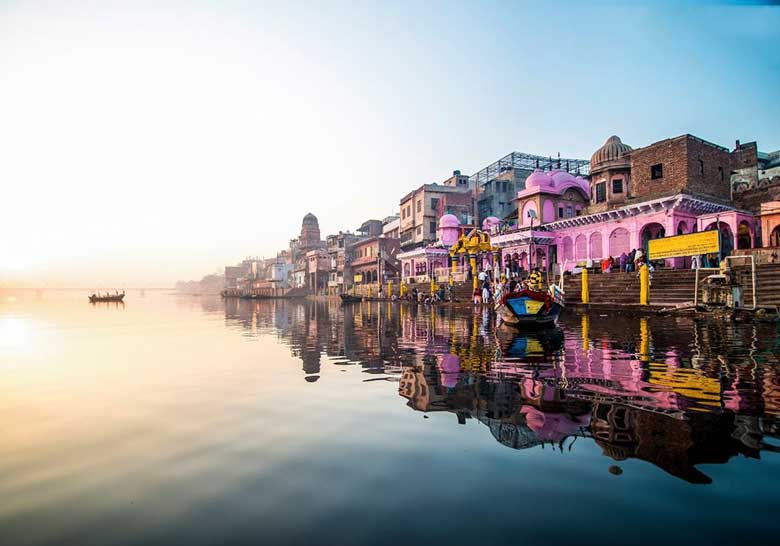
Close to Agra, the twin towns of Mathura and Vrindavan hold deep significance in Hindu tradition as important centres related to Lord Krishna. They make a meaningful cultural and spiritual addition to a Golden Triangle route.
Top attractions
Krishna Janmabhoomi Temple – Believed to mark Krishna’s birthplace.
Prem Mandir – A large, beautifully lit marble temple in Vrindavan.
Banke Bihari Temple – A lively temple known for devotional singing and crowds of pilgrims.
Experience tip: If you travel in spring, visiting around Holi offers a unique festival experience with colour, music and celebrations linked to Krishna’s legends.
Pushkar, set around a sacred lake and ringed by hills, offers a quieter, more spiritual atmosphere than the big cities. It works well as an extension from Jaipur or as part of a longer Rajasthan loop after your Golden Triangle.
Top attractions
Pushkar Lake – A holy lake surrounded by ghats and temples.
Brahma Temple – One of the very few major temples dedicated to Lord Brahma.
Pushkar Camel Fair – A famous annual fair combining livestock trading, performances and desert festivities.
Experience tip: Consider spending a night in or near Pushkar to enjoy sunset over the lake and, in season, a desert‑style evening with campfires and folk performances.
A Golden Triangle Tour often starts as a simple plan to “see Delhi, the Taj Mahal and Jaipur,” but it can easily grow into a much richer journey when you add the right extra stops. Delhi shows you how centuries of empires and modern life sit side by side; Agra gives you the Taj’s romance and the power of Mughal architecture; Jaipur surrounds you with forts, palaces and markets full of colour, crafts and everyday Rajasthani life. When you weave in Fatehpur Sikri’s silent courtyards, Ranthambore’s tiger‑haunted forests, the devotional energy of Mathura and Vrindavan, and the lakeside ghats and desert charm of Pushkar, your route stops feeling like a checklist and starts feeling like a story.
You see more than monuments: you watch sunrise over the Taj, listen to temple bells at dusk, breathe cool air in old forts, share chai on the roadside and wander through towns that are still living their traditions rather than performing them. Whether you travel for photography, history, food, spirituality or simply curiosity, building your Golden Triangle around these seven destinations gives you a balanced mix of big sights and quieter moments, famous highlights and lesser‑known gems. If your time and budget allow, planning a slightly longer Golden Triangle adventure with these add‑ons is one of the most rewarding ways to experience North India on your first visit
A Golden Triangle Tour is more than a quick visit to Delhi, Agra and Jaipur. When you add places like Fatehpur Sikri, Ranthambore, Mathura–Vrindavan and Pushkar, your route turns into a fuller journey through India’s royal history, spiritual traditions, wildlife and desert landscapes.

© 2025 Crivva - Hosted by Airy Hosting Managed Website Hosting.