

Most of us brush off constipation as a minor, passing inconvenience. Skip a day, strain a little, and move on. When constipation lasts for weeks rather than days, it starts to cause piles and anal fissures, two much more painful conditions. Understanding how chronic constipation triggers these problems is the first step toward avoiding them altogether.
Constipation is considered chronic when it lasts for several weeks or longer, not just after one heavy meal. Common signs include passing stools fewer than three times a week, stools that are hard and difficult to pass, straining during bowel movements, and a nagging feeling that the bowel hasn’t fully emptied. A diet low in fibre, inadequate water intake, a sedentary lifestyle, stress, and repeatedly ignoring the natural urge to go are some of the most common causes. Left unaddressed, this pattern rarely stays confined to digestion alone. It puts direct, repeated pressure on the delicate tissue around the rectum and anus.
Some people are more likely than others to see chronic constipation turn into piles or fissures, especially when the condition goes unmanaged for a long time. Pregnant women often deal with hormonal changes and added pressure on their pelvic veins, making straining more likely in the later stages of pregnancy. People with desk jobs or largely sedentary routines tend to have slower movements, which can build into chronic constipation over several months. Older adults face weaker bowel muscles and reduced mobility, making regular, comfortable bowel movements harder to maintain as they age. Anyone on a long-term low-fibre diet faces the same risk, since fibre keeps stool soft enough to pass without straining. A history of previous piles or fissures also raises the odds of recurrence, as the affected tissue stays more sensitive to future straining. Recognising these risk factors early makes it easier to adjust diet, movement, and daily habits before constipation causes lasting damage.
Piles, also called hemorrhoids or bawasirs, are swollen veins in the lower rectum and anus. The connection to constipation is mechanical and simple: hard, dry stools force the body to strain harder and longer to pass them. That extra pressure pushes down on the veins lining the anal canal, and over months of repeated straining, these veins stretch, swell, and eventually bulge outward as piles. This is exactly why chronic constipation ranks among the leading risk factors doctors look for during piles treatment and diagnosis.
Once piles develop, common symptoms include rectal bleeding, itching, a soft lump near the anus, and pain while sitting down or passing stool. These symptoms tend to get worse the longer they’re ignored, while early piles treatment usually means simpler management and a far smaller chance of needing surgery later.
An anal fissure is a small tear in the lining of the anus, and it develops through almost the same process as piles: stools that are too hard or too large stretch the anal opening beyond what the tissue can comfortably handle. The result is sharp, burning pain during and after bowel movements, sometimes lasting for hours, along with bright red bleeding.
What makes fissures especially stubborn is the cycle they create. The pain makes a person tense up and delay their next bowel movement, which allows stool to harden further, leading to more straining and reopening the same tear. Effective fissure treatment usually softens the stool first, giving the tissue an actual chance to close and heal instead of just numbing the pain.
If any of these show up regularly, the real issue to address is usually the underlying constipation, not just the symptoms it’s causing.
The most reliable way to avoid piles and fissures altogether is to prevent chronic constipation from taking hold in the first place. That means eating enough fibre through fruits, vegetables, and whole grains, drinking sufficient water through the day, staying active, and never delaying the urge to go. These simple home remedies for constipation work well for mild, occasional cases.
When lifestyle changes alone aren’t enough, a gentle, plant-based laxative can help restore regularity without the harsh cramping that many chemical alternatives can cause. Constac Granules is formulated for mild constipation, while Constac Plus Granules is built for more severe or long-standing cases, both designed to soften stools so straining stops being a part of the daily routine.
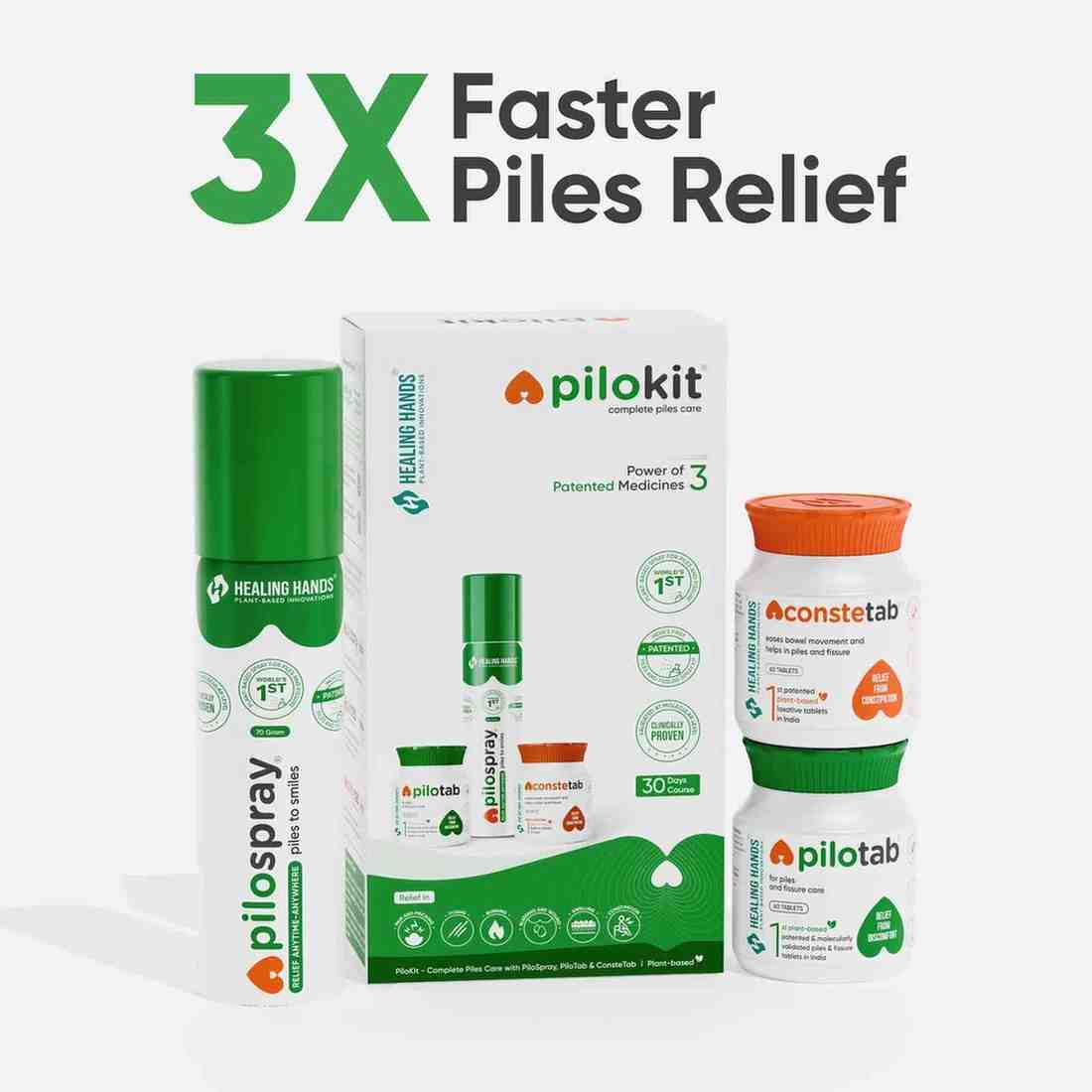
For anyone already dealing with piles, the PiloKit combines PiloSpray, PiloTab, and ConsteTab into one complete routine aimed at easing pain, controlling bleeding, and supporting internal healing without surgery. If a fissure is the concern, the FissureKit pairs the same core support with Anoac Cream, aimed at calming the tears so it gets a real chance to close.
Occasional discomfort can often be managed with the right diet and targeted care, but symptoms that last beyond a couple of weeks, keep getting uncomfortable, or involve heavy bleeding deserve a proper medical opinion. Healing Hands’ formulations are doctor-developed and clinically validated, but they work best as part of an informed routine rather than as a replacement for medical advice when symptoms are severe.
Chronic constipation rarely stays a problem on its own. Left unmanaged, the straining it causes is very often the direct root of both piles and anal fissures, two conditions that are far easier to prevent than to treat once they’ve taken hold. Paying attention to your bowel habits today, and reaching out for gentle, plant-based support when needed, is one of the simplest ways to protect your comfort for years to come.
Explore the full range of piles, fissure, and constipation care at Healing Hands.

© 2025 Crivva - Hosted by Airy Hosting Managed Website Hosting.