

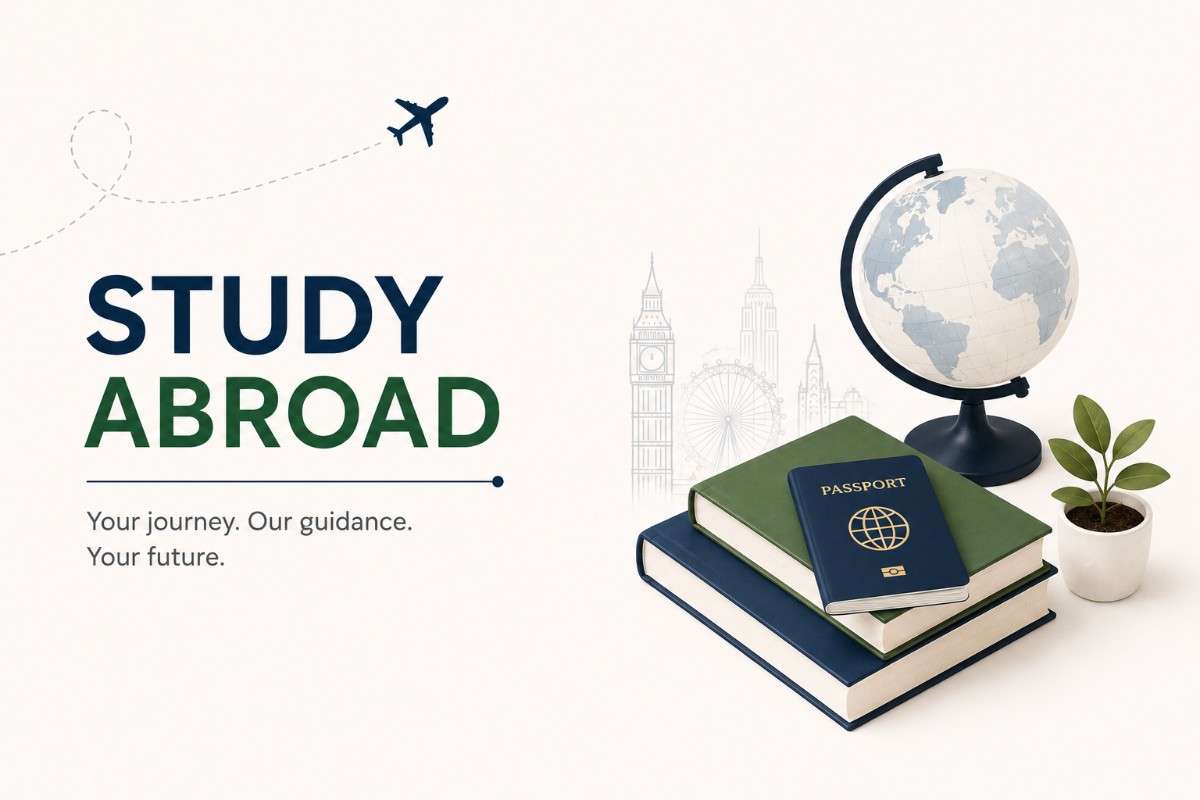
Applying to study abroad sounds simple until you actually start doing it. Suddenly you’re juggling university shortlists, entrance exams, scholarship deadlines, visa paperwork, and a dozen tabs open with conflicting advice from forums and YouTube videos. This is exactly the moment when most students start asking the same question: should I just hire an overseas education consultant, or can I figure this out myself?
This guide breaks down what consultants actually do, what it costs, the red flags you absolutely need to watch for, and how to tell a genuinely good consultancy from one that’s just after your money.
A good consultant isn’t just someone who fills out forms on your behalf. Their real job is to remove the guesswork from a process that has dozens of small decisions, each of which can affect your acceptance, your costs, or your visa outcome.
That typically includes helping you shortlist universities and courses that genuinely match your academic profile, budget, and career goals, instead of just chasing rankings. It includes guiding you through your Statement of Purpose and Letters of Recommendation, since admissions officers can usually tell a generic essay from a thoughtful one within a few lines. It includes keeping you on top of application and scholarship deadlines, which differ from country to country and university to university. And it includes walking you through visa documentation, financial proof requirements, and pre-departure preparation, which is often the most stressful and confusing part of the entire journey.
Many consultancies, including Uniadmits, also support English proficiency preparation like IELTS, since your test score directly affects which universities will even consider your application.
The overseas education industry in India alone is now worth thousands of crores of rupees, which tells you something important: this isn’t a small niche anymore, it’s a process complicated enough that an entire industry exists to help people through it.
A few real reasons students lean on consultants instead of going solo: requirements change constantly, from updated visa rules to new English test formats to shifting minimum bank balance figures, and missing even one update can cost you months. Application mistakes are expensive, since a single error in your SOP, your financial documents, or your visa form can lead to rejection, and reapplying often means losing a full intake cycle. And country-specific knowledge matters enormously, because what works for a UK student visa application looks completely different from what’s expected for Canada, Australia, or Italy.
None of this means you can’t do it alone. Some students do, successfully. But for most people, the time saved and mistakes avoided make working with a consultant worth the cost.
Fees vary a lot depending on the country, the level of service, and whether you’re working with a country specialist or a full-service consultancy. Comprehensive, end-to-end support for popular destinations like the UK can run from roughly ₹1.8 lakh to ₹2.4 lakh, while other countries and service levels may cost less or more depending on what’s included.
Here’s the part students often miss: extremely low fees can be just as risky as extremely high ones. A consultancy charging almost nothing may be cutting corners on document review, university research, or post-admission support, or may be earning hidden commissions by pushing you toward universities that pay them the most, regardless of fit. The goal isn’t to find the cheapest option, it’s to find the one that’s transparent about exactly what you’re paying for.
This is the part of the decision that matters most, because the overseas education space does attract fraudulent operators alongside the legitimate ones. Watch for these warning signs:
“100% guaranteed admission” claims. No ethical consultant can guarantee admission to a specific university, especially competitive ones. Genuine consultants talk about your chances realistically, not in absolutes.
Pressure tactics and fake urgency. Lines like “this offer expires tomorrow” or “only two spots left” are classic manipulation, not genuine deadlines. Real application timelines are usually known well in advance.
Refusal to give you access to your own application. You should always be able to see and review what’s being submitted in your name. If a consultancy keeps your application portal logins hidden from you, that’s a serious red flag.
Demands for cash payments or upfront full payment with no contract. Legitimate consultancies provide proper invoices, contracts, and traceable payment methods.
Pushing unaccredited or unrecognized universities. Always confirm independently that a university is officially recognized before signing anything, especially if a consultant seems unusually eager to place you somewhere specific.
No verifiable physical address or track record. A consultancy with no real office, no reviews, and no history of past students is a risk you don’t need to take.
Before signing up with anyone, do a bit of independent homework. Search the firm’s name alongside words like “review” or “complaint” and see what comes up on independent platforms, not just their own website. Check whether they have a genuine, verifiable office address. Ask for sample case studies or success stories that match a profile similar to yours, and don’t be afraid to ask direct questions about their refund policy and what happens if your application doesn’t go as planned.
A consultancy that welcomes these questions is showing you exactly the kind of transparency you want. One that gets defensive or evasive is telling you something too.
The best overseas education consultants don’t treat you like a transaction. They take time to understand your academic background, your budget, and your long-term goals before recommending anything. They’re upfront about costs and timelines from the very first conversation. They support you end-to-end, from university shortlisting and test prep through to your visa approval and pre-departure briefing, instead of vanishing the moment you’ve paid your fee.
This is exactly the kind of support Uniadmits is built around: honest, profile-based university guidance, real help with applications and documentation, English test preparation, and consistent support all the way through to your departure, instead of empty guarantees.
Studying abroad is one of the biggest decisions you’ll make, and the consultant you choose to guide you through it matters just as much as the university you end up attending. Take your time, ask the hard questions, and choose a partner who’s transparent rather than one who’s just persuasive.
If you’re ready to start your journey with guidance you can actually trust, explore how Uniadmits can help you study abroad and take the next step with confidence.

© 2025 Crivva - Hosted by Airy Hosting Managed Website Hosting.