

How Is India’s Logistics Automation Market Performing?
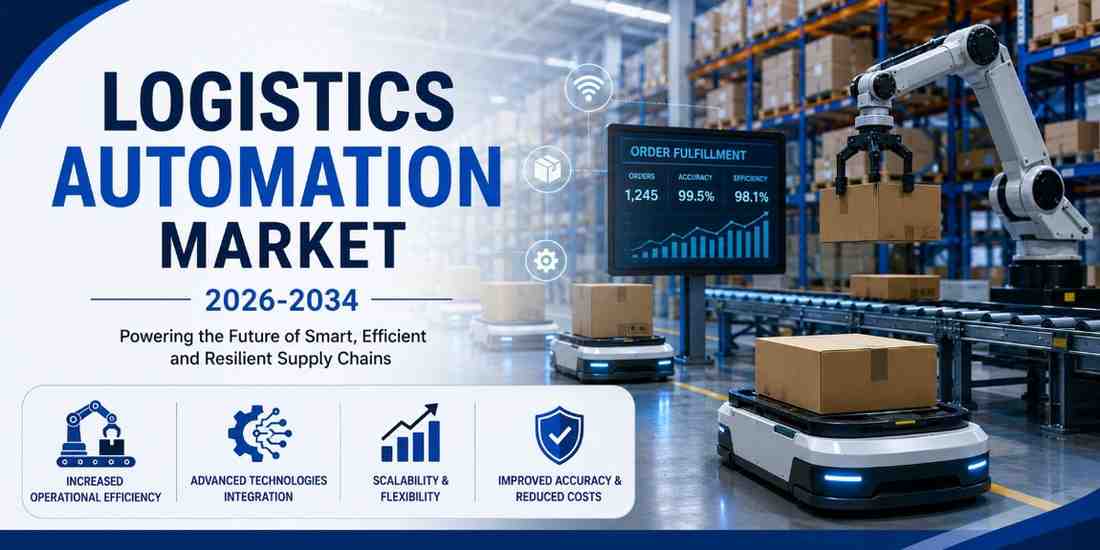
The logistics automation market in India size was valued at USD 2,181.07 Million in 2025 and is projected to reach USD 8,010.64 Million by 2034, growing at a compound annual growth rate (CAGR) of 15.55% from 2026-2034.
The market is experiencing a transformative phase as businesses across sectors prioritize efficiency, accuracy, and scalability in their supply chain operations. The convergence of digital technologies with traditional logistics processes is creating a new paradigm where automated sorting systems, robotic picking solutions, and intelligent transportation management platforms are becoming standard components of modern warehouses and distribution networks.
India Logistics Automation Market Dynamics
The India logistics automation market is being propelled by the rapid expansion of e-commerce and direct-to-consumer channels, which are pushing enterprises toward faster, more accurate fulfillment. Rising consumer expectations around quick delivery, coupled with the growth of quick-commerce models promising delivery within minutes, are compelling businesses to invest in robotic picking, automated sorting, and intelligent warehousing systems.
Simultaneously, escalating labor costs and persistent workforce shortages, particularly evident during peak periods like Diwali, are making automation a strategic necessity rather than an option, as automated systems deliver consistent output without fatigue-related productivity dips. Government-led infrastructure modernization is reinforcing this shift, with initiatives like the Unified Logistics Interface Platform integrating dozens of digital systems across ministries to enable real-time data flow. Combined with dedicated freight corridors and multimodal logistics parks, these efforts are creating the physical and digital foundation needed for automation to scale nationwide.
India’s logistics automation market presents significant opportunities as cloud-based and software-as-a-service platforms lower entry barriers for small and medium enterprises, opening automation to businesses previously excluded due to high capital costs. The manufacturing sector’s expansion, supported by government efforts to boost domestic production and reduce logistics costs, offers scope for automated material handling, robotic palletizing, and integrated manufacturing execution systems that connect procurement with distribution. Growing investment in Tier 2 and Tier 3 city warehousing, driven by the geographic spread of e-commerce demand, creates fresh opportunities for hyperlocal automated fulfillment centers.
Additionally, the rise of homegrown robotics innovators developing humanoid robots and scalable autonomous mobile robot fleets signals opportunities for domestic players to capture market share from established multinational providers. Export-oriented manufacturing and pharmaceutical verticals also present untapped potential for end-to-end automated supply chain integration, positioning India as an emerging hub for next-generation logistics innovation.
Key trends shaping the market include the accelerated integration of artificial intelligence and machine learning for predictive analytics, demand forecasting, and intelligent route optimization, exemplified by AI-powered platforms automating document processing and shipment forecasting. The rising deployment of autonomous mobile robots across warehouses and distribution hubs is enabling efficient goods-to-person picking and internal transportation, reducing manual handling and improving throughput to meet fluctuating seasonal demand. Cloud-based logistics platforms are witnessing widespread expansion, offering real-time visibility and centralized control while enabling mid-sized providers to migrate mission-critical operations to scalable infrastructure with measurable performance gains.
Additionally, the emergence of AI-driven transport management systems supporting natural-language commands via everyday communication tools like WhatsApp reflects a broader movement toward intuitive, low-friction automation interfaces. Together, these trends indicate a shift from isolated automation deployments toward interconnected, intelligent supply chain ecosystems across warehousing, transportation, and last-mile delivery functions.
Despite strong growth momentum, the market faces notable restraints. High initial capital investment requirements for robotic systems, automated storage infrastructure, and integrated software remain a significant barrier, especially for small and medium enterprises operating with constrained budgets, often resulting in extended payback periods that discourage full-scale adoption. Integration complexity also poses challenges, as many logistics operators continue relying on legacy infrastructure and traditional processes that are difficult to align with modern automation technologies, compounded by a lack of standardized protocols across vendors.
Furthermore, a shortage of skilled technical talent in robotics, automation engineering, and artificial intelligence constrains the pace of implementation, since operating and maintaining sophisticated systems demands specialized expertise that remains scarce in India’s workforce. This talent gap necessitates substantial investment in training programs, adding to overall implementation costs and timelines, and collectively slowing the broader market’s transition toward comprehensive, technology-driven logistics automation.
Evaluate Market Opportunity with the Business Sample Report
How Is India’s Logistics Automation Market Segmented?
By Component
By Function
By Vertical
Regional Insights
Competitive Landscape
The India logistics automation market exhibits a highly competitive landscape, with established multinational automation providers competing alongside emerging domestic technology firms across software solutions, hardware integration, warehouse automation, and end-to-end supply chain management services.
Some of the key players include:
Government Initiatives Supporting the Market
Frequently Asked Questions (FAQ)
The India logistics automation market was valued at USD 2,181.07 Million in 2025.
The market is projected to reach USD 8,010.64 Million by 2034, growing at a CAGR of 15.55% during 2026–2034.
Software dominates with a 44% share in 2025, driven by increasing adoption of warehouse management systems and cloud-based logistics solutions.
Warehouse and storage management leads with a 60% share in 2025, supported by demand for automated inventory control and order processing.
In 2026, Addverb launched Elixis‑W, a humanoid industrial robot, underscoring home-grown automation innovation in India.
Conclusion
India’s logistics automation market presents exponential growth through 2034, underpinned by e-commerce expansion, manufacturing growth, and digital transformation.
Three transformational forces will reshape the market through 2034: software and cloud-based platforms enabling real-time visibility; robotic and automation hardware revolutionizing warehouse operations; and home-grown automation providers driving innovation.
Organizations that invest in software solutions, robotic automation, and end-to-end supply chain integration will capture the largest share of the USD 5.83 Billion incremental market generated through 2034.
Source: IMARC Group

© 2025 Crivva - Hosted by Airy Hosting Managed Website Hosting.