

Bali is not just a tourist destination. It is also a fast-growing region where road infrastructure plays a key role in supporting logistics, tourism, and local development. If you are planning a 3-month road construction project in Bali, one critical question often comes up: Is a 60 m³/h concrete batching plant enough to meet your project demand?
This question is practical and important. It directly affects your project timeline, cost control, and overall efficiency. In this article, we will break down the real factors that matter, so you can make a confident decision.
Before selecting equipment, you need to clearly estimate your total concrete demand. This is the starting point for any smart investment decision.
For example, a typical road project may require between 150–300 m³ of concrete per day, depending on road width, thickness, and construction speed. If your project runs for 90 days, the total demand could reach 13,500–27,000 m³.
So, what does this mean for a 60 m³/h batching plant concrete?
A 60 m³/h batching plant does not usually operate 24 hours a day. In Bali, due to labor schedules, traffic conditions, and environmental factors, most projects run 8–10 hours per day.
That means your daily output will be:
60 m³/h × 8 hours = 480 m³/day
Even with a conservative estimate, this output is already higher than the typical daily requirement of many medium-scale road projects.
Therefore, in terms of pure capacity, a 60 m³/h plant is generally sufficient.
While the numbers look promising, real-world conditions in Bali can influence your actual performance. So, let’s look deeper.
If your project has strict deadlines, you need stable and continuous production. A 60 m³/h plant can meet demand, but only if it runs efficiently with minimal downtime.
For example, equipment maintenance, material shortages, or unexpected weather can reduce actual output. Therefore, you should always consider a safety margin.
Bali has unique traffic challenges, especially in tourist areas. Even if your batching plant produces enough concrete, delays in transportation can slow down your paving process.
So, placing the batching plant close to the project site becomes very important. A 60 m³/h plant works best when logistics are well managed.
Different road types require different concrete volumes and pouring speeds. For example:
Therefore, you should match your batching plant not only with volume but also with construction style.
Now that we understand the variables, let’s look at why many contractors choose this capacity.
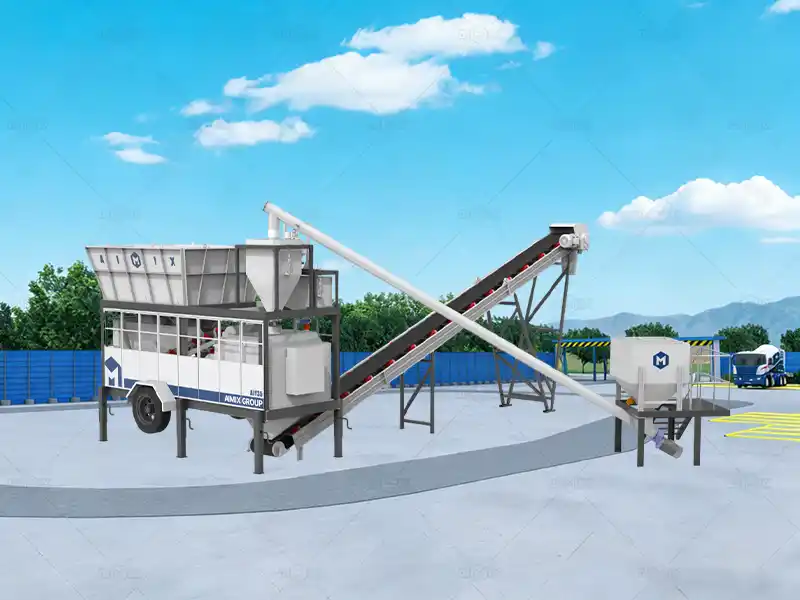
A 60 m³/h concrete ready mix plant for sale offers a good balance. It is not too large, which keeps initial investment reasonable. At the same time, it delivers enough output for most medium-sized projects.
This makes it ideal for contractors who want to control costs while maintaining efficiency.
In Bali, contractors often handle multiple small to medium projects rather than one large project. A 60 m³/h plant gives you flexibility. You can use it across different sites without overspending on oversized equipment.
Compared with larger plants, a 60 m³/h batching plant is easier to install and relocate. This is especially useful in Bali, where land space can be limited and project sites may change.
Although a 60 m³/h plant works for many scenarios, there are cases where you should consider upgrading.
If your project requires more than 500–600 m³ per day consistently, a larger plant (such as 90 m³/h or 120 m³/h) may be more suitable.
If your project duration is shorter than planned or if delays occur, higher capacity helps you catch up quickly.
If you plan to expand your business into larger infrastructure projects, investing in a higher-capacity plant could bring long-term benefits.
While a 60 m³/h batching plant provides a solid foundation for most road construction projects, other factors can influence its overall efficiency. For instance, the quality of the raw materials you use, such as aggregates and cement, can significantly impact the strength and durability of the concrete.
In Bali’s tropical climate, raw materials can vary in quality depending on the season. Rain can increase moisture content in aggregates, which might affect the water-cement ratio, ultimately impacting concrete quality. Ensure you have a reliable supplier and consider moisture control methods to maintain consistency.
Different road projects require different types of concrete mixes. Whether it’s a high-strength concrete mix for highways or a more flexible mix for urban roads, the ability to adjust the mix design is crucial. A 60 m³/h plant offers precise control over mixing, helping you tailor concrete to the specific needs of your project.
Efficient plant operation is key to meeting deadlines and managing costs. In Bali, with its high humidity and seasonal rain, it’s important to keep the plant operating smoothly to avoid downtime.
Due to Bali’s humid environment, parts like mixers, hoppers, and conveyors can be prone to rust and wear. Regular maintenance is critical to avoid unexpected breakdowns. A well-maintained plant operates at full capacity and ensures that your project timeline isn’t jeopardized by equipment failure.
Given Bali’s energy costs, it is essential to optimize your batching plant’s power consumption. Many modern 60 m³/h batching plants are energy-efficient and come with automatic control systems that minimize energy usage while maintaining high output. This can significantly lower operational costs over the duration of the project.
Another benefit of a 60 m³/h batching plant is its scalability. If your project expands or if you decide to take on more complex, high-volume projects, you can easily upgrade your equipment or incorporate additional batching units without much hassle.
Additionally, many suppliers offer flexible financing options or leasing programs for equipment, which means you don’t have to make a significant upfront investment. Instead, you can scale up operations as needed, making the 60 m³/h plant an attractive long-term solution for contractors in Bali.
To summarize, a 60 m³/h batching plant is more than enough for a typical 3-month road construction project in Bali, assuming the plant is well-maintained, raw materials are high quality, and logistics are well-managed. It strikes a balance between cost-effectiveness, output, and flexibility, making it an ideal choice for most road construction projects in Bali’s dynamic environment.
If you want to make sure your project is executed on time and within budget, consider the full scope of your needs, including logistics, maintenance, and raw material quality. A 60 m³/h batching plant is a great solution for most, but you should always plan ahead for any unexpected challenges.
In most cases, yes—a 60 m³/h batching plant is sufficient for a 3-month road construction project in Bali.
It provides enough daily output, offers cost efficiency, and fits well with the typical project scale in the region. However, your final decision should consider logistics, project schedule, and future plans.
In other words, capacity matters, but smart planning matters even more.
Every project is different. That is why a one-size-fits-all solution does not work in the construction industry.
If you are planning a road project in Bali or anywhere in Indonesia, we can help you design a customized batching plant solution based on your exact needs. From capacity selection to layout planning and cost estimation, we focus on what truly helps your project succeed.
Contact us today to get a tailored recommendation and ensure your project runs smoothly, efficiently, and profitably.

© 2025 Crivva - Hosted by Airy Hosting Managed Website Hosting.