

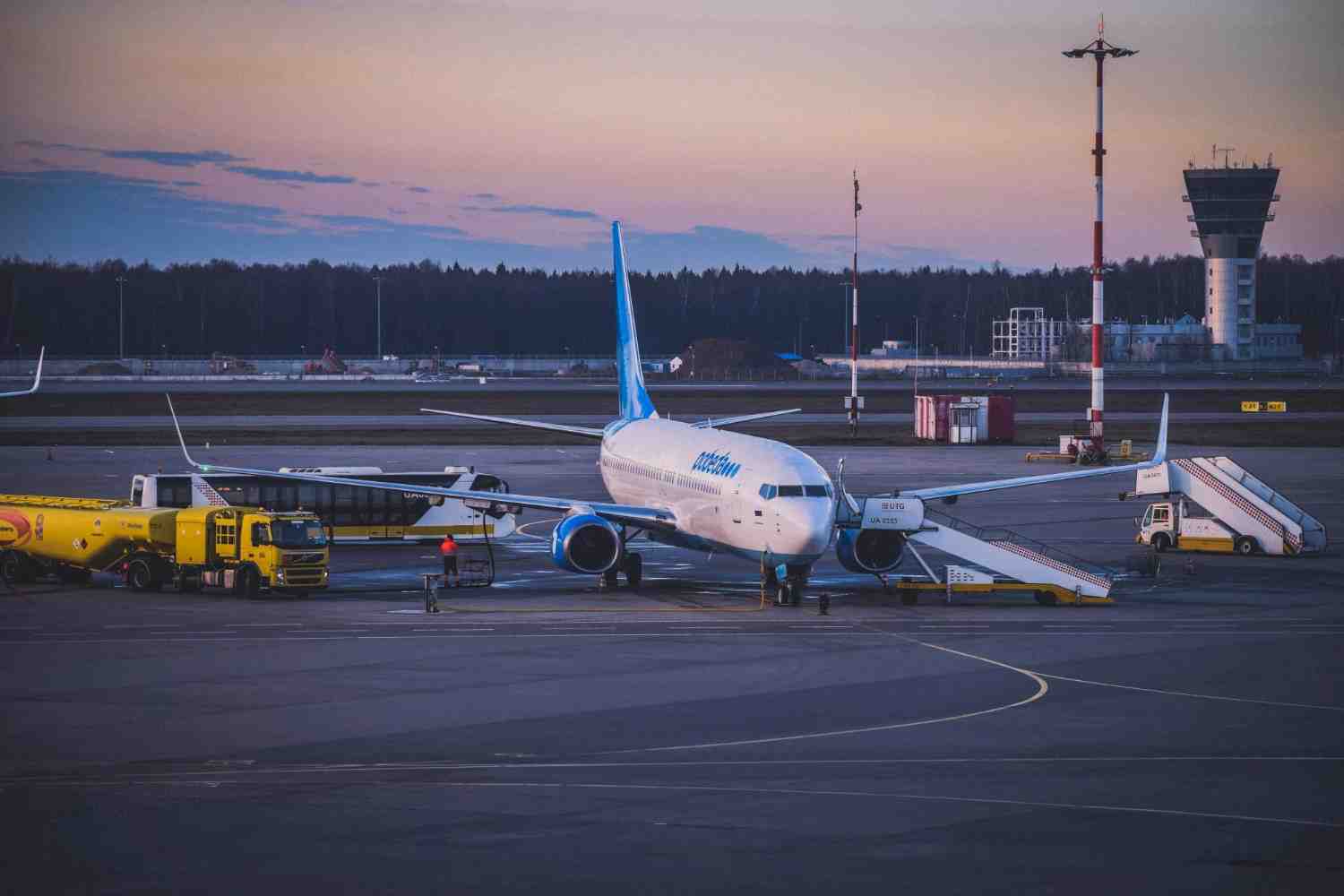
Flying has always come at an environmental cost. But in the last few years, the aviation industry has been quietly working on a shift that could change that story entirely. The fuel powering commercial aircraft is evolving, and the implications go far beyond reducing carbon emissions.
For decades, commercial aircraft have relied on kerosene-based jet fuel, commonly known as Jet A or Jet A-1. It works exceptionally well at high altitudes and in extreme cold, but it comes with a significant drawback: burning it releases large amounts of carbon dioxide, along with nitrogen oxides and water vapor that contribute to warming at altitude.
Aviation accounts for roughly 2 to 3 percent of global carbon dioxide emissions annually. That number might seem small, but when you factor in the warming effects of contrails and other high-altitude impacts, the total climate contribution is estimated to be considerably higher. As air travel demand continues to grow, especially in regions like Asia-Pacific, the urgency to find cleaner alternatives has intensified.
Sustainable aviation fuel, often abbreviated as SAF, is not one specific substance. It is a category of aviation fuels produced from non-petroleum sources, including agricultural waste, cooking oil, municipal solid waste, and even captured carbon dioxide combined with green hydrogen.
What makes it compelling is that it is what the industry calls a “drop-in” fuel. It can be blended with conventional jet fuel and used in existing aircraft engines without requiring any modifications. Airlines do not need new planes. Airports do not need new infrastructure. The transition, at least on the technical side, is far more manageable than most green energy shifts.
Lifecycle carbon emissions from SAF can be 50 to 80 percent lower than conventional jet fuel, depending on the feedstock and production method. Some pathways, particularly those using waste or captured carbon, can even approach near-zero net emissions.
In 2021, United Airlines made one of the most significant SAF commitments in commercial aviation history by partnering with Fulcrum BioEnergy. The agreement involved purchasing up to 375 million gallons of sustainable aviation fuel derived from household garbage over a 10-year period. United also made an equity investment in Fulcrum, signaling confidence not just in the fuel itself but in the broader supply chain. This partnership demonstrated that airlines were willing to move beyond pilot programs and treat SAF as a genuine part of their long-term fuel strategy.
Electric and hydrogen: promising but far off for long-haul flights
There is significant excitement around electric aircraft and hydrogen-powered planes. Short-haul regional flights may very well see electric propulsion within this decade. Companies like Heart Aerospace and Eviation are already testing small electric aircraft designed for routes under 500 kilometers.
Hydrogen presents another path, with Airbus publicly committing to develop a hydrogen-powered commercial aircraft by 2035. But the infrastructure challenge is enormous. Airports would need liquid hydrogen storage, new fueling systems, and supply chains that do not yet exist at scale. For long-haul international travel, the energy density problem with hydrogen remains difficult to solve.
This is why SAF is currently the most practical solution for the bulk of commercial aviation. It fits into existing systems, scales through existing supply chains, and is available today, even if not yet at sufficient volume or affordable cost.
The role of aviation events in driving change
Industry momentum does not happen in isolation. Aviation events like the Paris Air Show and the World Aviation Festival serve as critical gathering points where airlines, fuel producers, aircraft manufacturers, and policymakers align on targets and announce commitments. These events have increasingly become platforms for SAF announcements, green technology demonstrations, and regulatory discussions that shape how quickly innovation moves from laboratory to aircraft wing. The public visibility they provide also keeps pressure on airlines to show tangible progress rather than vague promises.
In November 2023, Virgin Atlantic completed what became a landmark moment in aviation history. A Boeing 787 flew from London Heathrow to John F. Kennedy International Airport in New York powered entirely by sustainable aviation fuel, with no conventional jet fuel blended in. This was a world first for a commercial aircraft on a transatlantic route. The flight used a fuel produced from waste fats and plant sugars, and while it was a demonstration rather than a regular commercial service, it proved that 100 percent SAF flights were technically viable. It also produced substantial data on engine performance and emissions that will inform future operations.
Challenges that still need solving
The honest reality is that SAF currently represents less than 1 percent of total global aviation fuel consumption. Cost is the biggest barrier. SAF typically costs three to five times more than conventional jet fuel, which creates a difficult economics problem for airlines already operating on thin margins.
Feedstock availability is another concern. There is only so much used cooking oil, agricultural waste, and municipal garbage to go around. Scaling SAF to meet even 10 percent of global aviation demand by 2030 will require multiple feedstock pathways and considerable investment in production facilities.
Regulatory support is growing. The European Union’s ReFuelEU Aviation regulation mandates increasing SAF blending percentages at EU airports over the coming decades. The United States has introduced tax incentives under the Inflation Reduction Act to make domestic SAF production more financially viable. Policy and investment together are what will close the cost gap.
For most passengers, the immediate experience of flying will not change. Planes will look and feel the same. But over time, airlines committed to SAF targets will likely pass some of the cost on through ticket prices or offer voluntary carbon offset programs tied specifically to SAF usage.
Several airlines already allow passengers to contribute to SAF programs at the point of booking. As production scales and costs come down, the expectation is that SAF will eventually become cost-competitive, making sustainable travel a standard part of commercial aviation rather than a premium option.
The future of flight is being built not just in aircraft design studios but in fuel labs, policy chambers, and boardrooms. The shift is happening gradually, then all at once.
Q1. Is sustainable aviation fuel safe to use in commercial aircraft?
Yes. SAF has been certified for use in commercial aircraft since 2011 and has been used on thousands of flights worldwide. It can be blended with conventional jet fuel at up to 50 percent concentration using current certifications, and ongoing testing is exploring higher blend ratios, including 100 percent SAF as demonstrated by Virgin Atlantic in 2023.
Q2. Why is sustainable aviation fuel so expensive compared to conventional jet fuel?
The higher cost comes from the complexity of production processes, the relatively small scale of current manufacturing facilities, and the cost of sourcing and processing feedstocks like agricultural waste or used cooking oil. As production scales up and technology matures, costs are expected to fall significantly over the next decade.
Q3. Will electric planes replace jet fuel entirely in the future?
For short-haul regional routes, electric aircraft are a realistic near-term possibility. However, for long-haul commercial flights, the energy density limitations of current battery technology make full electrification impractical for the foreseeable future. Aviation fuel, and specifically SAF, will remain essential for long-distance air travel for decades to come.
Q4. What feedstocks are used to make sustainable aviation fuel?
Current approved feedstocks include used cooking oil, animal fats, agricultural residues, municipal solid waste, forestry waste, and algae. Emerging pathways include power-to-liquid technology, which uses captured carbon dioxide and green hydrogen to synthesize fuel, and this approach has the potential to produce fuel with near-zero net carbon emissions.
Q5. How can passengers support the transition to cleaner aviation fuel?
Many airlines now offer SAF contribution programs at the point of booking, allowing passengers to fund the use of sustainable aviation fuel on their flights. Choosing airlines that have made credible SAF commitments, supporting policies that incentivize cleaner fuel production, and staying informed about industry progress are all ways individual travelers can contribute to the transition.

© 2025 Crivva - Hosted by Airy Hosting Managed Website Hosting.