


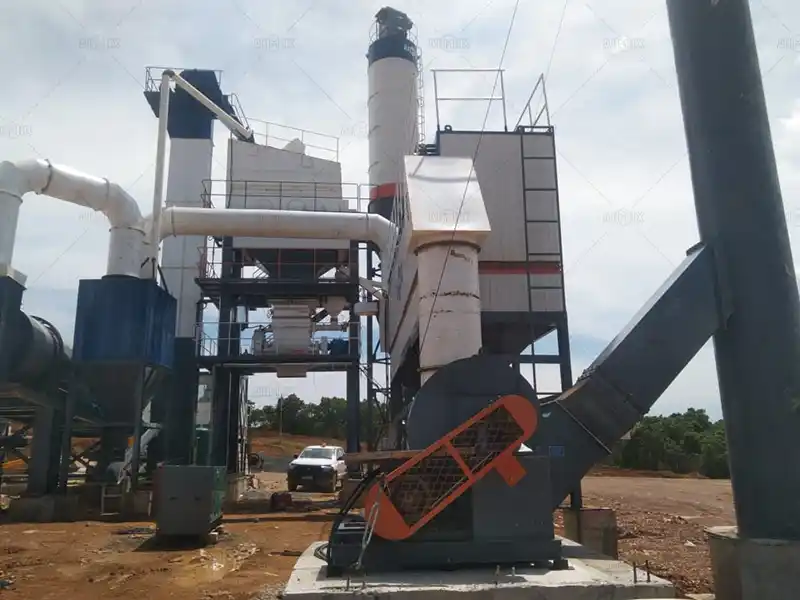
In Saudi Arabia, construction contractors are closely watching fuel prices, especially when crude oil stays above $90 per barrel. At the same time, road and highway projects continue to expand under national infrastructure development plans. In this environment, many contractors start asking a practical question: can a 100 TPH asphalt plant machine actually reduce production costs when fuel and bitumen-related expenses rise?
This is not just a theoretical question. It directly affects bidding strategy, project profitability, and long-term equipment investment decisions. To answer it clearly, we need to look at how plant capacity, fuel consumption, and operational efficiency interact under high oil price conditions.
Saudi Arabia is one of the world’s largest oil producers, yet domestic construction costs still rise when global crude oil prices increase. This happens because asphalt production depends heavily on fuel, heating energy, and petroleum-based bitumen. When oil exceeds $90 per barrel, every ton of asphalt mix becomes more expensive to produce.
At the same time, Saudi Arabia continues to invest in highways, industrial zones, and urban expansion projects under long-term development programs. This creates steady demand for asphalt mix plants in the 60–200 TPH range. Among them, the 100 TPH asphalt plant often becomes a balanced choice for medium-scale contractors.
To understand whether it saves cost, we must first understand what 100 TPH really means in practical construction terms.
A 100 TPH asphalt plant can produce around 100 tons of asphalt mix per hour under stable operating conditions. In a typical 10-hour working day, it can deliver close to 1,000 tons of asphalt mix. This output is suitable for medium-sized highway sections, urban road maintenance, and regional infrastructure projects.
However, output alone does not determine cost efficiency. What matters more is how evenly the plant runs, how much fuel it consumes per ton, and how well it manages heat efficiency during production.
Therefore, when oil prices rise, contractors must evaluate not only production capacity but also energy efficiency per ton of mix.
When crude oil prices exceed $90 per barrel, three major cost components increase almost immediately.
The burner system in an asphalt plant consumes diesel, natural gas, or heavy oil. Higher oil prices directly increase burner operating costs. This is usually the largest variable cost in asphalt production.
Bitumen is a petroleum derivative. When crude oil rises, bitumen prices also increase. Since bitumen is a key ingredient in asphalt mix, this significantly affects total project cost.
Fuel cost increases also affect truck transportation for aggregates, finished asphalt, and equipment logistics. This creates a chain reaction across the entire supply network.
Because of these three factors, contractors naturally look for ways to improve efficiency. This is where plant capacity and operational design start to matter.
The answer depends on how the plant is used. A 100 TPH asphalt plant does not automatically reduce cost, but it can improve cost efficiency under the right operating conditions.
To understand this clearly, we need to compare production stability, fuel efficiency, and downtime impact.
A 100 TPH plant operates in a balanced production range. It avoids frequent start-stop cycles that waste fuel during heating and cooling phases. As a result, it maintains more stable thermal efficiency per ton of asphalt.
Many road construction projects in Saudi Arabia do not require extremely high daily output. Instead, they require consistent supply over long periods. A 100 TPH plant matches this demand well, which reduces idle capacity costs.
Compared to 160–240 TPH plants, a 100 TPH plant requires lower upfront investment. When oil prices are high and financial risk increases, this becomes an important advantage for mid-sized contractors.
However, cost savings only appear when the plant is operated efficiently and continuously. Poor scheduling or low utilization can reduce this benefit significantly.
A 100 TPH asphalt plant performs best in cost control under three conditions.
If a contractor works on a 10–50 km highway section or multiple urban road packages, the plant can maintain steady output without overcapacity waste.
When aggregates and bitumen are delivered on time, the plant runs continuously. This reduces fuel waste caused by shutdown cycles and reheating.
If paving teams and transport trucks are well coordinated, production flow remains smooth. This increases overall cost efficiency per ton.
When these conditions align, a 100 TPH plant can help contractors maintain competitive pricing even when oil prices remain high.
Even with a well-sized plant, operational strategy plays a major role in cost control. Contractors in Saudi Arabia can improve efficiency through several practical methods.
Regular maintenance of burners and drum insulation helps reduce unnecessary fuel consumption. Even a small improvement in combustion efficiency can save significant cost at scale.
Wet aggregates require more energy to dry. By storing materials properly, contractors can reduce heating time and fuel usage.
Running the plant at steady load instead of irregular bursts improves thermal stability and reduces energy waste.
Accurate mixing ratios avoid overuse of bitumen, which becomes more expensive during high oil price periods.
These strategies do not require major investment, but they can significantly improve cost efficiency in daily operations.
Large plants like 160 TPH or 240 TPH offer higher output, but they also require stronger project pipelines. If utilization drops, cost per ton increases quickly.
In contrast, a 100 TPH plant offers flexibility. It allows contractors to adjust production to real project demand without excessive idle capacity.
Therefore, in a market where oil prices remain volatile, flexibility often becomes more valuable than maximum capacity.
A 100 TPH asphalt plant does not automatically guarantee cost savings. However, under high oil price conditions, it can become a smart financial choice when matched with medium-scale projects and efficient operations.
Contractors in Saudi Arabia should focus on three key factors: utilization rate, fuel efficiency, and project scheduling. When these elements work together, the plant can help stabilize production costs even when crude oil stays above $90 per barrel.
In simple terms, the real savings come not only from the machine itself, but from how well it fits your project scale and how efficiently you operate it every day.
If you are planning a road construction project in Saudi Arabia and want to control asphalt production costs under fluctuating oil prices, selecting the right plant capacity is critical. A 100 TPH asphalt plant may offer the balance you need between cost, flexibility, and performance.
For project-specific recommendations, plant configuration options, or cost analysis based on your construction schedule, working with an experienced asphalt mixing plant supplier can help you make a more informed decision and avoid unnecessary operational costs.

© 2025 Crivva - Hosted by Airy Hosting Managed Website Hosting.