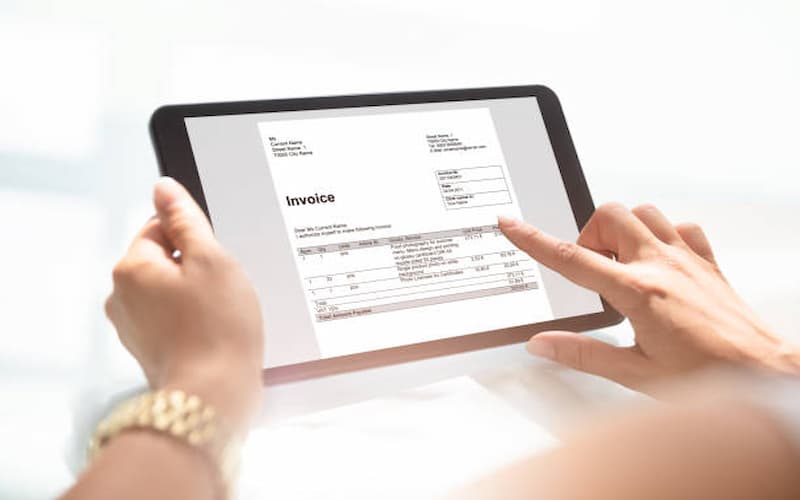



As remote-first operations have become the new standard in the financial services, fintech, and healthcare industry, companies can no longer use document checks in person as a way of determining who they are interacting with. The fact that there has never been a stronger need to quickly, accurately and at scale verify digital documents has come to fruition and the technology has finally served that need.
Starting with identity checks and all the way to SSN verification, the new verification platforms are substituting the manual system that is slow, error-prone, and lacks intelligence with a real-time and automated system. This is transforming the customer onboarding experience in the following way.
Conventional workflows of onboarding were developed in a different time frame. Customers had to go to a branch, physical paperwork, and take days to wait, even weeks to make their identity known. Although companies transitioned to digital platforms, a significant number still depended on manual review teams to scan uploaded documents, which resulted in bottlenecking and frustrating customers and subjecting companies to human error.
The outcome was a bad user experience on one side and mixed-compliance results on the other side. Fraud slipped through. Bona fide customers gave up the procedure. And compliance departments could not keep up as the volumes and regulations began to change.
Digital document verification is the process of verifying identity documents, such as passports, national ID, driver’s licence and utility bills, automatically, based on the combination of optical character recognition (OCR), machine learning, and liveness check. The system can extract the data and compare it to authoritative databases when a user uploads or scans a document, detects any evidence of tampering or forgery, and delivers a confidence score in several seconds.
This goes a long way farther than merely taking a photo post. The current document verification systems are able to identify changes of fonts, inconsistency in microprinting and abnormalities in security characteristics that are not visible to the naked eye. The technology is also able to authenticate supporting data points – like running an SSN check to ensure that the Social Security Number of a submitted document is the same as government records – to provide an extra level of identity assurance that can simply not be recreated at scale by manual review.
The greatest advantage that businesses claim to receive when implementing digital document verification is a significant drop in the time of onboarding. What used to take 48 to 72 hours, now can be done in less than two minutes. This is critical to the industries that work in the competitive market – neobanks, lending platforms, crypto exchanges. When customers are faced with friction during the point of sign up, it is very likely that they are going to give up the process.
In addition to speed, three fundamental areas document verification is changing the structure include:
AI-based verification models learn on millions of samples of documents in more than 200 countries, which allows them to detect more advanced forgeries that cannot be detected by humans.
Companies that work according to the guidelines of KYC, AML, GDPR, and FinCEN regulations should have verifiable and coherent verification logs. Automated solutions provide an entire digital audit trail that is compliant with regulators and helps in preparing audits.
Digital verification systems can handle documents in many different languages, and those of hundreds of issuing authorities at once, unlike human review teams, which make international expansion a much less complex operation.
SSN verification is now a part of the remote onboarding stack of companies doing business in the United States. An SSN check compares the SSN of a customer with data of credit bureaus, the Social Security Administration and fraud watchlists to verify when they use the numbers to ensure that the identity is real and the number has not been reported to be used improperly.
This applies especially to lenders, insurance companies and financial institutions, which must verify the actual identity of any customer under the regulations of BSA and FinCEN, before they can create a relationship. Multi-layered verification, through the combination of SSN verification, document verification and biometric checks, forms a multi-layered verification that is both regulator friendly and immune to synthetic identity fraud – one of the most rapidly increasing categories of fraud in the US.
Not every document checking solution is the same. In assessing a platform to be used in remote onboarding, compliance and operations teams should be able to find the following capabilities:
Provision of a wide document library which includes passports, national IDs, driving licences, residence permits, utility bills and many more across various jurisdictions. Additional biometric liveness detection to stop spoofing and deepfake attacks. API-first, which can be seamlessly integrated with current onboarding processes and CRM. An audit trail and compliance reporting dashboard to submit to regs. Assistance on the supplementary checks such as SSN check, address validation, and watchlist check.
Onboarding of customers remotely is not a workaround anymore, it is a major channel of most digital businesses. The winning companies in this environment will be those that ensure onboarding is quick, safe and compliant without causing friction to the customer that is not needed.
Exactly that is offered by the digital document verification, which is combined with the SSN verification and biometric checks. It helps mitigate fraud, appeases regulators, and provides the smooth experience contemporary customers desire. Any company that takes their remote operation seriously cannot afford not to invest in the appropriate verification infrastructure on which all other things are based.
Services such as Shufti Pro provide end to end document verification and KYC compliance solutions, which have a worldwide reach of 10,000+ document types in 240 different countries and allow businesses to develop verification workflows that are both internationally and locally compliant.

© 2025 Crivva - Hosted by Airy Hosting Managed Website Hosting.