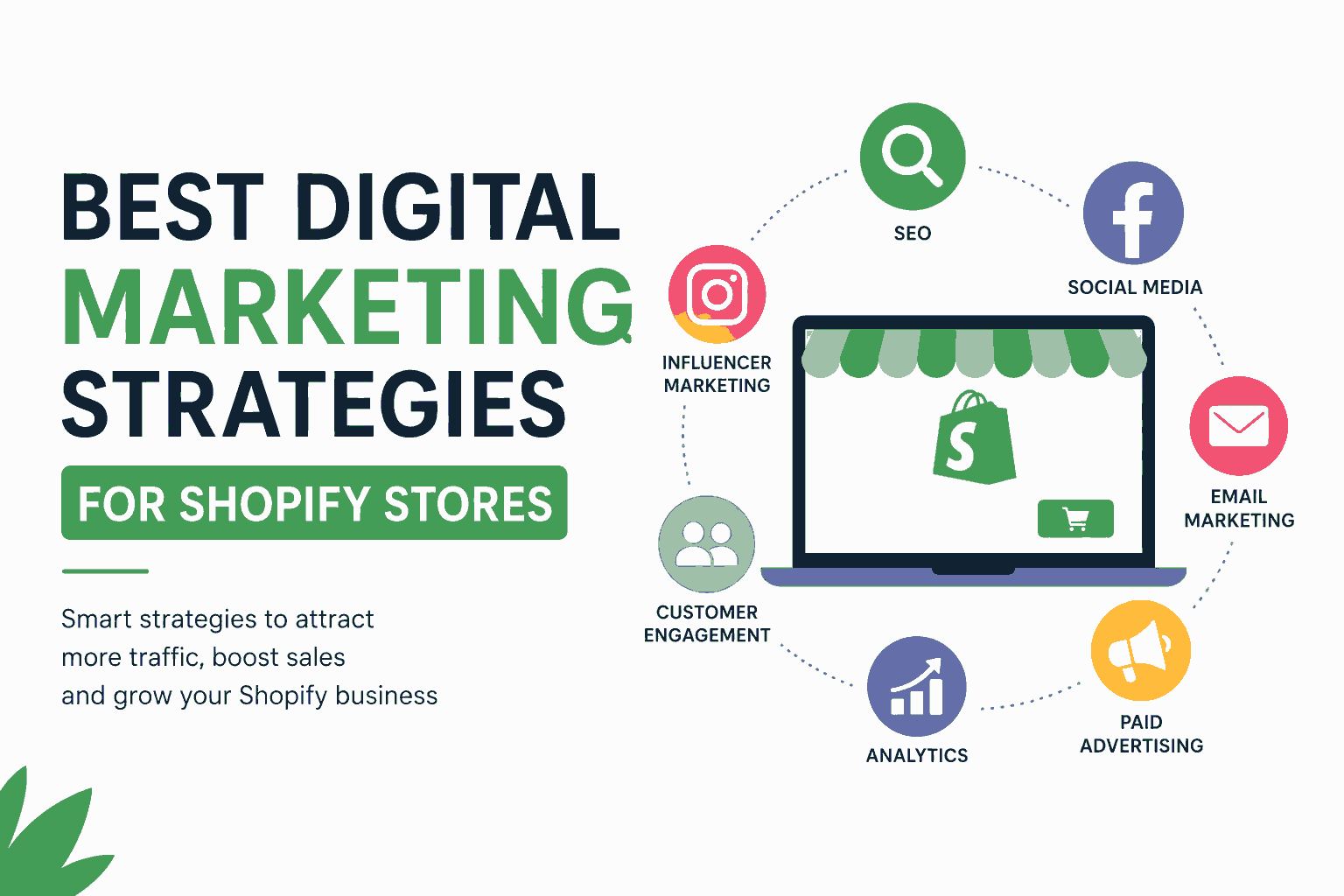
Best Digital Marketing Strategies for Shopify Stores

Ameena N
Best Digital Marketing Strategies for Shopify Stores

Introduction

Running a successful Shopify store in 2026 requires more than just uploading products and waiting for customers to arrive. The ecommerce space has become highly competitive, and store owners now need strong digital marketing strategies to stand out, attract traffic, and increase sales consistently.

Whether you are a beginner launching your first online store or an experienced ecommerce entrepreneur, digital marketing plays a critical role in your growth. From SEO and social media marketing to email automation and influencer collaborations, every marketing channel contributes to building a profitable Shopify business.

Today, millions of businesses use Shopify because of its flexibility, scalability, and marketing-friendly ecosystem. Many store owners searching for the Best Shopify Product Options also focus heavily on improving customer experience and conversions through smarter marketing techniques.

The good news is that digital marketing no longer requires massive budgets. With the right strategies, even small Shopify stores can compete with larger brands by targeting the right audience and building strong customer relationships.

In this guide, you’ll learn the best digital marketing strategies for Shopify stores in 2026, including SEO, social media, influencer marketing, email campaigns, paid advertising, AI automation, and more.

Why Digital Marketing Matters for Shopify Stores

Launching a Shopify store is only the first step. Without marketing, even the best-designed store may struggle to generate traffic or sales.

Digital marketing helps Shopify businesses:

  • Increase website traffic
  • Build brand awareness
  • Generate leads
  • Improve customer retention
  • Increase conversion rates
  • Boost revenue

Think of your Shopify store like a physical retail shop hidden inside a large city. Without signs, advertisements, or directions, customers may never find it. Digital marketing acts as the roadmap that guides people to your business.

Search Engine Optimization (SEO)

Why SEO Is Essential for Shopify Stores

SEO helps your store appear in search engines like Google when customers search for products or solutions.

For example:

  • “Best wireless headphones”
  • “Affordable skincare products”
  • “Minimalist office desk”

If your store ranks well, you can receive free organic traffic consistently.

Shopify SEO Best Practices

Optimize Product Pages

Your product pages should include:

  • Keyword-rich titles
  • Clear meta descriptions
  • Helpful product descriptions
  • Optimized images
  • Internal links

Example

Instead of:
“Blue Running Shoes”

Use:
“Lightweight Blue Running Shoes for Men”

This improves both readability and search visibility.

Create Blog Content

Content marketing remains one of the strongest SEO strategies.

Useful blog ideas include:

  • Product guides
  • Buying tips
  • Industry trends
  • Tutorials
  • Comparison articles

For example, a fashion store could publish:

  • “Top Summer Fashion Trends”
  • “How to Style Oversized Hoodies”

Educational content attracts long-term organic traffic.

Improve Website Speed

Slow websites hurt SEO and conversions.

To improve Shopify speed:

  • Compress images
  • Use lightweight themes
  • Avoid excessive apps
  • Minimize unnecessary scripts

Fast-loading stores create better user experiences.

Social Media Marketing

Why Social Media Works for Shopify

Social media platforms are essential for ecommerce growth because they help brands connect directly with customers.

Popular platforms include:

  • Instagram
  • TikTok
  • Facebook
  • Pinterest
  • YouTube

Visual platforms especially work well for ecommerce businesses.

Instagram Marketing for Shopify Stores

Instagram remains one of the best platforms for product-based businesses.

Effective Instagram Strategies

Post High-Quality Product Photos

Professional visuals build trust instantly.

Use Reels and Short Videos

Short-form video content performs exceptionally well in 2026.

Share User-Generated Content

Customer photos and reviews increase authenticity.

Use Product Tags

Instagram Shopping makes purchasing easier directly from posts.

Fashion, beauty, and lifestyle brands often see strong engagement through Instagram marketing.

TikTok Marketing for Ecommerce

TikTok has become a major sales channel for Shopify stores.

Why TikTok Works

TikTok’s algorithm allows small brands to go viral quickly.

Even stores with small audiences can generate significant traffic through engaging videos.

Effective TikTok Content Ideas

  • Product demonstrations
  • Behind-the-scenes videos
  • Packaging videos
  • Customer reactions
  • Tutorials

Authenticity performs better than overly polished advertisements on TikTok.

Email Marketing

Why Email Marketing Still Matters

Email marketing delivers one of the highest returns on investment in ecommerce.

Unlike social media, your email list is an owned audience.

You are not dependent on changing algorithms.

Important Shopify Email Campaigns

Welcome Emails

Introduce new subscribers to your brand.

Abandoned Cart Emails

Recover lost sales automatically.

Product Recommendation Emails

Suggest relevant products based on browsing history.

Seasonal Promotions

Promote holiday discounts and limited-time offers.

AI-powered email tools now help Shopify stores automate customer segmentation and personalization.

Influencer Marketing

Partnering with Influencers

Influencer marketing continues to drive ecommerce sales effectively.

Customers trust recommendations from creators they follow.

Choosing the Right Influencers

Focus on:

  • Engagement rate
  • Audience relevance
  • Authenticity
  • Niche alignment

Micro-influencers often generate better engagement than celebrities.

For example:
A skincare store partnering with a beauty creator who has 20,000 loyal followers may perform better than paying a celebrity influencer.

Paid Advertising Strategies

Facebook and Instagram Ads

Meta advertising still works well for Shopify stores.

Popular ad types include:

  • Carousel ads
  • Video ads
  • Retargeting campaigns
  • Collection ads

Retargeting is especially powerful because it targets people who already visited your store.

Google Shopping Ads

Google Shopping Ads display products directly in search results.

These ads often attract highly motivated buyers.

Benefits include:

  • Strong purchase intent
  • High visibility
  • Product-focused search traffic

For ecommerce businesses, Google Shopping can become a major revenue source.

AI-Powered Marketing Automation

How AI Is Changing Shopify Marketing

AI tools now help Shopify stores automate many marketing tasks.

Examples include:

  • Personalized product recommendations
  • AI-generated ad copy
  • Predictive analytics
  • Automated customer support
  • Smart email campaigns

AI helps small businesses compete more efficiently by reducing manual workload.

Customer Retention Strategies

Why Retention Matters

Acquiring new customers is often more expensive than retaining existing ones.

Returning customers usually:

  • Spend more
  • Convert faster
  • Trust your brand more

Effective Retention Strategies

Loyalty Programs

Reward repeat customers with:

  • Points
  • Discounts
  • Exclusive access

Personalized Offers

AI-powered personalization improves repeat purchases.

Excellent Customer Service

Fast support builds long-term trust.

Post-Purchase Follow-Ups

Send thank-you emails and review requests after orders.

Retention-focused marketing increases long-term profitability.

Conversion Rate Optimization (CRO)

Turning Visitors into Customers

Driving traffic is important, but conversions matter more.

Even small improvements in conversion rates can significantly increase revenue.

CRO Tips for Shopify Stores

Improve Product Pages

Include:

  • Clear images
  • Customer reviews
  • Benefit-focused descriptions
  • Trust badges

Simplify Checkout

Complicated checkout processes reduce conversions.

Optimize for Mobile Devices

Most ecommerce traffic now comes from smartphones.

Add Social Proof

Customer testimonials improve trust.

Stores with strong user experience often outperform competitors even with smaller traffic volumes.

Using Apps to Improve Marketing

Shopify’s app ecosystem helps automate and improve marketing performance.

Helpful App Categories

SEO Apps

Improve rankings and technical SEO.

Review Apps

Build customer trust.

Email Marketing Apps

Automate campaigns and segmentation.

Product Customization Apps

Enhance customer experience through the Best Shopify Product Options.

Analytics Apps

Track performance and customer behavior.

Choose apps carefully to avoid slowing down your website.

Common Digital Marketing Mistakes Shopify Stores Make

Trying Every Platform at Once

Focus on a few channels first.

Ignoring SEO

SEO builds sustainable long-term traffic.

Weak Branding

Consistent branding improves recognition and trust.

Not Tracking Analytics

Data helps improve campaigns.

Overcomplicating Marketing

Simple strategies executed consistently often outperform complex plans.

Conclusion

Digital marketing is the engine that drives Shopify store growth in 2026.

The most successful Shopify businesses combine:

  • SEO
  • Social media
  • Email marketing
  • Influencer partnerships
  • Paid advertising
  • AI automation

to create a complete ecommerce growth strategy.

You do not need a massive budget to succeed. Small businesses can compete effectively by focusing on customer experience, consistent branding, and targeted marketing efforts.

Start with a few strong strategies, analyze your results, and improve gradually over time.

In ecommerce, consistency and adaptability often matter more than perfection.

FAQ

What is the best marketing strategy for Shopify stores?

There is no single best strategy. Most successful Shopify stores combine SEO, social media marketing, email campaigns, and paid advertising.

Is SEO important for Shopify stores?

Yes. SEO helps generate long-term organic traffic and improves visibility in search engines.

Which social media platform works best for Shopify?

It depends on your niche. Instagram and TikTok work especially well for visual ecommerce brands.

Should beginners use paid ads for Shopify?

Yes, but start with small budgets and test campaigns carefully before scaling.

What apps help improve Shopify marketing?

SEO apps, email marketing tools, analytics apps, review apps, and apps offering the Best Shopify Product Options can improve both marketing performance and customer experience.

Leave a Reply
    Table of Contents
    Crivva Logo
    Crivva is a professional social and business networking platform that empowers users to connect, share, and grow. Post blogs, press releases, classifieds, and business listings to boost your online presence. Join Crivva today to network, promote your brand, and build meaningful digital connections across industries.