

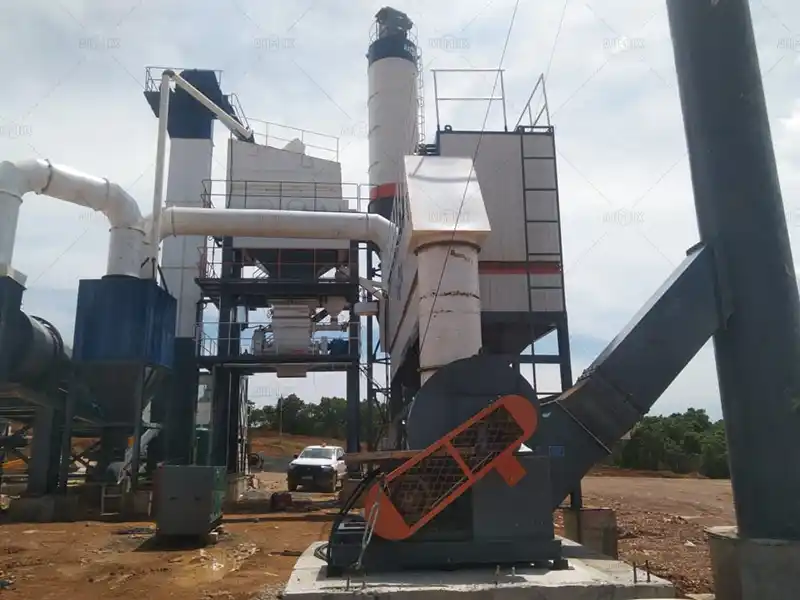
If you are planning to invest in an asphalt batching plant in Indonesia, one of the most common and practical questions is this: what can I realistically get with a $300,000 budget? This is not just about equipment price. It is about matching your budget with your project needs, production targets, and long-term return.
In Indonesia, road construction demand remains strong. From local municipal roads to rural access upgrades and private industrial roads, contractors need reliable and cost-effective asphalt production solutions. Therefore, understanding how far your $300,000 budget can go is critical before making a decision.
In this article, we will break down realistic plant options, production capacities, configurations, and practical buying advice. More importantly, we will help you align your investment with actual project requirements in Indonesia.
Before choosing a plant model, you need to clearly understand what this budget includes. Many buyers focus only on the equipment price. However, a successful asphalt plant project involves more than just purchasing the machine.
Typically, a $300,000 budget in Indonesia can cover the core asphalt batching plant equipment. In some cases, it may also include basic accessories and partial installation support. However, it often does not fully cover land, civil foundation, or long-distance transportation.
Therefore, you should divide your budget into three main parts:
This is the largest portion. It includes the mixing system, drying drum, burner, dust collector, and control system.
Shipping to Indonesia, inland transport, and installation services can take a noticeable share of your budget.
You need to prepare land, foundation, and power supply. Many first-time buyers underestimate this cost.
Once you understand this structure, you can make a more realistic and safe investment plan.
Now that you understand the budget allocation, the next step is to match your investment with production capacity. This is where many buyers make mistakes. They either choose a plant that is too small or overspend on unnecessary capacity.
With a $300,000 budget in Indonesia, you can typically consider the following options:
This is the most common and balanced choice. A 40–60 tons per hour asphalt batching plant fits well within this budget range.
This type of plant works well for:
– Rural road construction projects
– Small to medium municipal road works
– Maintenance and repair projects
In practical terms, a 60 TPH amp hotmix can produce about 480 tons per 8-hour working day. This output is enough for most local contractors in Indonesia.
If you optimize your configuration and reduce optional features, you may reach an entry-level 80 TPH plant.
However, you should be cautious. At this budget level, an 80 TPH plant often comes with:
– Simpler dust collection system
– Basic control system
– Limited storage capacity
This option suits contractors who want higher output but can accept fewer advanced features.
So, the key decision here is clear: do you prefer stable performance or higher capacity with basic configuration?
After choosing the capacity range, the next important step is configuration. A well-balanced configuration ensures efficiency, fuel savings, and stable operation.
For Indonesia’s climate and project conditions, the following configuration works well.
Indonesia has high humidity. Therefore, you should choose an efficient drying drum with strong heat exchange performance. This helps reduce fuel consumption and improve productivity.
A diesel or heavy oil burner is common. However, if you have stable fuel supply, consider a multi-fuel burner. This gives you flexibility and cost control.
Environmental regulations are becoming stricter in many regions. A combination of cyclone dust collector and bag filter is highly recommended.
A semi-automatic or fully automatic control system improves accuracy and reduces labor costs. It also ensures consistent asphalt quality.
In short, even with a limited budget, you should not compromise on key components that directly affect performance.
Another important decision is whether to choose a mobile or stationary plant. Both options are available within a $300,000 budget, but they serve different project needs.
This option is ideal if your projects are scattered across different locations.
Main advantages include:
– Easy transportation
– Quick installation
– Flexible project switching
This is very suitable for contractors working across multiple islands in Indonesia.
This option fits long-term projects with fixed locations.
Main advantages include:
– Higher stability
– Better scalability
– Lower long-term operating cost
Therefore, your choice depends on your business model. If mobility matters, go mobile. If stability matters, go stationary.
Choosing the right plant is only the first step. To truly benefit from your investment, you must focus on return on investment (ROI).
Let’s look at how you can maximize your returns.
If your daily demand is 300–500 tons, a 60 TPH plant is ideal. Avoid overspending on unused capacity.
Fuel is one of the biggest operating costs. Efficient drying and burner systems can save significant money over time.
Try to keep your plant running consistently. Idle equipment reduces profitability.
In Indonesia, many contractors handle several small projects instead of one large project. A flexible plant setup helps you serve more clients.
In short, ROI depends not only on price, but also on how you use the plant.
Even experienced contractors sometimes make costly mistakes when buying asphalt plants. Being aware of these risks can save you time and money.
The cheapest option often leads to higher maintenance costs later.
Indonesia’s high humidity and varying fuel supply require suitable configurations.
Foundation and setup require proper planning. Delays here can affect your project timeline.
Buying a large plant without enough projects can create financial pressure.
Therefore, a balanced and realistic approach always works best.
At this point, you may wonder whether this budget limits your future expansion. The answer depends on your strategy.
A 40–60 TPH asphalt batching plant provides a solid starting point. It allows you to enter the market, build experience, and generate steady cash flow.
Later, you can expand by:
– Adding storage silos
– Upgrading control systems
– Investing in a second plant
So, instead of aiming for the biggest plant at the start, focus on building a sustainable business step by step.
A $300,000 budget can get you a reliable and efficient asphalt batching plant in Indonesia. The key is not just what you buy, but how well it fits your projects.
If you focus on the right capacity, proper configuration, and practical operation strategy, this investment can quickly turn into a profitable asset.
Every contractor’s situation is different. Project size, location, and business goals all matter. Therefore, the best solution is always a customized one.
Ready to find the right asphalt batching plant for your projects in Indonesia?
Contact us today. Share your project details, required capacity, and budget plan. Our team will help you choose a solution that delivers real performance, stable operation, and strong returns.

© 2025 Crivva - Hosted by Airy Hosting Managed Website Hosting.