

In today’s fast-paced production environment, mobility and efficiency are everything. Whether you’re shooting a film, live streaming an event, or creating content on the go, a wireless video transmitter can dramatically streamline your workflow. By eliminating bulky cables and enabling real-time video monitoring, these devices empower filmmakers, creators, and broadcasters to work smarter, faster, and more creatively.
This in-depth guide explores everything you need to know about wireless video transmitters—from how they work and why they matter to the key features you should consider and the best solutions available today. If you’re aiming for professional-grade production, investing in a high-quality HDMI video transmitter paired with a reliable receiver is no longer optional—it’s essential.
A wireless video transmitter is a device that sends video signals from a camera to a monitor, switcher, or recording system without using physical cables. These systems typically consist of two main components:
Instead of relying on HDMI or SDI cables running across your set, the transmitter wirelessly sends the video feed to the receiver in real time. This setup is particularly valuable in dynamic environments where mobility and flexibility are crucial.
Modern wireless video transmitters support high-definition video (up to 4K in many cases), ultra-low latency, and long-range transmission. With evolving wireless technology, they are now more reliable than ever—even in complex shooting conditions.
Traditional wired setups can be restrictive, especially in complex shooting environments. Cables not only limit movement but also create clutter and potential safety hazards on set.
With a wireless video transmitter, camera operators can move freely without worrying about cable length or tangling. This is especially useful for:
Freedom of movement translates directly into more creative shots and smoother workflows.
One of the biggest advantages of using a wireless system is real-time monitoring. Directors, producers, clients, and crew members can view the live camera feed on external monitors connected to the receiver.
This enables:
Instead of crowding around a single camera screen, your entire team can stay aligned and informed.
Time is money in production. A traditional wired setup can take significant time to install, especially in large or multi-camera environments.
With an HDMI video transmitter:
This is particularly beneficial for:
Wireless doesn’t mean compromised quality. Modern transmitters deliver crystal-clear video with minimal compression and near-zero latency.
This ensures:
For professionals working in film, television, or live streaming, maintaining high production standards is non-negotiable—and wireless systems now meet those expectations.
Choosing the right system depends on your specific needs, but here are the most important features to evaluate:
Range determines how far your transmitter can send a signal without losing quality.
If you shoot outdoors or in large venues, prioritize longer-range systems.
Latency refers to the delay between capturing and displaying video.
Low latency is critical for live production, especially when switching between multiple camera feeds.
Look for support for:
Also ensure compatibility with both HDMI and SDI formats if needed.
A versatile HDMI video transmitter should offer:
Make sure it integrates seamlessly with your existing gear.
Look for:
Hot-swappable batteries are a big plus for uninterrupted operation.
Some advanced systems allow:
This is extremely useful for larger teams where multiple stakeholders need access to the live feed.
These are perfect for beginners, solo creators, and small teams.
Key characteristics:
Best for:
These strike a balance between performance and cost.
Features include:
Ideal for:
Built for demanding environments, these systems deliver top-tier performance.
Advanced features:
Best suited for:
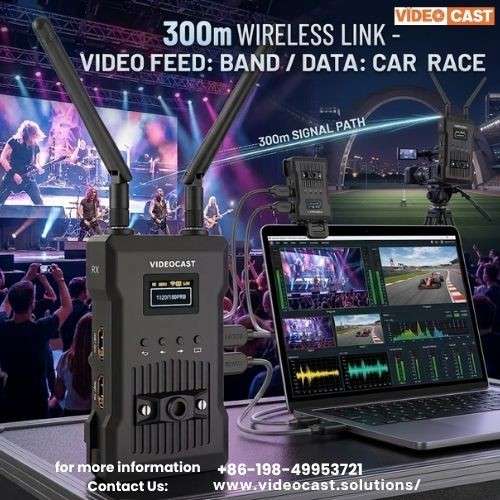
When it comes to reliability and performance, a Videocast transmitter is designed with professionals in mind. It combines cutting-edge technology with user-friendly operation, making it a strong choice for both experienced crews and growing production teams.
1. Stable Long-Distance Transmission
Videocast systems are engineered to maintain a strong and stable signal even in challenging environments, ensuring uninterrupted video feeds.
2. Seamless Multi-Receiver Pairing
Multiple receivers can connect to a single transmitter, allowing directors, clients, and crew members to monitor footage simultaneously.
3. High-Quality HDMI Video Output
Enjoy crystal-clear video with minimal latency, suitable for both live streaming and cinematic production.
4. User-Friendly Interface
Quick setup and intuitive controls reduce downtime and simplify operation on set.
5. Integration with Live Streaming Systems
Videocast transmitters work seamlessly with video switchers and streaming platforms, making them ideal for live broadcasting workflows.
Directors and cinematographers can monitor shots wirelessly on set, improving shot composition and reducing retakes.
From concerts to corporate events, wireless transmitters allow seamless video feeds to switchers without cable clutter.
News teams and live broadcasters rely on stable wireless transmission to ensure uninterrupted coverage in fast-moving environments.
Solo creators can use wireless monitoring to frame shots perfectly without needing additional crew.
Wireless systems enable multi-camera setups for lectures, webinars, and live religious services, improving production quality and viewer engagement.
While wireless video transmitters are powerful tools, they come with a few challenges:
Solution: Choose systems with dual-band transmission and automatic frequency selection.
Solution: Carry spare batteries and use systems with long battery life or DC input.
Solution: Invest in low-latency professional-grade systems for live production.
Solution: Ensure your transmitter supports your camera’s output format (HDMI/SDI).
The future of wireless video technology looks incredibly promising. With advancements in:
Wireless transmitters will become even more powerful, enabling:
As the industry evolves, wireless solutions will continue to replace traditional wired setups across all levels of production.
A high-quality wireless video transmitter is no longer a luxury—it’s a necessity for modern video production. From enhancing mobility to improving collaboration and speeding up workflows, these devices are transforming how content is created and delivered.
Whether you’re using an HDMI video transmitter for simple shoots or a full-fledged Videocast transmitter system with multiple receiver units, choosing the right setup can significantly elevate your production quality and efficiency.
Invest wisely, prioritize performance and reliability, and embrace the freedom that wireless technology brings to your creative process.
For more information about professional wireless video transmission solutions:
Email: [email protected]
Phone: +86-198-49953721
Website: https://www.videocast.solutions

© 2025 Crivva - Hosted by Airy Hosting Managed Website Hosting.