


Metal fabrication has changed quietly over the last decade. Not through flashy breakthroughs, but through steady refinement in how shops handle accuracy, repeatability, and production flow. Plate forming sits at the center of this evolution. When it goes wrong, problems surface everywhere – misaligned assemblies, inconsistent welds, wasted material, and rework that eats margins.
When it goes right, everything downstream becomes easier.
This article looks at how plate forming accuracy influences modern fabrication workflows, why many shops struggle to maintain consistency, and what experienced operators and planners pay attention to long before a plate ever touches a bending system.
Plate forming is often treated as an isolated operation. Bend the plate, move it to welding, and deal with issues later if they appear. In practice, even small deviations at the forming stage ripple through the entire workflow.
A few millimeters of mismatch in curvature can mean:
Fabricators who track defects back to their source usually discover that many “welding problems” or “assembly issues” began during bending.
Accuracy at the forming stage isn’t about perfection for its own sake. It’s about predictability.
One of the most overlooked challenges in plate forming is material variability. Two plates with identical specifications on paper rarely behave exactly the same in practice.
Factors that influence forming outcomes include:
Operators compensate for these variables through experience, test bends, and incremental adjustments. Shops that rely purely on nominal values from drawings often struggle with repeatability, especially when switching suppliers or grades.
This is why forming accuracy depends as much on process control as on machine capability.
Assembly teams feel the impact of forming quality immediately. When rolled sections arrive with consistent geometry, fixtures work as intended, alignment becomes routine, and welding proceeds smoothly.
When forming results vary:
Many fabrication managers underestimate how much assembly labor is driven by upstream forming consistency. Shops that invest time refining bending processes often see assembly efficiency improve without changing weld procedures at all.
Experienced fabricators plan plate forming as part of a broader workflow, not a standalone step. Decisions made during job planning influence forming accuracy more than many realize.
Key planning considerations include:
When these factors are addressed early, operators spend less time correcting issues on the floor.
This approach is especially important in projects involving cylindrical shells, cones, or structural components where multiple formed plates must align precisely during assembly.
Some shops rely heavily on manual correction after bending — re-rolling, localized pressing, or heat-assisted adjustments. While this can salvage parts, it introduces hidden costs.
Manual correction often leads to:
Over time, these practices mask underlying process issues rather than solving them. Fabricators who step back and analyze why correction is needed often find that better control during initial forming reduces overall labor.
Not every job requires extreme precision, but understanding where accuracy truly matters is critical. Pressure vessels, heavy equipment components, and structural assemblies often demand tighter control than general fabrication work.
Shops that handle mixed workloads benefit from forming setups that allow:
In operations where forming consistency directly affects downstream fit-up, many fabricators reference equipment concepts associated with advanced rolling machine configurations as part of their internal process evaluations. These discussions tend to focus less on speed and more on control, repeatability, and operator visibility.
Skilled operators remain invaluable, but relying solely on intuition introduces risk, especially as experienced workers retire or move on. Modern fabrication environments aim to support operator skill with process stability.
This can include:
The goal isn’t to remove human judgment, but to ensure that good results aren’t dependent on one individual’s memory or feel.
Inspection teams often act as the final checkpoint for forming errors. When forming accuracy improves, inspection shifts from problem detection to verification.
Consistent forming results allow inspectors to:
In many shops, inspection bottlenecks ease naturally once forming variability is addressed.
Certain components require tighter curvature control across multiple passes, especially thicker plates or larger diameters. In these cases, forming methods that allow continuous adjustment during the rolling process can reduce trial-and-error.
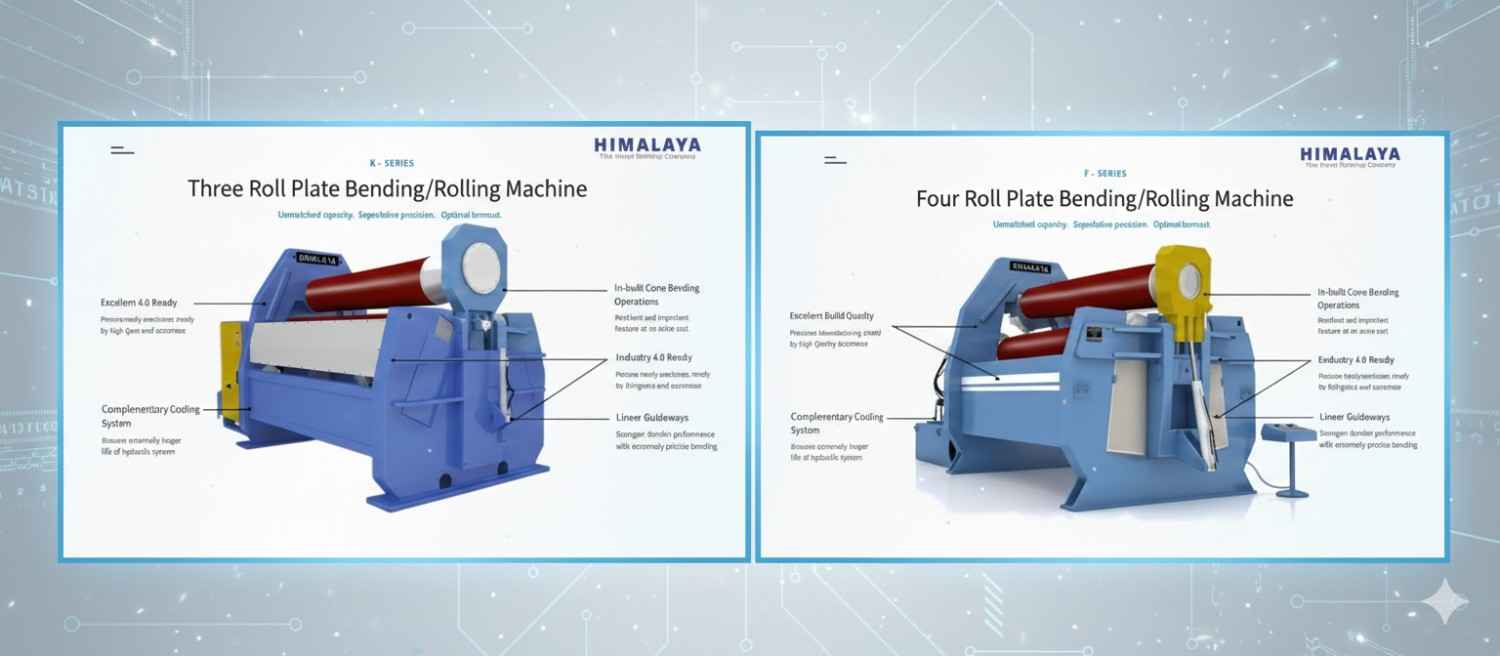
Fabricators evaluating such requirements often study the workflow advantages associated with a 4 roll plate bending machine, particularly in projects where alignment accuracy affects sealing surfaces, mating flanges, or structural symmetry. The interest is usually tied to process consistency rather than output volume.
Improving forming accuracy doesn’t always require major investment. Many effective changes are procedural.
Examples include:
Over time, these small adjustments compound into measurable gains in productivity and quality.
As fabrication operations grow, tolerance for inconsistency shrinks. What works in low-volume, hands-on environments often breaks down at scale.
Higher throughput means:
In this context, forming accuracy becomes a strategic factor rather than a technical detail.
Fabricators rarely advertise forming accuracy as a selling point, yet customers notice its effects. Assemblies fit cleanly. Delivery timelines hold. Inspection reports raise fewer questions.
These outcomes build trust over time.
Shops that prioritize forming control tend to experience fewer internal disputes between departments and fewer late-stage surprises. The benefit isn’t just technical – it’s operational stability.
Plate forming may not be the most visible part of fabrication, but its influence runs through every stage that follows. When accuracy is treated as a workflow concern rather than a machine setting, the entire operation moves with less friction and more confidence.

© 2025 Crivva - Hosted by Airy Hosting Managed Website Hosting.