

Search visibility isn’t what it used to be. Google’s algorithms parse context and E-E-A-T signals instead of counting raw links. ChatGPT and Perplexity mine the web for trusted sources to answer user questions. Yet link building remains a cornerstone of brand authority and discoverability—you just need the right approach in 2026.
Links still reinforce topical authority. When a high-authority domain references your content, search engines interpret that signal as third-party validation. That validation feeds into E-E-A-T scoring: Experience, Expertise, Authoritativeness, and Trust. Google’s ranking systems use backlinks as one data point among many to determine whether your page deserves to rank.
AI assistants like ChatGPT and Perplexity follow a similar logic. They scrape the web for well-cited, credible answers to user prompts. Question-and-answer platforms—especially those with established user engagement and editorial oversight—appear frequently in AI-generated responses. A single high-quality answer on a platform like Quora can be cited by multiple AI tools, extending your reach far beyond traditional search.
People Also Ask boxes appear in roughly 65% of Google SERPs for “how to” queries. These boxes pull from structured, question-driven content. If your brand owns the answer to a common question, you capture visibility without ranking number one organically. That shortcut matters when users scroll less and click faster.
Quora marketing surfaces in AI overviews and conversational answers because platforms like Quora host millions of user-generated questions mapped to searcher intent. When you publish expert answers on those platforms, you position your brand to be cited in ChatGPT summaries, Perplexity threads, and Google’s AI Overviews. The link may be nofollow, but the brand mention and referral traffic carry measurable SEO and commercial value.
Not all backlinks weigh the same. Dofollow links pass PageRank directly. Nofollow links do not. But Google confirmed years ago that nofollow links from high-authority sites still send trust signals. A nofollow backlink from a domain with DA 91—like Quora—tells crawlers that real users find your content valuable enough to reference.
Nofollow as trust signals correlates with rankings and brand authority. When your link appears in a well-upvoted Quora answer that drives hundreds of clicks to your site, Google sees engaged users spending time on your pages. That behavioral signal—dwell time, pages per session, low bounce rate—reinforces relevance and can boost rankings indirectly.
Referral traffic quality and behavioral signals support SEO outcomes. A user who arrives from a contextual Quora answer is more likely to convert than someone who clicked a display ad. Those high-intent visitors skew your analytics in ways that matter: longer sessions, deeper funnels, more conversions. Search engines track those patterns and reward pages that satisfy user intent.
Contextual, question-targeted placements map to searcher intent. If your SaaS tool solves invoice automation and you answer a Quora thread titled “What’s the best invoice automation software for small businesses?”, the placement is contextually relevant. That relevance makes the link—and the brand mention—more valuable than a generic directory listing.
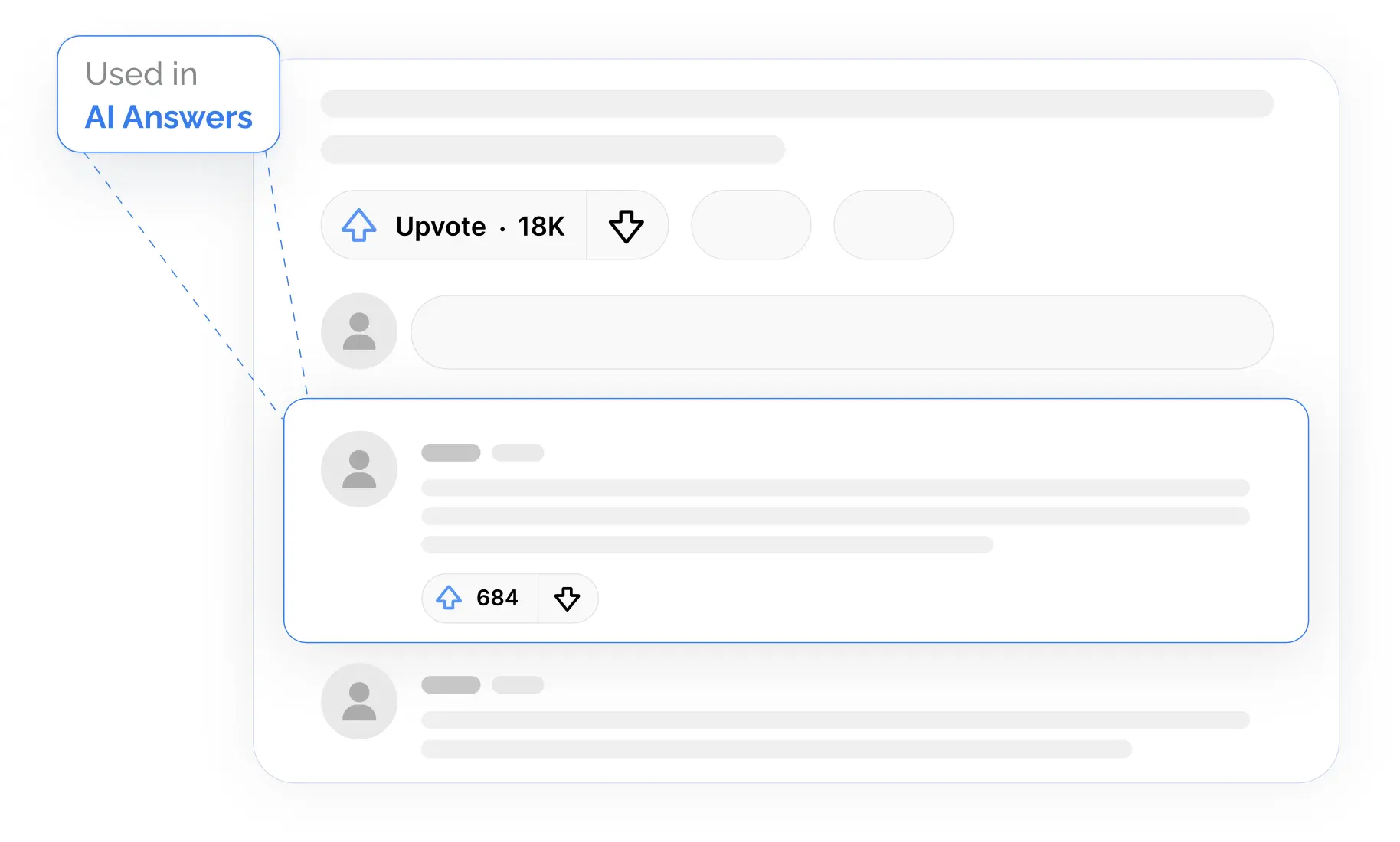
AI citations and source selection drivers for ChatGPT and Perplexity hinge on authority and engagement. AI models favor sources with editorial oversight, user votes, and a track record of accuracy. Quora answers with hundreds of upvotes and thoughtful commentary signal trustworthiness. When ChatGPT or Perplexity generates an answer, it pulls from those vetted threads, amplifying your brand beyond Google’s index.
A resilient link profile blends multiple tactics. No single channel should account for more than 30% of your backlinks. Diversification protects you from algorithm updates and platform policy shifts. It also mirrors natural link growth—real brands earn links from press coverage, resource pages, community forums, and user-generated content.
Content-led digital PR, resource outreach, and unlinked mention reclamation form the foundation. Digital PR secures editorial placements in industry publications. Resource outreach lands your tools or guides on curated lists. Unlinked mention reclamation turns brand name-drops into hyperlinks. Each tactic builds authority signals that Google and AI assistants recognize.
Quora-based, contextual Q&A captures PAA and AI search visibility. By answering high-traffic questions on Quora with expert, structured responses, you position your brand to appear in People Also Ask boxes and AI-generated summaries. The nofollow backlink drives referral traffic. The brand mention and topical relevance feed E-E-A-T signals. The combination delivers compounding value over months.
Avoiding spam tactics means prioritizing quality and real user value. Quora moderators remove answers that exist solely to drop links. Google penalizes sites that participate in link schemes. To stay compliant, your answers must genuinely help users. That means detailed explanations, cited sources, and links placed only where they add context.
Diversified link sources and steady velocity reduce risk. A sudden spike of 500 backlinks from one domain raises red flags. Gradual growth from multiple platforms—Quora, Reddit, niche forums, industry blogs—looks natural. Spread your link building over weeks, not days. Monitor your backlink profile monthly to catch any toxic links early.
Quora hosts over 300 million monthly users who ask 400,000 new questions daily. That massive corpus of question-led content aligns with searcher pain points. When users type “how do I…” or “what’s the best…” into Google, Quora threads often rank in the top ten. Those threads also populate PAA boxes and feed AI training datasets.
Massive corpus of question-led content aligned to searcher pain points makes Quora a natural fit for brands targeting high-intent keywords. The platform’s structure—questions organized by topic, answers ranked by upvotes—mirrors the way users search and consume information. That alignment means a well-crafted Quora answer can rank for dozens of long-tail queries.
UGC trust and historical authority mean AI models frequently cite Quora. ChatGPT and Perplexity prioritize sources with editorial oversight and user validation. Quora’s upvote system and moderation policies provide both. Answers with hundreds of upvotes signal consensus and credibility, making them prime candidates for AI citations.
Publication from high-authority, aged profiles maximizes credibility. A Quora account with four to six years of activity, 100,000+ answer views, and Top Writer badges in relevant topics carries more weight than a new profile. Answers published from those accounts rank higher in Quora’s internal search and Google’s index. They’re also more likely to be upvoted and shared.
Organic engagement patterns and community norms sustain visibility. Posting at peak times, following threads, and upvoting related answers signals genuine participation. That organic behavior keeps your account in good standing with Quora’s moderation team and boosts the reach of your answers. Avoid automation and bulk posting—both violate platform guidelines and risk account suspension.
Structuring answers to mirror PAA and snippet formats with clear takeaways increases the chance of being featured. Start with a direct answer in the first 40–50 words. Use bullet points or numbered lists for steps. Include subheadings if the answer is long. This format matches the way Google extracts content for featured snippets and PAA boxes.
Embedding brand expertise, sources, and compliant nofollow backlinks turns an informative answer into a marketing asset. Cite credible studies or official docs to build E-E-A-T. Reference your own case studies or tools where relevant. Place a single, contextual link to your landing page—never stuff multiple links. Quora’s guidelines permit one link per answer if it genuinely adds value.
Effective Quora marketing follows a repeatable process. You can’t wing it and expect PAA placements or AI citations. Each step—research, creation, publishing, amplification—requires strategic planning and quality control.
Identify gaps and PAA clusters aligned to high-intent queries. Use tools like AnswerThePublic, AlsoAsked, or Google’s autocomplete to find questions your audience is asking. Cross-reference those questions with Quora’s search to see which threads have high views but weak answers. Those are your targets.
Prioritize questions likely to earn AI citations and referral traffic. Look for questions that already rank in Google’s top ten or appear in PAA boxes. Check the existing answers—if they’re short, vague, or outdated, you can outcompete them with a detailed, cited response. Questions with commercial intent (“best,” “vs,” “for small business”) drive higher-quality traffic.
Use scannable structure, examples, and cite credible sources. Break long answers into short paragraphs. Use bold text for key terms. Include real examples or mini case studies to illustrate your points. Cite industry reports, academic studies, or official statistics to back up claims. That structure keeps readers engaged and signals expertise to AI crawlers.
Place contextual, nofollow backlinks and CTAs to capture demand. Insert your link where it naturally supports the answer—never in the opening line. For example, if you’re explaining invoice automation, link to your product’s features page when you mention specific functionality. Add a soft CTA at the end, like “I’ve written a detailed guide on this topic here [link]” rather than “Buy now.”
Timing, cadence, and topical clustering sustain momentum. Publish answers during peak Quora activity hours (weekday mornings and early evenings in your target timezone). Space out your posts—publishing five answers in one day looks spammy. Cluster answers around a core topic to build topical authority within a Quora Space.
Ethical community engagement earns upvotes and comments. Follow threads related to your answer. Upvote thoughtful replies. Respond to comments on your own answer to boost engagement signals. Never buy upvotes or use bots—Quora’s algorithms detect artificial patterns and will shadowban or suspend accounts.
Multi-language, geo-specific answers combined with Geo campaigns expand reach. If you serve Spanish-speaking markets, publish answers in Spanish on Quora’s Spanish-language interface. Combine that with localized landing pages and Geo-targeted SEO to maximize conversions. Multi-language campaigns also reduce competition—fewer brands invest in non-English Quora marketing.
White-label link building workflows enable regional rollouts. Agencies can deliver Quora campaigns under their own brand by partnering with a specialist provider. White-label services include client-branded reports, strategy calls, and transparent dashboards. This approach lets agencies scale without hiring in-house Quora experts.
Tracking Quora campaigns requires more than vanity metrics. Views and upvotes matter, but you need to connect Quora activity to business outcomes: referral traffic, lead generation, keyword rankings, and AI citations.
UTM standards, referral segmentation, and assisted conversion tracking let you isolate Quora’s impact. Tag every Quora link with UTM parameters: source=quora, medium=answer, campaign=your_campaign_name. Set up a segment in Google Analytics to track Quora referral traffic. Enable assisted conversions in GA4 to see how Quora contributes to multi-touch customer journeys.
Monitor PAA placements and AI citations across ChatGPT/Perplexity. Use tools like SEMrush or Ahrefs to track when your target keywords trigger PAA boxes. Manually test your brand name and product terms in ChatGPT and Perplexity to see if your Quora answers are cited. Document those citations in a shared tracker to quantify AI visibility over time.
Referral traffic quality, dwell time, and lead-to-close rates reveal whether Quora visitors convert. Compare Quora traffic to other channels: What’s the average session duration? How many pages do visitors view? What percentage fill out a form or start a trial? If Quora traffic converts at 3–5x the rate of social media, that’s a strong signal to scale investment.
Brand authority lift shows up in unlinked mentions, branded search, and coverage. Track brand name search volume in Google Trends. Monitor social listening tools for new brand mentions. Check your backlink profile monthly—do you see more editorial links from sites that discovered you via Quora? These secondary signals confirm that Quora marketing is building long-term authority.
Sustainable Quora marketing requires strict compliance with platform policies and white-hat SEO principles. Cutting corners might deliver short-term wins, but account suspensions and manual penalties wipe out months of work.
Contextual value-first answers avoid link stuffing and automation spam. Every answer should pass the “would I read this if I had the question?” test. If the answer exists only to drop a link, it’s spam. Quora’s moderators will remove it, and repeat offenses lead to account bans. Focus on helping users first; the link is secondary.
Clear disclosures, nofollow usage, and respect for community policies protect your reputation. If you work for the company you’re linking to, disclose that in your Quora bio or answer. Use nofollow attributes (Quora enforces this automatically). Never manipulate upvotes, create fake accounts, or post identical answers across multiple threads. These tactics violate Quora’s terms and Google’s Webmaster Guidelines.
Templates, QA checklists, and replacement warranties ensure consistency. Develop answer templates for common question types: “What’s the best [tool] for [use case]?” or “How do I [solve problem]?” Build a QA checklist covering structure, citations, link placement, and disclosure. Partner with providers that offer replacement warranties—if an answer is removed within six months, they publish a new one at no cost.
Agency-ready white-label link building and multi-language operations let marketing teams scale without hiring specialists. White-label services provide client-branded dashboards, reports, and strategy calls. Multi-language campaigns require native speakers and geo-specific research—partnering with a provider that offers 50+ languages accelerates international expansion.
Building Quora campaigns in-house gives you control and deep product knowledge. Partnering with specialists gives you speed, aged accounts, and proven systems. The right choice depends on your timeline, budget, and internal expertise.
In-house execution offers control and domain expertise but requires a slower ramp and higher overhead. You’ll need to build Quora accounts from scratch, research questions, write answers, and manage upvote campaigns. It takes months to establish credibility. Budget for at least one full-time marketer and editorial review.
Partner execution delivers faster access to aged Quora accounts and repeatable systems. Specialist providers own accounts with four to six years of history, 250,000+ views, and Top Writer badges. They’ve already mapped high-traffic questions in your niche. You skip the learning curve and get published answers within two weeks. Pricing typically starts around $12 per answer at scale.

© 2025 Crivva - Hosted by Airy Hosting Managed Website Hosting.