


Bedwetting is one of the most common childhood sleep challenges, yet it remains a sensitive topic for many families. When bedwetting continues beyond the early years, parents often search for solutions that are safe, effective, and supportive of their child’s emotional wellbeing. A bed wetting alarm is widely recognized as one of the most reliable tools for addressing nighttime bedwetting in children.
This article explains what a bed wetting alarm is, how it works, why it is recommended by health professionals, and how it supports long-term dry nights rather than temporary relief.
A bed wetting alarm is a device designed to detect moisture as soon as bedwetting begins. When moisture is detected, the alarm activates through sound, vibration, or both. This alert helps the child wake up, stop urinating, and go to the bathroom.
Over time, the alarm trains the brain to recognize bladder signals during sleep. This learning process helps children wake before bedwetting occurs, which is why the bed wetting alarm is considered a long-term solution rather than a short-term fix.
Bedwetting is usually linked to development, not behavior. Most children who wet the bed do so because their brain does not yet wake them in response to a full bladder.
Common contributing factors include:
Deep sleep patterns
Delayed brain–bladder communication
Increased nighttime urine production
Genetic factors
Immature nighttime bladder control
Understanding these causes helps explain why punishment, reminders, or restricting fluids rarely solve the problem on their own.
A bed wetting alarm works through a learning process known as conditioning. Each time the alarm sounds, it reinforces the connection between bladder fullness and waking.
The process typically follows this pattern:
Moisture is detected immediately
The alarm activates
The child wakes and goes to the bathroom
The brain begins learning to respond earlier
With consistent use, many children start waking on their own before the alarm is triggered.
Health professionals often recommend a bed wetting alarm as a first-line treatment for persistent bedwetting because it addresses the root cause rather than masking symptoms.
Key reasons include:
High long-term success rates
No medication or side effects
Low relapse rates
Support for natural neurological development
Unlike medication, which works only while it is taken, a bed wetting alarm teaches a skill that supports lasting dryness.
Not all bed wetting alarms are the same. Choosing the right type can improve comfort and effectiveness.
These use a sensor mat placed under the fitted sheet. They detect moisture across a larger surface area and are ideal for younger children or restless sleepers.
These attach to underwear and detect moisture directly. They are discreet and portable, often preferred by older children.
Alarms with both sound and vibration are especially helpful for deep sleepers. Dual alerts increase the chance of waking quickly.
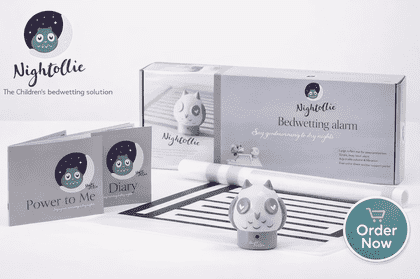
Some families choose systems such as Night Ollie because they combine reliable detection with child-friendly design and clear parental support.
A bed wetting alarm is usually appropriate when:
The child is at least five years old
Bedwetting occurs regularly
The child shows some readiness to improve
Parents can provide early support at night
Parental involvement is normal during the first few weeks and plays a key role in success.
Frequent alarms
Parental assistance needed
Learning begins even if dry nights are rare
Faster response to the alarm
Fewer wet nights
Increased confidence
More dry nights than wet
Independent waking
Reduced reliance on the alarm
Consistency is more important than speed. Each night contributes to learning.
Most experts recommend continuing until the child achieves at least two weeks of consecutive dry nights. Stopping too early can interrupt learning and increase the chance of relapse.
Even after dryness is achieved, some families continue for a short transition period to reinforce success.
Bedwetting can affect a child’s confidence, especially as they grow older. A bed wetting alarm helps by involving the child in the solution rather than making them feel powerless.
Positive outcomes often include:
Improved self-esteem
Reduced anxiety around sleepovers
Greater independence
Better overall sleep quality
How parents respond during the process greatly influences emotional outcomes.
Some families try alternatives such as medication, waking schedules, or absorbent products. While these methods may manage symptoms temporarily, they do not teach the brain to wake in response to bladder signals.
A bed wetting alarm stands out because it:
Encourages natural learning
Supports long-term dryness
Reduces reliance on external aids
Aligns with pediatric sleep recommendations
To get the best results from a bed wetting alarm, avoid:
Skipping nights
Letting the child sleep through the alarm without assistance
Stopping too early
Using punishment or pressure
Expecting immediate results
Progress is gradual, and setbacks are part of learning.
Children respond best when they feel supported rather than judged.
Helpful strategies include:
Praising effort, not just dry nights
Keeping routines calm and predictable
Tracking progress visually
Normalizing setbacks
A positive environment strengthens learning and confidence.
Parents should consult a healthcare professional if:
Bedwetting begins suddenly after long-term dryness
Daytime accidents occur frequently
Pain or discomfort is present
Bedwetting persists into later childhood without improvement
These situations may indicate an underlying issue that needs further evaluation.
Yes. When used consistently, a bed wetting alarm has one of the highest long-term success rates for treating nighttime bedwetting.
Yes. Bed wetting alarms are non-invasive, drug-free, and safe for long-term use.
No. The goal is to teach the brain to wake naturally, not to rely on the device permanently.
Yes. Alarms with sound and vibration are effective for deep sleepers, especially with parental support early on.
Some improvement is often seen within a few weeks, but full success may take several months.
A bed wetting alarm offers families a proven, respectful, and effective way to address nighttime bedwetting. By supporting natural development rather than suppressing symptoms, it helps children achieve lasting dryness and renewed confidence.
With patience, consistency, and encouragement, a bed wetting alarm can transform not only nighttime habits but also a child’s overall sense of independence and wellbeing.

© 2025 Crivva - Hosted by Airy Hosting Managed Website Hosting.