

Struggling to Scale Your Business Sales?
Finding reliable buyers or suppliers can feel like searching for a needle in a haystack, especially in today’s fast-moving digital economy. Maybe you’re a manufacturer looking for bulk buyers, or a business owner frustrated with slow, traditional procurement processes.
That’s where a B2B marketplace comes in.
If you’ve ever wondered how businesses efficiently connect, trade, and grow online without endless back-and-forth negotiations, this guide will break it all down for you in a simple, practical way.
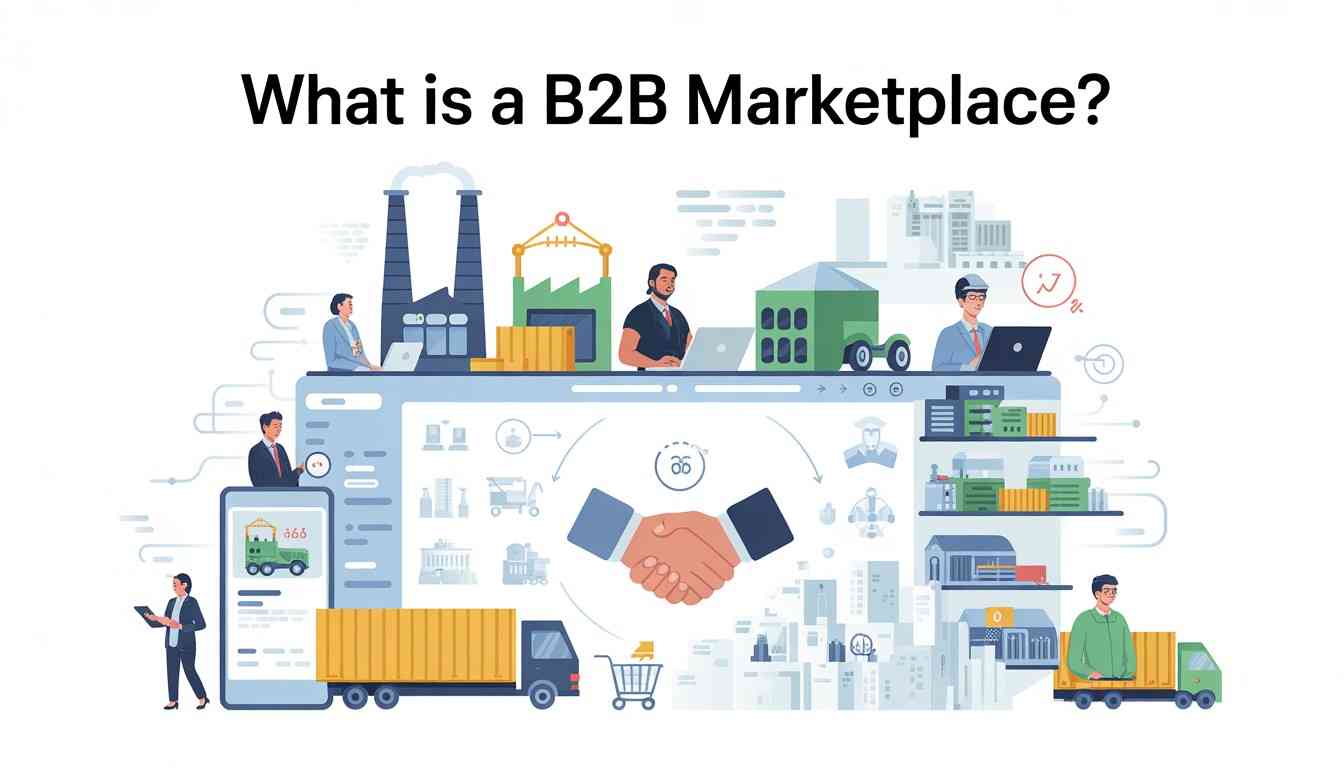
A B2B marketplace (business-to-business marketplace) is an online platform where businesses buy and sell products or services to other businesses. Unlike B2C (business-to-consumer) platforms, these marketplaces focus on bulk transactions, wholesale pricing, and long-term partnerships.
Think of it as a digital hub where suppliers, manufacturers, wholesalers, and retailers connect. It brings them all together in one place. This is backed by strong B2B eCommerce development services that improve operations, user experience, and allow for scalable growth.
At its core, a B2B eCommerce platform acts as a bridge between businesses, enabling smooth transactions between buyers and sellers. Here’s how the process typically works:
Businesses sign up on the platform and list their products or services. They include details like pricing, minimum order quantities (MOQ), specifications, and availability.
Buyers browse the platform to find suitable suppliers. They compare listings based on factors like price, product quality, supplier reputation, and customer reviews.
Unlike B2C platforms with fixed prices, B2B transactions often involve bulk orders. Buyers submit requests for quotes (RFQs) to get customized pricing based on their specific needs.
Both parties negotiate key terms like pricing, shipping costs, delivery timelines, and payment conditions directly through the platform before finalizing the deal.
Once the agreement is in place, secure payment gateways and integrated logistics systems ensure smooth order processing, shipment, and delivery.
Understanding the different types of B2B marketplaces can help businesses choose the right platform based on their needs and industry focus.
These platforms focus on specific industries, such as healthcare, automotive, or textiles. They offer specialized products and cater to niche audiences. This ensures higher relevance and expertise.
Horizontal marketplaces serve multiple industries and provide a wide range of products, such as office supplies, equipment, and machinery. They are ideal for businesses with diverse purchasing needs.
In managed marketplaces, the platform operator controls pricing, product quality, and logistics. This ensures consistency, reliability, and a better overall buyer experience.
Open marketplaces allow any seller to join. This offers greater flexibility and a broader product selection, but they may have less control over quality and standardization.
Here are some of the most well-known B2B eCommerce platforms that have transformed global trade:
These platforms have changed how businesses interact and transact globally. They make sourcing, negotiation, and procurement faster, more transparent, and efficient.
The increasing use of B2B marketplaces is not random. It comes from clear benefits that help businesses grow and compete better. Here’s a breakdown:
Businesses can connect with buyers and suppliers worldwide. This breaks geographical barriers and opens up new market opportunities.
B2B platforms reduce marketing, operational, and distribution costs. This makes it less expensive to acquire customers and manage sales.
Streamlined digital processes enable faster sourcing, ordering, and communication compared to traditional procurement methods.
Buyers can quickly compare multiple vendors, prices, and reviews. This helps them make better purchasing decisions.
Businesses can grow and expand without a large investment in infrastructure. This makes it easier to scale as demand increases.
|
Feature |
B2B Marketplace |
B2C Marketplace |
|
Audience |
Businesses |
Individual consumers |
|
Order Size |
Bulk / Wholesale |
Small / Single items |
|
Pricing |
Negotiable |
Fixed |
|
Relationship |
Long-term partnerships |
One-time purchases |
|
Complexity |
High (contracts, logistics) |
Low |
In a world focused on digital transformation, B2B eCommerce has become essential.
Businesses today demand:
A business-to-business marketplace meets these needs and serves as a vital tool for modern companies.
While powerful, they’re not without challenges:
However, most platforms are evolving quickly to tackle these challenges with AI, verification systems, and smart logistics.
The future of online B2B platforms is exciting and tech-driven:
As more businesses go digital, B2B marketplaces will also become smarter and more efficient.
A B2B marketplace is more than just a trading platform. It acts as a powerful ecosystem that connects businesses, simplifies transactions, and creates global growth opportunities.
Whether you’re a supplier wanting to expand your reach or a buyer looking for reliable partners, using a business-to-business marketplace can change how you operate.
In today’s competitive market, going digital is not just an advantage; it’s a need.
A B2B marketplace is an online platform where businesses sell products or services to other businesses, often in bulk.
Popular examples include Alibaba, Amazon Business, IndiaMART, and Global Sources.
They earn through commissions, subscription fees, listing charges, or premium services.
B2B focuses on business-to-business transactions, including bulk orders and negotiations, while B2C targets individual consumers with fixed pricing.
Yes, most platforms offer verification systems, secure payments, and buyer protection features, but it’s still important to do your research.

© 2025 Crivva - Hosted by Airy Hosting Managed Website Hosting.