

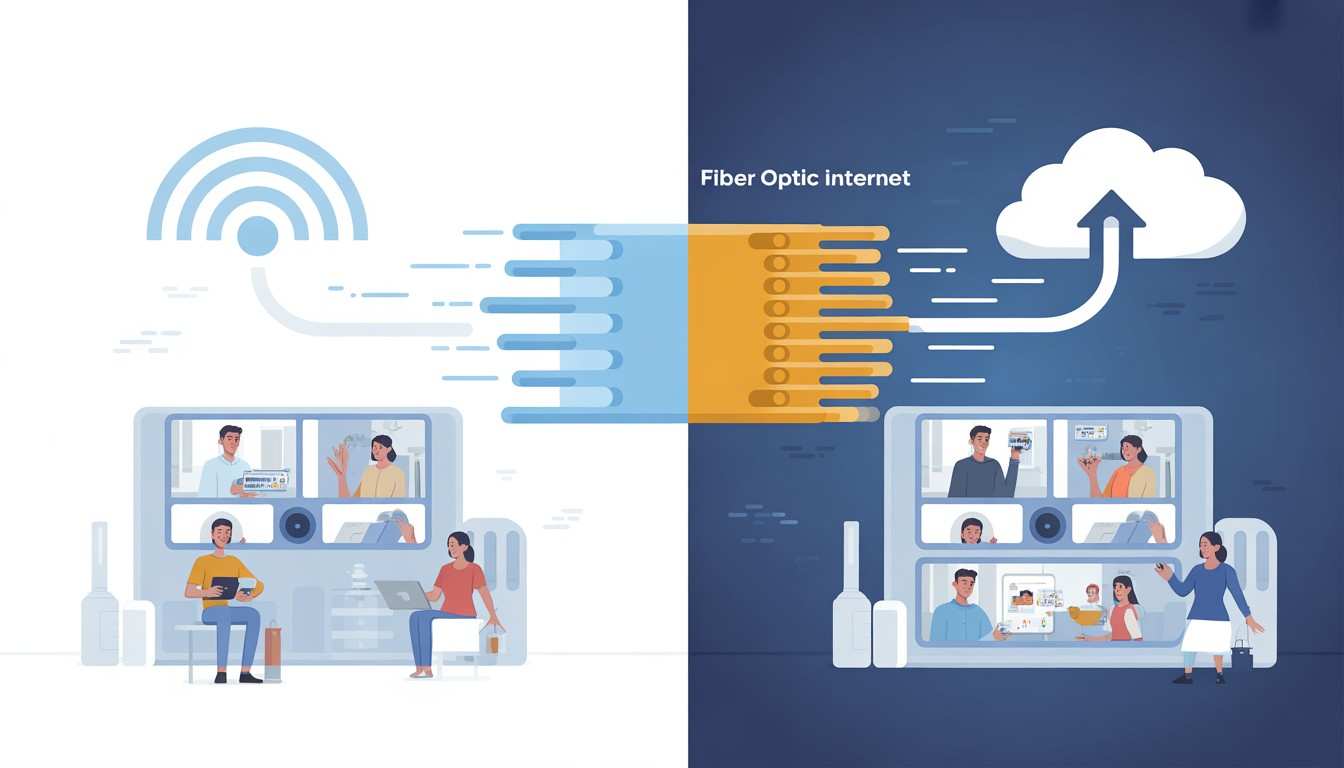
Was My Internet Really the Problem, or Was It Me? For years, I blamed myself.
If a video call froze mid-sentence, I assumed I had too many tabs open.
If a deploy failed or npm installs crawled, I figured my laptop was getting old.
If a cloud sync stalled, I shrugged and waited.
But one question kept coming back: what if the problem wasn’t my workflow, but my internet?
I work online, build things, ship code, and spend a lot of time in browsers and terminals. The internet isn’t a luxury for me; it’s essential. Still, I stuck with the same internet service provider because switching seemed annoying, risky, and honestly… unnecessary.
Until I switched to a fiber internet provider.
What changed after that was not just speed. It was how I worked, how I felt, and how much friction quietly disappeared from my day. This isn’t a sales pitch; it’s a personal breakdown of what surprised me after moving to fiber optic internet and why I wish I had done it sooner.
Before fiber, I had what most people would call decent broadband. Speeds were “up to” a certain number, latency was “acceptable,” and support was just… there.
But in practice:
The biggest issue wasn’t outages; it was inconsistency. My connection worked most of the time, but I never felt confident about it. That subtle uncertainty added friction to everything I did. I didn’t realize how much mental energy I spent managing my connection until I didn’t have to anymore.
The trigger was simple: back-to-back failed meetings and a production upload that took over an hour.
I started researching alternatives and kept finding discussions about fiber broadband and modern fiber networks. I looked at real user experiences, developer forums, and remote work communities, not just marketing pages.
What stood out:
I switched to a high-speed fiber internet plan from a provider that focused on reliability instead of gimmicks. (Later, I explored UbiFi, especially for areas where traditional fiber coverage is limited.)
This was the biggest shock.
With fiber internet, upload speeds finally matched download speeds, and that altered my workflow overnight.
Suddenly:
As someone who builds, tests, uploads, and collaborates constantly, this was the difference between waiting and working.
Speed gets all the attention, but latency is the quiet killer.
After switching to a fiber internet provider:
That low-latency connection made everything feel closer—servers, teammates, tools. It’s hard to explain until you experience it, but once you do, there’s no going back.
Before fiber, evenings were a gamble.
After switching:
A properly managed fiber network doesn’t stutter like older infrastructure often does. That consistency alone reduced stress more than I expected.
I used to second-guess everything:
With fiber optic internet, the connection stopped being a variable. That clarity saved time and mental energy.
Ironically, the faster internet helped me log off sooner. Tasks finished faster. Uploads didn’t linger. Calls didn’t need repeating. I wasn’t compensating for poor infrastructure anymore. That added up to real time saved every day.
When your internet just works, you stop worrying about it.
That confidence matters when:
A reliable internet service provider becomes part of your professional toolkit, not an afterthought.
One thing I learned while researching is that fiber access is growing, but it’s still uneven.
That’s where providers like UbiFi stand out, especially for people in rural or underserved areas. While not every location has direct fiber lines, hybrid and new network solutions are helping bridge the gap for remote workers who still need reliable connectivity.
The takeaway? Reliable internet isn’t just about location; it’s about choosing the right provider and technology.
Short answer: absolutely.
Long answer: I underestimated how much the poor internet shaped my daily experience. Switching to fiber broadband didn’t just make things faster; it removed friction I had normalized for years.
It felt like upgrading from a cluttered desk to a clean workspace, same work, completely different feel.
From my experience, fiber internet makes the biggest difference if you:
If your internet is part of how you earn a living, treating it as critical infrastructure, not a utility, is a mindset shift worth making.
The Quiet Upgrade That Changed My Work Life Switching my fiber internet provider didn’t give me a flashy “wow” moment. Instead, it gave me something better: calm.
Just consistent, fast, reliable connectivity that let me focus on building, shipping, and living.
If you’ve been putting up with a connection that’s “mostly fine,” consider this your sign. Sometimes the biggest productivity gains come from removing friction, not adding tools.
In my experience, yes, especially for uploads, latency, and consistency during peak hours.
Absolutely. Video calls, cloud tools, and collaboration feel significantly smoother.
It’s less painful than expected. Planning the transition properly minimizes downtime.
Direct fiber isn’t everywhere yet, but providers like UbiFi help deliver reliable high-speed connectivity where traditional options fall short.
If your work depends on the internet, the time saved and stress reduced easily justify the investment.

© 2025 Crivva - Hosted by Airy Hosting Managed Website Hosting.