

Cold plunge therapy has moved far beyond its origins in elite sports recovery and traditional hydrotherapy practices. Today, it has become a global wellness phenomenon adopted by professional athletes, biohackers, CEOs, fitness enthusiasts, and even celebrities who are constantly searching for reliable ways to enhance performance, mental clarity, and physical recovery.
High-profile figures such as elite endurance athletes, UFC fighters, and wellness influencers like Wim Hof have helped normalize the practice of cold water immersion. In modern wellness culture, stepping into a cold plunge is often seen as a discipline ritual that builds both physical resilience and psychological strength. Social media has further accelerated this trend, with ice bath challenges and recovery routines going viral across platforms, making the practice more accessible and desirable.
The growing popularity is driven by something deeper than trend culture. A commercial cold plunge tub is not just a wellness accessory; it is a performance and recovery tool that directly influences how the human body responds to stress. Users report improved energy levels, sharper focus, reduced muscle fatigue, and a stronger sense of mental control after consistent use. Whether used in elite training centers, wellness spas, or as an ice bath at home, cold immersion is now viewed as a cornerstone of modern recovery systems.
Cold water immersion is supported by a growing body of research in sports science, neuroscience, and physiology. Its effects extend beyond temporary refreshment and directly influence muscular recovery, inflammation pathways, and neurochemical balance.
After intense physical activity, muscle fibers undergo microscopic damage, which leads to soreness, stiffness, and inflammation. Cold exposure works by causing vasoconstriction, which temporarily reduces blood flow to the affected muscles. This limits the accumulation of metabolic waste products such as lactic acid and helps reduce post-exercise swelling.
When the body rewarms after exiting the cold plunge, blood circulation increases rapidly, delivering oxygen-rich blood to the muscles. This flushing effect accelerates the removal of waste products and supports faster tissue repair. For athletes and gym-goers, this means reduced downtime between training sessions and improved overall performance consistency.
This is one of the main reasons why recovery tubs and cold plunge systems are standard equipment in professional sports facilities.
Inflammation is the body’s natural response to stress and injury, but excessive or prolonged inflammation can delay recovery and contribute to discomfort. Cold water therapy helps regulate this response by lowering tissue temperature and slowing down nerve signal transmission.
As a result, pain perception is temporarily reduced, and swelling is minimized. This makes cold plunging especially beneficial for individuals recovering from intense workouts, joint strain, or repetitive stress injuries.
From a physiological perspective, cold exposure also influences cytokine activity, which plays a role in regulating inflammation in the body. This is why many sports medicine professionals recommend cold therapy as part of post-training recovery protocols.
One of the most compelling effects of cold immersion is its impact on the brain. Studies suggest that exposure to cold water can significantly increase dopamine levels, sometimes by as much as 200–250 percent. Dopamine is a neurotransmitter associated with motivation, focus, and reward-driven behavior.
This spike in dopamine does not create a short-lived “high” like stimulants. Instead, it contributes to sustained alertness, improved mood stability, and a stronger sense of mental clarity throughout the day. Many users describe feeling calm yet energized after a cold plunge session.
Additionally, repeated exposure to cold stress helps train the nervous system to become more resilient. This adaptive response improves the body’s ability to handle stress in everyday life, making cold water therapy not just a physical recovery tool but also a mental conditioning practice.
Choosing the right commercial cold plunge tub requires understanding how different systems operate, what level of convenience they offer, and how they align with your usage goals. Each type varies significantly in cost, maintenance requirements, and performance capability.
Portable inflatable or collapsible cold plunge tanks are designed for accessibility and affordability. They are often used by beginners, home users, or small fitness setups that want to experience cold water therapy without investing in complex systems.
These units are typically filled manually with water and ice, making them highly dependent on external cooling sources. While they lack advanced automation, they provide a practical entry point into cold immersion therapy.
The main advantage of these systems is flexibility. They can be set up in backyards, garages, or even indoor spaces with proper drainage. However, their performance is limited by temperature inconsistency, as maintaining a stable cold environment requires continuous ice replenishment.
They are best suited for individuals exploring cold water therapy for the first time or those building a basic ice bath at home setup.
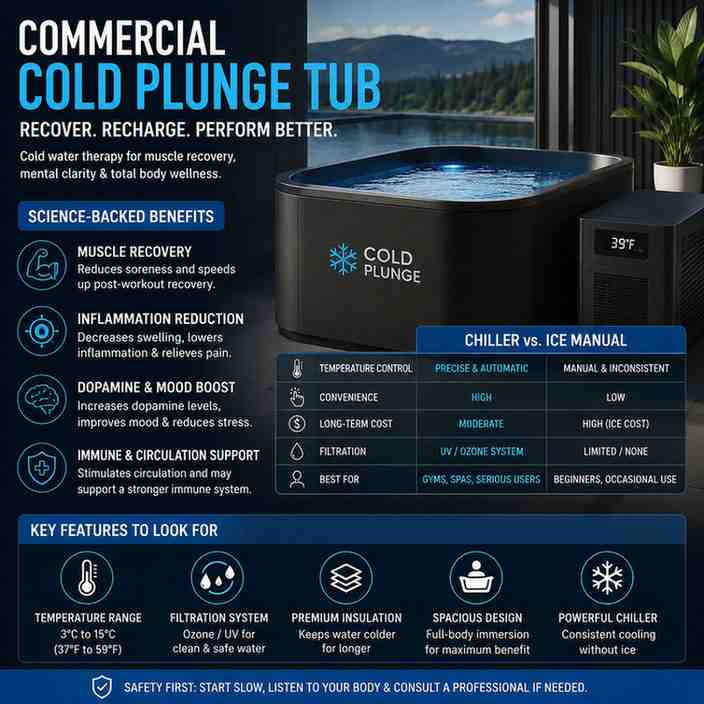
Chiller-integrated systems represent the most advanced and convenient form of cold plunge technology. These units use an external or built-in water chiller for cold plunge that continuously regulates water temperature without requiring ice.
This category is widely used in commercial gyms, recovery studios, luxury spas, and high-performance training environments where consistency and hygiene are critical. Many systems also include advanced filtration technologies such as ozone sanitation and UV purification, ensuring the water remains clean for repeated use.
The biggest advantage of chiller-based systems is precision. Users can set exact temperature levels, often ranging between 3°C and 15°C, and maintain them consistently regardless of external conditions. This creates a reliable and professional-grade recovery experience.
While these systems require a higher initial investment and occasional maintenance, they are widely considered the most efficient and scalable solution for long-term use.
Some users choose to convert standard chest freezers into makeshift cold plunge tubs. This method is popular due to its low cost and ability to achieve very low temperatures without specialized equipment.
However, this approach comes with significant limitations. Chest freezers are not designed for human immersion, which introduces safety risks related to electricity and waterproofing. Additionally, these setups often lack proper filtration systems, making water hygiene difficult to maintain over time.
Despite these drawbacks, DIY freezer conversions remain attractive to budget-conscious users who are willing to accept higher maintenance demands and potential safety concerns in exchange for lower upfront costs.
| Feature | Chiller-Integrated System | Ice-Based Manual System |
|---|---|---|
| Temperature Control | Highly precise and automated | Dependent on manual ice addition |
| User Convenience | Very high, minimal effort required | Low, frequent maintenance needed |
| Running Costs | Electricity usage over time | Continuous ice purchase cost |
| Water Hygiene | Built-in filtration systems | Limited or no filtration |
| Consistency | Stable and reliable temperature | Fluctuates frequently |
| Ideal Usage | Commercial gyms, serious home users | Beginners and casual users |
When investing in a commercial-grade system, focusing on engineering quality and long-term usability is essential. The right features not only improve performance but also reduce maintenance costs and extend product lifespan.
A high-quality system should offer precise temperature control, ideally within a range of 3°C to 15°C. Stability is just as important as range, as fluctuating temperatures can reduce the effectiveness of cold therapy.
Since cold plunge tubs involve repeated use of the same water, hygiene becomes a critical factor. Systems equipped with ozone or UV filtration help eliminate bacteria, viruses, and organic contaminants, ensuring safe and clean usage.
Proper insulation reduces energy consumption and helps maintain consistent water temperatures for longer periods. This is particularly important for commercial environments where the system runs frequently throughout the day.
A good cold plunge tub should allow full-body immersion without discomfort. Commercial users should also consider foot space, depth, and entry design to accommodate different body types and usage frequency.
For beginners, cold exposure should be approached gradually and with controlled progression to allow the body to adapt safely.
Beginners should start with moderately cold water, typically between 10°C and 15°C. This range is cold enough to activate physiological benefits without overwhelming the nervous system.
The first sessions should be short, usually between two to three minutes. Over time, as tolerance improves, duration can be gradually increased based on comfort and adaptation.
The initial exposure to cold water triggers a natural stress response, often causing rapid breathing. Learning to control breathing through slow, deep inhalation helps regulate the nervous system and improves tolerance.
Entering the tub slowly allows the body to adjust more effectively to temperature shock. After exiting, it is recommended to let the body warm naturally instead of immediately taking a hot shower, as this supports better physiological adaptation.
Individuals with cardiovascular conditions or underlying health issues should consult a medical professional before attempting cold immersion therapy. It is also advisable for beginners to avoid solitary sessions.
A commercial cold plunge tub represents a significant investment in both physical recovery and long-term wellness performance. While entry-level options provide an accessible introduction, premium chiller-based systems offer a far more consistent, hygienic, and professional-grade experience.

© 2025 Crivva - Hosted by Airy Hosting Managed Website Hosting.