


I found them in my grandmother’s cookbook.
It was the one I keep wrapped in a tea towel, tucked carefully on the second shelf—not because it’s valuable in the way antiques are valuable, but because it still smells faintly like nutmeg and old paper. The one with her looping handwriting in the margins. Notes like “add more cinnamon” next to the apple pie recipe. A splatter of grease on the page for Sunday roast. A faint pencil mark where she must have doubled a sauce and didn’t want to forget.
I hadn’t opened it in years.
My daughter was turning eight, and she had requested apple pie “the way Grandma used to make it,” even though she’d only tasted it once when she was very small. I pulled the book out gently, the way you do when something matters. And that’s when I saw them.
Not one hole. Not two. But a scattering of perfect, tiny pinpricks running along the spine. Too neat to be accidental. Too intentional to ignore.
At first, I told myself it was age. Paper gets brittle. Bindings weaken. But something felt wrong. This wasn’t decay—it was consumption.
Then I saw the culprit.
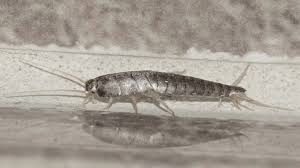
Under the kitchen sink, where the light barely reaches, something darted across the cabinet floor. A tiny, silvery-gray bug, moving with a strange, fish-like wiggle. It was fast. Startlingly fast. It slipped into a crack and disappeared before my brain fully caught up with what my eyes had seen.
I googled it once. That was all it took.
And I knew, right then, this wasn’t a bug I could just squash and forget. This was something else entirely. This was a quiet, methodical attack on the things I loved most.
I didn’t just need silverfish control.
I needed someone who understood that they weren’t just killing bugs—they were saving memories.
I needed My Pest Exterminator.
Here’s what makes silverfish so unsettling. They don’t want your leftovers. They don’t care about crumbs or sugar or whatever’s in your pantry.
They want your history.
Silverfish feed on starches and cellulose. That means the glue in book bindings. The backing of old photographs. The cotton fibers in heirloom linens. Wallpaper paste in a vintage bathroom. The edges of documents you assumed were safe because no one ever touches them.
They love dark, damp, undisturbed places—the exact places where we tend to store the things that matter most.
That box of love letters in the basement? A five-star restaurant.
Your child’s first finger-painting, rolled carefully and placed in the attic? Dessert.
Old textbooks, journals, sheet music, photo albums? An all-you-can-eat buffet.
Silverfish don’t rush. They don’t announce themselves. They don’t destroy things dramatically. They nibble. Slowly. Quietly. Over months. Sometimes years.
They won’t make you sick. They won’t bite you. But they will absolutely break your heart.
By the time you notice the damage, they’ve already been living alongside you for a long time—filing your life away one bite at a time. You’re not dealing with pests. You’re dealing with tiny, tireless archivists, and they are very good at their job.
My first move was panic.
I went straight to the hardware store and bought the strongest bug spray I could legally get my hands on. I emptied cabinets. I sprayed along baseboards. I sprayed under sinks, behind toilets, along the edges of closets.
For a week, I felt triumphant.
Then I pulled an old college textbook off the shelf. More holes.
The spray had only killed the ones I could see—the scouts, the wanderers, the unlucky few who crossed open ground. It did nothing for the colony I couldn’t see. The ones living comfortably inside wall voids, under insulation, behind baseboards, feeding and reproducing in total peace.
DIY silverfish control is a frustrating game of whack-a-mole that you are destined to lose. You’re treating the symptom, not the disease. And while you’re spraying shadows, your most precious belongings are paying the price.
By the time I called My Pest Exterminator, I felt defeated—and honestly, embarrassed. Like I should have known better.
The technician who came out—let’s call him Ben—didn’t arrive with bravado or a one-size-fits-all pitch. He showed up with a flashlight, a notebook, and curiosity.
He asked questions no one else had asked me.
“Do you have a basement?”
“Is it damp down there?”
“Any old books or paper stored near exterior walls?”
“Have you noticed yellowed paper that feels crumbly?”
He didn’t just look for bugs. He looked for conditions.
He crouched near my bookshelf and pointed to a hairline gap where the baseboard met the floor.
“Highway,” he said.
He checked the humidity in my bathroom with a small handheld meter.
“Perfect spa for them,” he nodded.
My house wasn’t just a structure—it was a map. And he knew how to read it.
For the first time, I felt like someone was solving the mystery instead of spraying poison at shadows.
Ben explained that silverfish control isn’t about brute force. It’s about strategy.
First: humidity. Silverfish thrive in moisture. He recommended a dehumidifier for the basement—a simple, practical fix I’d never even considered.
Second: targeted treatment. Instead of spraying everything, he applied a fine powder into wall voids, cracks, and hidden spaces—places sprays will never reach. Strategic barriers along their highways.
Finally, he introduced an Insect Growth Regulator (IGR).
“It doesn’t kill them,” he explained.
“It stops their kids from growing up. It breaks the family tree.”
It was smart. Layered. Long-term. Not a temporary truce, but a plan to actually win.
Ben didn’t just treat my house. He gave me homework.
“Get rid of cardboard boxes,” he said. “Cardboard is a silverfish carnival.”
He showed me how to check under sinks for slow leaks. He explained why sealing gaps mattered. He told me to store books, photos, and papers in airtight plastic bins.
He made me a partner in the solution.
That weekend, I bought clear tubs and spent hours transferring memories—photo albums, handwritten letters, my grandmother’s cookbook. It was emotional. But it also felt empowering.
For the first time, I wasn’t just hoping my memories would survive. I was actively protecting them.
The real success didn’t come overnight.
It came months later.
I needed that apple pie recipe again. I opened the plastic bin, pulled out the cookbook, and for the first time, I didn’t flinch. I didn’t scan the spine. I didn’t hold my breath.
I just opened the book. Found her note. And started baking.
That’s what My Pest Exterminator gave me.
Not just pest control—but peace. The return of a quiet confidence in my own home. The ability to enjoy my belongings without fear.
Ben even called to check in. No upsell. Just a human voice asking if everything was still okay.
And that meant everything.
If you’re seeing silvery flashes in the dark—or worse, finding the holes they leave behind—don’t wait.
Don’t let silverfish turn your history into their lunch.
Call My Pest Exterminator. Let them be the detectives. The strategists. The protectors of your past.
Your memories deserve a fighting chance.

© 2025 Crivva - Hosted by Airy Hosting Managed Website Hosting.