

The Silent Role of Ground Engineering in Infrastructure
Civil infrastructure rarely fails because of a single dramatic error. More often, problems emerge slowly-cracks that widen, surfaces that settle unevenly, water that finds its way where it shouldn’t. Many of these issues trace back to decisions made below ground level, long before a structure becomes visible.
Engineers working in roads, retaining systems, basements, and land development know that soil behavior is unpredictable. Load changes, moisture movement, and seasonal cycles can stress even well-designed structures. Over the last few decades, ground engineering practices have evolved to address these realities with smarter material choices and better system thinking.
This article looks at how modern ground engineering approaches reduce long-term risk, where projects tend to fail, and why certain material systems have become standard tools without being headline features.
Surface elements-concrete finishes, pavements, wall facades-tend to receive most of the attention during planning and construction. They are visible, measurable, and easier to explain to stakeholders.
Subsurface systems work differently. Their job is preventive rather than expressive. When they succeed, nothing noticeable happens. When they fail, remediation is disruptive and costly.
Several recurring issues stem from insufficient ground planning:
These are not design mistakes in isolation. They are often coordination gaps between structural planning, drainage strategy, and soil behavior assumptions.
Water exerts pressure in ways that aren’t always intuitive. Hydrostatic pressure behind a basement wall or beneath a foundation slab increases gradually. By the time symptoms appear-damp patches, efflorescence, hairline cracks-the system is already under stress.
Traditional drainage solutions relied heavily on gravel layers and pipe networks. While effective, these systems depend on precise installation and ongoing performance of surrounding soil conditions. In constrained urban projects or areas with variable soil composition, relying on aggregates alone introduces risk.
Modern ground systems focus on controlled water movement rather than simple displacement. The idea is to guide water safely away from vulnerable zones without allowing pressure to accumulate.
Rather than viewing soil reinforcement and drainage as separate tasks, many engineers now approach them as interconnected functions.
A stable ground system often needs to:
This integrated thinking has led to wider adoption of engineered material layers designed to perform specific roles consistently across large areas.
Manufacturers offering geosynthetics products often categorize these materials by function rather than by project type. That distinction matters because it allows designers to select materials based on performance requirements, not just precedent.
When separation, filtration, and drainage are addressed together, systems tend to age more predictably and require less intervention.
Drainage is not limited to horizontal planes like roads or slabs. Vertical structures-retaining walls, basement walls, podium levels-face constant interaction with groundwater and surface runoff.
In these applications, traditional backfill drainage methods can struggle due to:
Engineered drainage layers installed directly against structural elements reduce reliance on perfect backfill conditions. They create defined flow paths that remain functional even as surrounding soils shift.
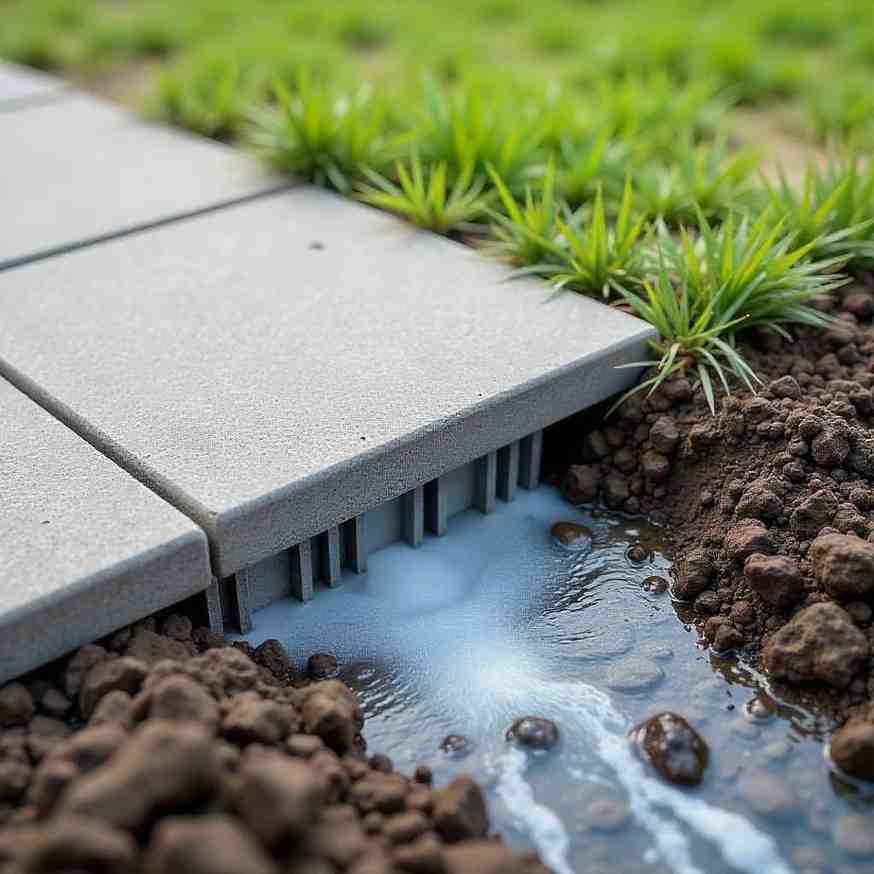
One commonly specified solution in such cases is the dimple board, which creates an air gap and drainage channel between the structure and surrounding soil. Its role is not structural reinforcement but pressure management-ensuring that water never becomes a load-bearing concern.
Used correctly, this type of system supports waterproofing membranes and extends their service life by reducing constant exposure to moisture pressure.
Even the best materials cannot compensate for poor installation. Ground engineering failures are often attributed to material choice when the real issue lies in execution.
Common site-level challenges include:
Experienced contractors recognize that subsurface systems require the same attention to detail as visible finishes. Clear installation guidelines, supervision, and sequencing matter.
That said, materials designed with installation tolerance in mind tend to perform more consistently across varied site conditions. Systems that maintain function even with minor installation deviations reduce overall project risk.
Urban construction places unique demands on ground systems. Limited excavation depth, adjacent structures, and tight staging schedules reduce margin for error.
In dense environments:
These constraints favor engineered solutions that combine multiple functions into thinner profiles. Instead of thick gravel layers, designers specify materials that achieve separation, drainage, and protection within compact assemblies.
This shift is not about innovation for its own sake. It reflects practical adaptation to site realities.
Infrastructure design is increasingly evaluated over decades rather than years. Life-cycle cost analysis has become standard practice in public and commercial projects alike.
Ground systems contribute directly to longevity by:
When these systems perform well, downstream elements-concrete, asphalt, finishes-experience fewer failures. The savings appear gradually, often long after construction teams have moved on.
This long-term perspective explains why project owners are more willing to invest in subsurface quality, even when it doesn’t produce visible features.
One challenge in ground engineering is the disconnect between design intent and on-site understanding. Specifications may call for certain functions, but contractors may be more familiar with traditional methods.
Bridging this gap requires:
Resources that explain not just what to install but why it matters tend to improve outcomes. When site teams understand the function of a drainage or separation layer, they are more likely to protect it during subsequent work.
The future of ground engineering is less about dramatic new materials and more about predictable performance. Designers value systems with well-documented behavior across climates and soil types.
Trends suggest continued focus on:
As infrastructure demands increase and construction environments become more constrained, the quiet role of subsurface engineering will only grow in importance.
Projects that perform well over time rarely do so by accident. They reflect early decisions to respect soil behavior, manage water intelligently, and treat the ground as an active part of the structure rather than a passive support.
When those principles guide material selection and installation, the results tend to speak for themselves – usually by not needing attention at all.

© 2025 Crivva - Hosted by Airy Hosting Managed Website Hosting.