

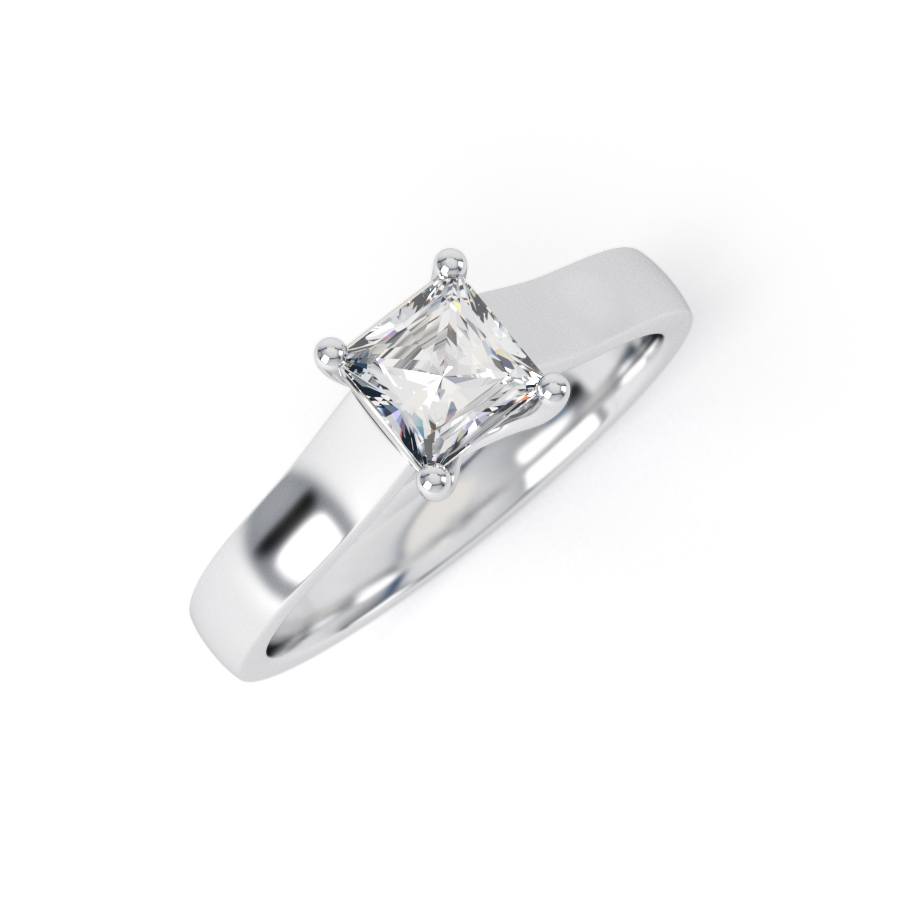
The diamond set wedding band as we know it today is a relatively modern concept — but the idea of adorning a wedding ring with precious stones stretches back centuries. Understanding how diamond set wedding rings have evolved over the decades illuminates where the most significant current trends come from — and helps modern buyers place their own choices within a broader design context.
For centuries, the wedding ring was a simple band of gold. Its symbolism lay in its continuous form — an unbroken circle — rather than in any ornamentation. Diamonds and other gemstones were associated with wealth and status, and the undecorated band was worn across virtually all social classes as the universal symbol of matrimony.
The concept of a diamond-set wedding band as a distinct product category is largely a 20th-century development, driven by changes in diamond availability, manufacturing capability, and marketing.
The post-war period saw a significant expansion in diamond availability as new mines opened and cutting technology improved. The emergence of the ‘eternity ring’ as a gift category — marketed explicitly as an anniversary present to follow the plain wedding band — began the process of normalising diamond-set bands in the broader market.
The marketing of diamond jewellery in this era was transformative: De Beers’ ‘A Diamond is Forever’ campaign (launched in 1947) permanently associated diamonds with romantic commitment, laying the cultural groundwork for the normalisation of diamond wedding rings that followed in subsequent decades.
The channel setting — which suspends diamonds between two parallel metal rails with no exposed prongs — was developed and popularised during this period. It offered a new level of practicality: a diamond-set band that could be worn continuously with less maintenance risk than prong settings.
The clean, geometric lines of channel-set bands also aligned naturally with the design aesthetics of the era — structured, contemporary, and unembellished. Channel setting remains one of the most popular choices for diamond wedding bands today.
The development of more refined pavé setting techniques — and the broader availability of very small, precisely cut melee diamonds — brought the continuous-sparkle pavé band into mainstream accessibility. Previously, the skill required to set small stones in this configuration meant pavé was largely confined to high-end fine jewellery. Improved manufacturing made it widely available.
The pavé wedding band became the ‘upgraded’ alternative to the plain gold band for a generation of buyers — a choice that offered significantly more visual impact without the visual formality of a channel set or the traditional eternity style.
The 2010s saw a meaningful shift in how wedding jewellery was worn and perceived. The stacked ring — multiple bands worn together on the same finger — became a significant trend, driven partly by social media and partly by a broader cultural preference for personalised, layered jewellery over single-statement pieces.
Diamond-set bands took on a new role as part of a curated stack rather than a singular choice beside an engagement ring. Thinner, more delicate bands with finer stone work found new demand as stackable elements — a trend that continues today.
The most significant current shift in diamond wedding band buying is the move toward lab-grown stones and greater interest in ethical sourcing. Lab-grown diamonds offer the same visual and physical properties as natural stones at a significantly lower price — enabling buyers to access higher total carat weights or better quality grades within the same budget.
Design-wise, there is a marked move away from uniform, catalogue styles toward individual expression. Asymmetric settings, mixed metals, rose-cut stones, and bespoke commissions are all seeing increased interest as buyers seek something that genuinely reflects their specific identity rather than a convention.
The evolution of diamond wedding bands consistently shows that the most enduring choices are those rooted in genuine quality rather than trend. The channel and pavé setting styles that emerged decades ago remain completely relevant today because they’re built on sound principles — good craftsmanship, secure stone setting, and designs that wear well over time.
For modern buyers, the lesson is straightforward: prioritise quality and considered design over whatever happens to be photographing well on social media this season.
The diamond set wedding band has a rich and interesting history that continues to evolve. Understanding that evolution — where styles came from, why they endured, and what drives current trends — gives modern buyers a more informed and confident foundation for their own choices.
Diamond-set wedding bands became widely popular in the latter half of the 20th century, as improvements in diamond availability, cutting technology, and setting techniques made them accessible to a broader market. The eternity ring as a specific product category was largely a post-war development.
The stacked ring trend involves wearing multiple thinner bands on the same finger — often mixing plain bands, diamond-set bands, and stones of different types. It emerged prominently in the 2010s and remains popular as a way to personalise and evolve a ring style over time.
Trends come and go, but the underlying principles of good jewellery design — quality craftsmanship, secure setting, proportionate design — are timeless. Classic settings like pavé, channel, and rub-over have remained relevant for decades and are unlikely to look dated in the way that very specific fashion-driven designs might.
Yes — substantially. The availability of lab-grown diamonds at significantly lower prices than natural equivalents has enabled buyers to access larger carat weights or higher quality grades within the same budget, changing the value calculation for diamond-set bands meaningfully.
Launched by De Beers in 1947, it is widely considered one of the most successful advertising campaigns in history. It permanently linked diamonds with romantic permanence in the cultural imagination, and played a direct role in normalising diamond jewellery as an expected component of engagement and marriage — including the diamond wedding band.

© 2025 Crivva - Hosted by Airy Hosting Managed Website Hosting.