


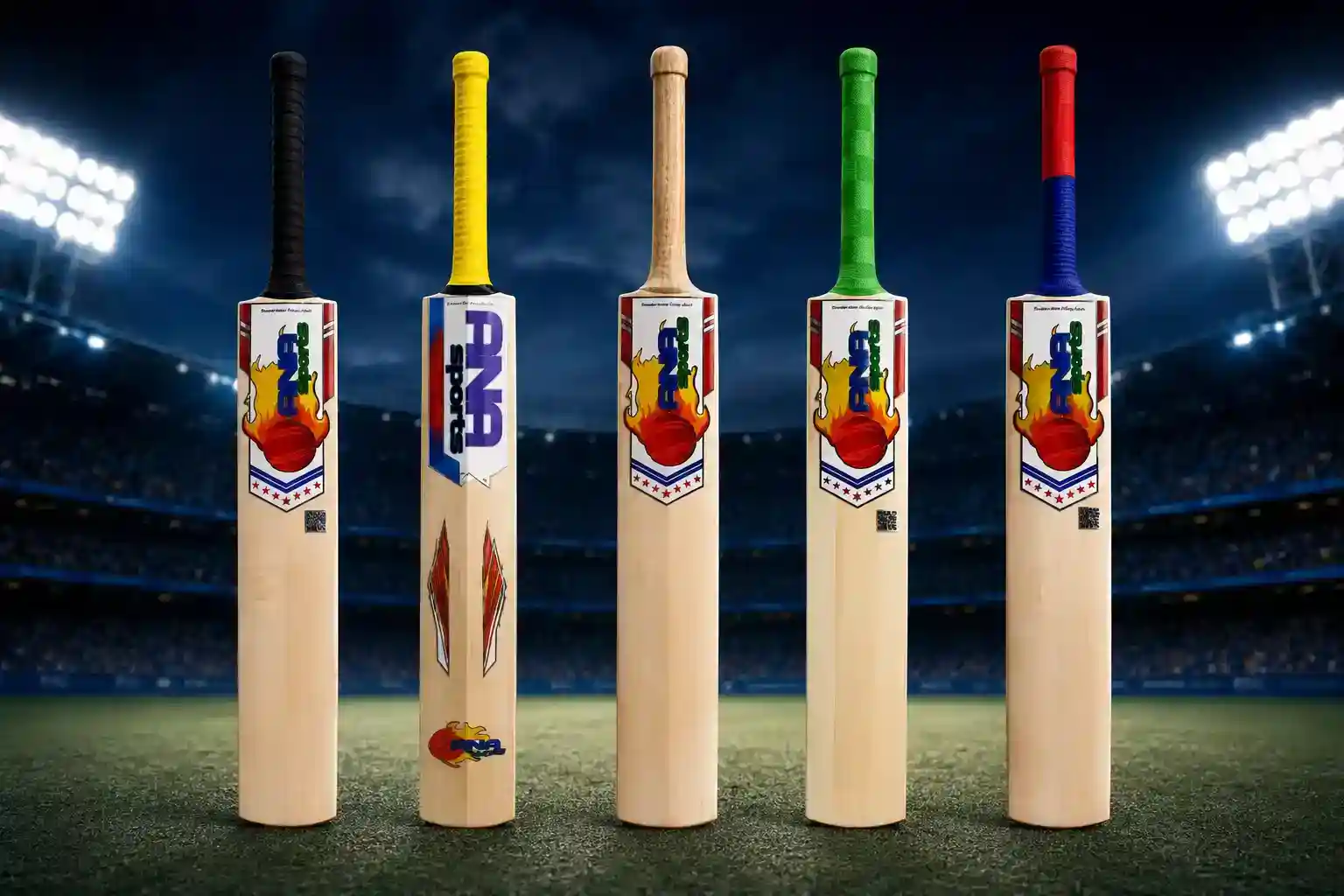
Every cricketer, from a weekend club player to an international professional, has felt it at least once. That rare moment when the ball meets the bat perfectly, producing almost no vibration, no sting in the hands, and a carry that seems to defy the laws of physics. That feeling comes from the sweet spot of a cricket bat, and understanding it could genuinely transform how you select your bat, how you train, and ultimately how you play.
Let us go beyond the basics and break down what the sweet spot actually is, where it sits, and why it should influence every serious batsman’s gear decision.
In simple physics terms, the sweet spot is the node point of a bat. It is the location where the bat’s natural vibration is minimised upon impact. When a ball strikes this zone, the energy transfer is maximised and the feedback to the hands is minimal. It feels effortless because it actually is, mechanically speaking.
For cricketers, this translates to cleaner timing, greater power with less physical effort, and reduced risk of hand fatigue or discomfort over long innings. Mistiming a ball off the sweet spot, by even a few centimetres, creates that jarring vibration you feel up into the forearms.
This is where it gets nuanced. The cricket bat sweet spot position is not fixed. It varies significantly based on the bat’s profile, the willow grade, and the pressing technique used by the manufacturer.
On a traditional English willow bat with a middle-to-low profile, the sweet spot typically sits roughly 15 to 18 cm from the toe. On a modern high-spine bat designed for aggressive pulls, scoops, and upper cuts, the sweet spot may be positioned higher, closer to the middle of the blade or even towards the shoulders.
For players who face a lot of fuller deliveries or play on flat tracks, a bat with a lower sweet spot is ideal. For stroke players who favour the pull shot and the cut, especially on bouncier pitches, a mid-to-high sweet spot serves better.
You do not need a lab. Hold your bat firmly by the handle and tap along the face from toe to shoulder with a cricket ball. As you move through the blade, there will be a point where the ball just pings differently. A clean, resonant thud rather than a hollow knock. That is your sweet spot.
You can also feel it intuitively. Any section of the bat that, upon impact, sends vibration into your hands is outside the sweet spot. The area that feels almost silent and solid is the zone you are looking for.
Many players make the mistake of buying a bat based purely on aesthetics or brand name. Spending five minutes doing this simple tap-test in a store, or even watching a slow-motion review video, can reveal whether a bat’s sweet spot aligns with your natural hitting zone.
The hitting zone is shaped by your height, stance, backlift, and dominant scoring areas. A tall player who drives on the up will naturally make contact higher on the blade than a compact player who plays close to the body.
The game has changed dramatically in the last two decades. Twenty20 cricket has pushed manufacturers to reconsider where they build the sweet spot. The traditional Test match bat was engineered for the drive, with a full face, extended middle, and sweet spot in the lower-mid zone.
Today’s white-ball bats, particularly those used in T20 leagues, are built with a sweet spot that is more generous and sits higher. This accommodates modern strokes like the ramp, the reverse scoop, and the lap shot, all played with the bat in unorthodox positions, making contact above the traditional hitting zone.
Here is something many players overlook: a poorly maintained bat can lose its sweet spot characteristics over time. Cracking, water damage, or over-knocking can alter the structural integrity of the blade, shifting the node point or reducing its effectiveness.
According to MCC guidelines on bat care, available on the Lord’s Cricket website, proper knocking-in can add months, sometimes seasons, to a bat’s productive life, preserving the sweet spot zone throughout.
Elite batsmen often work with their coaches to identify their personal hitting zone, the area of the bat face where they most naturally make contact during their dominant strokes. That data is then used to specify custom bats where the sweet spot aligns precisely with that zone.
Virat Kohli is known to prefer bats with a pronounced mid-profile sweet spot, matching his on-side game and his preference for playing straight. Players like David Warner, who favours horizontal bat shots, often use bats engineered with a broader sweet spot across the lower blade.
You may not be ordering custom bats, but the principle applies: know where you hit the ball most, then find the bat whose sweet spot matches that zone.
The sweet spot of a cricket bat is not a magic zone that adds runs. It is a zone that rewards timing. When you make contact there, good timing sounds and feels exceptional. Off the sweet spot, even a physically powerful shot lacks carry.
Spend time understanding your bat. Tap-test it, observe where your grass or net marks cluster after sessions, and use that information to make smarter choices. Cricket is a game of inches, and in many cases, those inches live in the sweet spot.
For a full range of professional cricket equipment built with these principles in mind, visit ANA Sports and explore their collection.

© 2025 Crivva - Hosted by Airy Hosting Managed Website Hosting.