

Cars in 2026 are no longer just machines that respond to pedals and steering wheels. They actively observe the road, assess potential risks, and support drivers in real time.
So what does smart safety really mean today?
In simple terms, smart vehicle safety relies on advanced sensors and intelligent software to identify hazards early and help drivers avoid accidents before they happen.
These systems don’t replace the driver, but they significantly reduce human error, which remains the leading cause of road collisions.
From automatic emergency braking and lane-keeping assistance to driver monitoring and predictive alerts, modern safety technology is changing the way we drive making everyday journeys safer, calmer, and more controlled.
When vehicles are sourced, calibrated, and supported through a reputable auto dealership, these safety systems are correctly configured from the start and maintained to manufacturer standards, ensuring they perform reliably when it matters most.
This guide explains how smart safety systems work in 2026, the role of sensors in modern vehicles, how intelligent driver assistance reduces accidents, and what the future holds for road safety.
Smart car safety systems are built-in technologies designed to reduce the risk of accidents by continuously watching the road, nearby vehicles, and the driver’s behaviour.
Unlike older safety features that reacted after an impact, today’s systems focus on prevention, stepping in before a situation becomes dangerous.
Common smart safety features found in modern vehicles include:
Together, these systems reduce reaction time, improve awareness, and support safer decision-making behind the wheel.
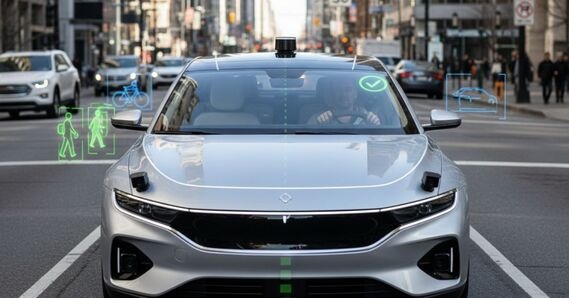
Sensors are the foundation of smart vehicle safety. They act like extra eyes and ears, constantly scanning the environment and feeding information to the car’s control systems.
In 2026, most vehicles rely on a combination of sensor types:
Radar tracks objects at long distances and works reliably in rain, fog, and darkness. It’s essential for collision warnings, adaptive cruise control, and emergency braking.
Cameras read lane markings, detect pedestrians and cyclists, recognise traffic signs, and monitor road conditions. They are crucial for lane support and driver awareness features.
These sensors operate at short range and are mainly used for parking assistance and low-speed manoeuvres, helping drivers avoid kerbs, walls, and nearby vehicles.
LiDAR builds a detailed 3D view of the surroundings, allowing precise distance measurement and object recognition, especially useful in complex urban environments.
All of this data is processed instantly, allowing the car to react faster than a human could in many situations.
In modern vehicles, intelligent safety systems don’t “think” like humans, but they do learn patterns, recognise risk, and respond consistently.
For example, modern systems can:
These systems work quietly in the background, supporting the driver rather than distracting them.
Driver assistance features are designed to support, not replace, the driver. They provide guidance, alerts, and gentle corrections while keeping the human fully in control.
Key benefits of driver assistance systems include:
By reducing small mistakes, these systems help prevent serious accidents that often result from momentary lapses in attention.
Yes, and the evidence continues to grow.
Recent road safety studies show that vehicles equipped with modern driver assistance systems experience significantly fewer collisions, particularly at urban speeds.
Accident severity has also declined, with fewer serious injuries reported in vehicles using automatic braking and lane support.
The wider impact includes:
While no system is perfect, smart safety has proven to be one of the most effective advancements in road safety over the past decade.
Despite the benefits, smart safety systems are not foolproof.
Drivers still need to:
Smart safety works best when combined with responsible driving, not used as a replacement for it.
Looking beyond 2026, safety technology is moving toward greater connectivity and anticipation rather than reaction.
Key developments include:
Cars sharing information with traffic lights, road signs, and other vehicles to warn of hazards ahead.
Vehicles adapting safety responses based on driving conditions and patterns over time.
Cars contact emergency services automatically after a serious collision, even if the driver is unconscious.
These improvements aim to reduce accidents further and improve emergency response times when incidents do occur.
Driving in 2026 is safer than ever, not because cars drive for us, but because they support us better. Smart safety systems, powered by sensors and intelligent processing, reduce everyday risks and help drivers avoid mistakes that once led to serious accidents.
Choosing a vehicle with modern safety features isn’t just about convenience, it’s about protecting yourself, your passengers, and everyone else on the road.
As traffic grows and roads become more complex, smart safety is no longer a luxury. It’s becoming a standard part of responsible, confident driving in the modern world.

© 2025 Crivva - Hosted by Airy Hosting Managed Website Hosting.