

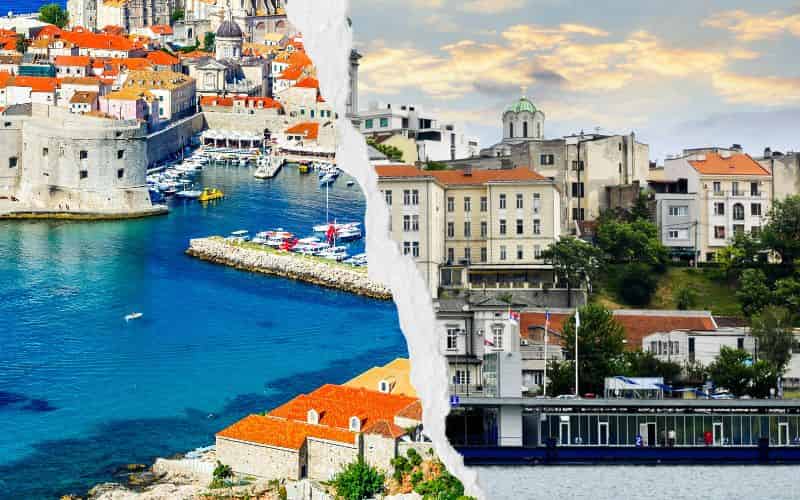
People compare Serbia and Croatia like they’re rivals. They’re not. They’re neighbors with very different personalities, and they reward different kinds of travelers. If you arrive expecting the same experience on both sides of the border, this is where trips often go wrong.
I’ve spent time in both, in busy seasons and quiet ones, eating in local places and moving slowly enough to notice patterns. The choice between Serbia and Croatia isn’t about which is “better” in general. It’s about which one fits the way you actually travel.
If you’re weighing routes that include Serbia luxury holiday experiences or Croatia cultural and heritage tours, this breakdown should help you decide honestly—without the brochure language.
Croatia makes an impression immediately. Blue water. Stone towns. Sunlight bouncing off old walls. You understand the appeal within hours.
Serbia takes longer. It’s landlocked, more inward-looking, and less interested in selling itself quickly. Cities feel lived-in rather than curated. You don’t “get it” on day one—and that’s part of the deal.
If you want instant visual payoff, Croatia delivers faster. If you’re comfortable letting a place reveal itself slowly, Serbia rewards patience.
Croatia’s landscapes are obvious. The Adriatic coast, islands, waterfalls, medieval towns perched above the sea. Even casual photos look good.
In Croatia, nature is part of the daily route. You don’t work hard to see it.
Serbia’s beauty is subtler. Rolling hills, wide rivers, forests, and mountains that don’t announce themselves.
In Serbia, landscapes feel more internal. You drive longer. You stop less often. But when you do—especially along the Danube or in central Serbia—it feels earned.
Most people miss this because they’re chasing highlights instead of atmosphere.
Croatia’s cities feel finished.
Dubrovnik is dramatic but heavily managed. Split balances daily life and tourism fairly well. Zagreb is orderly and calm, with a strong café culture.
Serbian cities feel rougher around the edges—and more alive.
Belgrade doesn’t try to impress. It’s loud, social, and layered. Cafés spill onto sidewalks year-round. Nights stretch late. History isn’t boxed behind museum glass; it sits next to construction sites and bars.
This is where trips often split. Some travelers love Belgrade’s energy. Others find it chaotic. Croatia’s cities feel easier to “consume.” Serbia’s cities ask you to participate.
Croatia’s food follows the coast inland.
Seafood, olive oil, grilled fish, pasta in Istria, lighter flavors overall. Meals feel seasonal and restrained, especially near the Adriatic.
Serbian food is heavier and unapologetic.
Grilled meats, stews, bread, cheese, kajmak. Portions are generous. Lunch matters. You don’t nibble your way through the day.
If you like long, social meals that leave you full, Serbia wins. If you prefer lighter eating with variety and wine by the sea, Croatia fits better.
Most people eat too much too fast in Serbia and feel sluggish. Pace yourself. Locals do.
Croatia is more expensive, especially in summer.
Accommodation, dining, and transport prices rise sharply along the coast from June to September. You pay for location and demand. Budget travel is possible, but planning matters.
Serbia is consistently affordable.
Food, accommodation, transport—everything costs less, and quality doesn’t drop. Even higher-end hotels and dining feel reasonably priced.
If budget matters, Serbia is easier. If cost is secondary to setting, Croatia justifies its prices—most of the time.
Croatia has a narrow peak season.
Summer is beautiful and crowded. Spring and fall are ideal but shorter. Winter works mainly for cities like Zagreb.
Serbia is steadier year-round.
Summer brings festivals. Autumn is calm. Winter is atmospheric, especially in Belgrade. You rarely feel overwhelmed by tourism.
This matters more than people expect. Crowds change how places feel. Croatia requires better timing. Serbia is forgiving.
Both countries carry heavy history, but they present it differently.
Croatia packages its heritage well. Museums, signage, walking routes, UNESCO sites. You can understand a place quickly.
Serbia’s history is less curated. You learn through conversations, neighborhoods, and contradictions.
If you enjoy structured learning, Croatia’s cultural and heritage tours work naturally. If you prefer absorbing history indirectly—through daily life, Serbia feels more authentic.
Croatia’s nightlife is seasonal and location-based. Beach clubs, summer festivals, island parties.
Serbia’s nightlife is constant.
Belgrade’s river clubs, late dinners, and social culture don’t depend on season. Even weekdays feel alive.
If nightlife matters, Serbia stands out. If it’s optional, Croatia’s quieter evenings by the sea feel restorative.
Croatia is easier for first-time Balkan travelers.
English is widely spoken. Infrastructure is polished. Routes are intuitive.
Serbia requires slightly more engagement. English is common in cities, less so in smaller towns. Transport works, but you pay attention more.
Neither is difficult. One just asks more awareness.
Choose Croatia if you:
Want coastal scenery and historic towns
Prefer structured sightseeing
Travel in summer and enjoy beach culture
Don’t mind crowds with good planning
Value visual impact
Choose Serbia if you:
Enjoy cities with strong personalities
Like food-driven travel
Prefer fewer tourists
Travel year-round
Want depth over polish
This is why Serbia luxury holiday experiences often focus on urban culture, gastronomy, and wellness, while Croatia cultural and heritage tours lean into coastal history and curated routes.
Serbia and Croatia don’t compete. They complement.
Croatia shows you beauty easily. Serbia makes you work a little—and then gives you something more personal. One isn’t better. One is just better for you, depending on how you travel.
If you want clarity, scenery, and structure, choose Croatia. If you want character, conversation, and fewer filters, choose Serbia.
Or, if you have time, do both. Just don’t expect the same experience on each side of the border. That’s where disappointment starts.
Croatia is generally easier and more intuitive.
Serbia, across accommodation, food, and transport.
Yes, especially in cities. Use normal travel awareness.
In coastal hotspots, yes. Timing and location matter.
Serbia for hearty meals and value. Croatia for seafood and lighter flavors.
Helpful in Croatia for coastal exploration. Optional in Serbia’s cities.
Yes. They connect well by road and rail if planned properly.

© 2025 Crivva - Hosted by Airy Hosting Managed Website Hosting.