

Healthcare mobile apps have become essential tools for patient engagement, remote care, diagnostics, and health data management. From appointment scheduling and telemedicine to electronic health records and remote monitoring, these applications handle highly sensitive personal and medical data. As a result, security and compliance are not optional-they are fundamental requirements in healthcare mobile app development. Failure to address them can lead to data breaches, legal penalties, and loss of patient trust.
Healthcare data is among the most valuable and vulnerable types of information. Medical records, prescriptions, diagnostic reports, and personal identifiers are prime targets for cybercriminals. A single security lapse can expose patients to identity theft and healthcare providers to severe regulatory consequences.
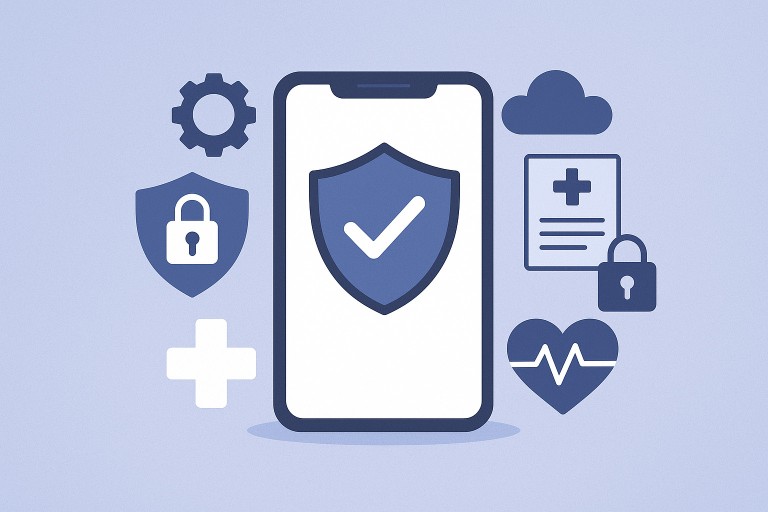
Compliance ensures that healthcare apps follow legal and ethical standards for data protection, while security focuses on safeguarding systems against threats. Together, they form the backbone of reliable and trustworthy healthcare mobile applications.
Healthcare apps must comply with regional and international regulations depending on where they operate. Some of the most important compliance standards include:
Compliance requires secure data storage, controlled access, audit trails, and clear user consent mechanisms. Developers must understand these regulations early in the project to avoid costly redesigns later.
One of the most critical security practices in healthcare mobile app development is data encryption. Sensitive information must be encrypted both at rest and in transit to prevent unauthorized access. Secure cloud storage, encrypted databases, and protected backups ensure data integrity even if systems are compromised.
Professional developers also avoid storing unnecessary data and implement data minimization strategies. This reduces exposure and simplifies compliance requirements.
Healthcare apps serve multiple user roles, such as patients, doctors, nurses, and administrators. Each role requires different access levels. Strong authentication mechanisms like multi-factor authentication and biometric verification help prevent unauthorized access.
Role-based access control ensures users can only view or modify information relevant to their role. This limits internal risks and supports compliance with healthcare regulations.
Healthcare apps often integrate with external systems such as wearable devices, payment gateways, diagnostic tools, and hospital management systems. Insecure APIs are a common entry point for cyberattacks.
To mitigate this risk, developers use token-based authentication, API gateways, and rate limiting. Regular audits of third-party services ensure that integrations meet security and compliance standards without introducing vulnerabilities.
Security threats evolve constantly, making ongoing testing essential. Vulnerability assessments, penetration testing, and code reviews help identify weaknesses before they can be exploited. Automated security testing combined with manual reviews provides comprehensive coverage.
Real-time monitoring and logging enable rapid detection of suspicious activities. This proactive approach minimizes damage and ensures compliance with incident reporting requirements.
User trust depends heavily on transparency. Healthcare apps must clearly explain what data is collected, how it is used, and who has access to it. Explicit consent mechanisms and easy-to-understand privacy policies are mandatory for compliance.
Users should also have control over their data, including the ability to update information, manage permissions, or request deletion where applicable. These practices enhance user confidence and align with global privacy standards.
Security and compliance require specialized expertise. Working with an experienced healthcare app development company ensures that regulatory requirements, secure architecture, and best practices are embedded from the start. Skilled developers help healthcare organizations avoid common pitfalls, reduce risks, and build scalable, compliant solutions.
The right development partner does more than write code-they act as strategic advisors who understand healthcare workflows, legal requirements, and security challenges.
Healthcare mobile apps handle sensitive patient information such as medical records, prescriptions, and personal identifiers. Protecting this data is a top priority. Developers implement strong data protection practices like encryption, secure storage, and controlled access to prevent data leaks. Patient privacy is maintained by collecting only essential data and ensuring transparency about how information is used and stored.
Compliance with healthcare regulations is mandatory for any healthcare mobile app. Standards such as HIPAA, GDPR, and local healthcare data laws define how patient information should be handled. These regulations require strict access controls, audit logs, consent management, and secure data transmission. Following compliance standards not only avoids legal penalties but also builds trust among users and healthcare providers.
Strong authentication mechanisms play a vital role in healthcare app security. Multi-factor authentication, biometric login, and role-based access ensure that only authorized users can access sensitive data. Different access levels are assigned to patients, doctors, and administrators, reducing the risk of internal data misuse and unauthorized exposure.
Healthcare apps often rely on APIs and third-party services such as wearable devices, payment gateways, and analytics platforms. Securing these integrations is essential to avoid vulnerabilities. Developers use token-based authentication, secure API gateways, and regular audits to ensure third-party services comply with security and compliance standards.
Cyber threats evolve constantly, making continuous security testing essential. Regular vulnerability assessments, penetration testing, and code reviews help identify risks early. Timely security updates and patches protect apps from newly discovered threats and ensure long-term reliability.
Security and compliance require deep technical and regulatory expertise. Working with an experienced healthcare app development partner ensures that best practices are followed from the planning stage to post-launch maintenance. A reliable development team focuses on secure architecture, compliance readiness, and future scalability, helping healthcare organizations deliver safe and trustworthy mobile applications.
Security and compliance are the foundation of successful healthcare mobile app development. From encryption and access control to regulatory adherence and continuous monitoring, every aspect of the app must be designed with protection and trust in mind. By prioritizing these elements and partnering with experts, healthcare organizations can deliver secure, compliant, and user-friendly mobile applications that truly improve patient care while safeguarding sensitive data.

© 2025 Crivva - Hosted by Airy Hosting Managed Website Hosting.