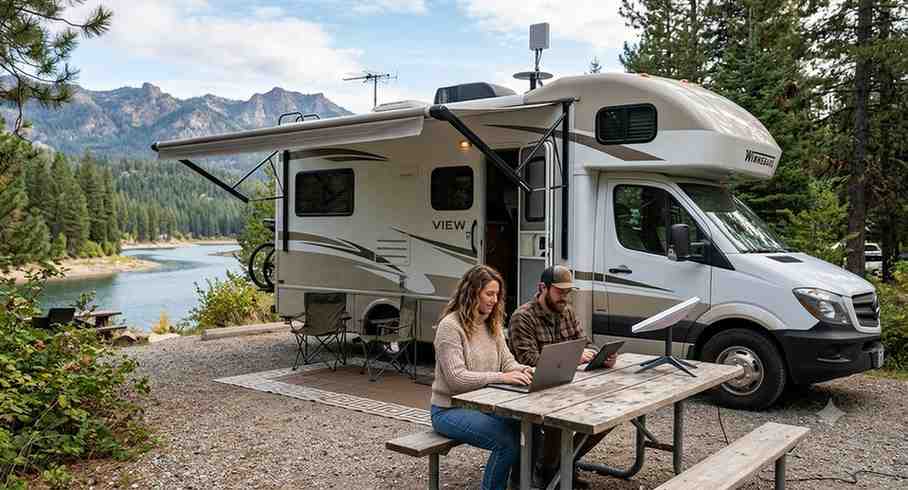


If you live in a rural area, you’ve probably wondered at some point, “Why is decent internet still such a struggle out here?” You check coverage maps, call providers, and read promises about “high-speed” connections. Yet, reality rarely matches those expectations.
This isn’t just frustrating; it can feel isolating. Remote work becomes unreliable. Online classes buffer endlessly. Software updates take hours. And video calls? They’re a gamble.
What many people don’t understand is that choosing a rural internet provider isn’t about finding the best option. It’s about picking the least painful trade-off. Unfortunately, these trade-offs don’t get enough attention.
This article takes an honest look at the compromises involved in internet service for rural areas. It’s free from hype, sales pitches, and the idea that there’s a perfect solution.
Let’s be honest: rural internet isn’t broken because people don’t want it, it’s broken because infrastructure is expensive.
Urban areas benefit from:
Rural regions don’t.
For internet providers in rural areas, laying fiber across miles of farmland or mountains often doesn’t make financial sense. That’s why rural users frequently rely on alternatives that come with limitations most city users never face. Understanding these trade-offs will help you set realistic expectations and make better choices.
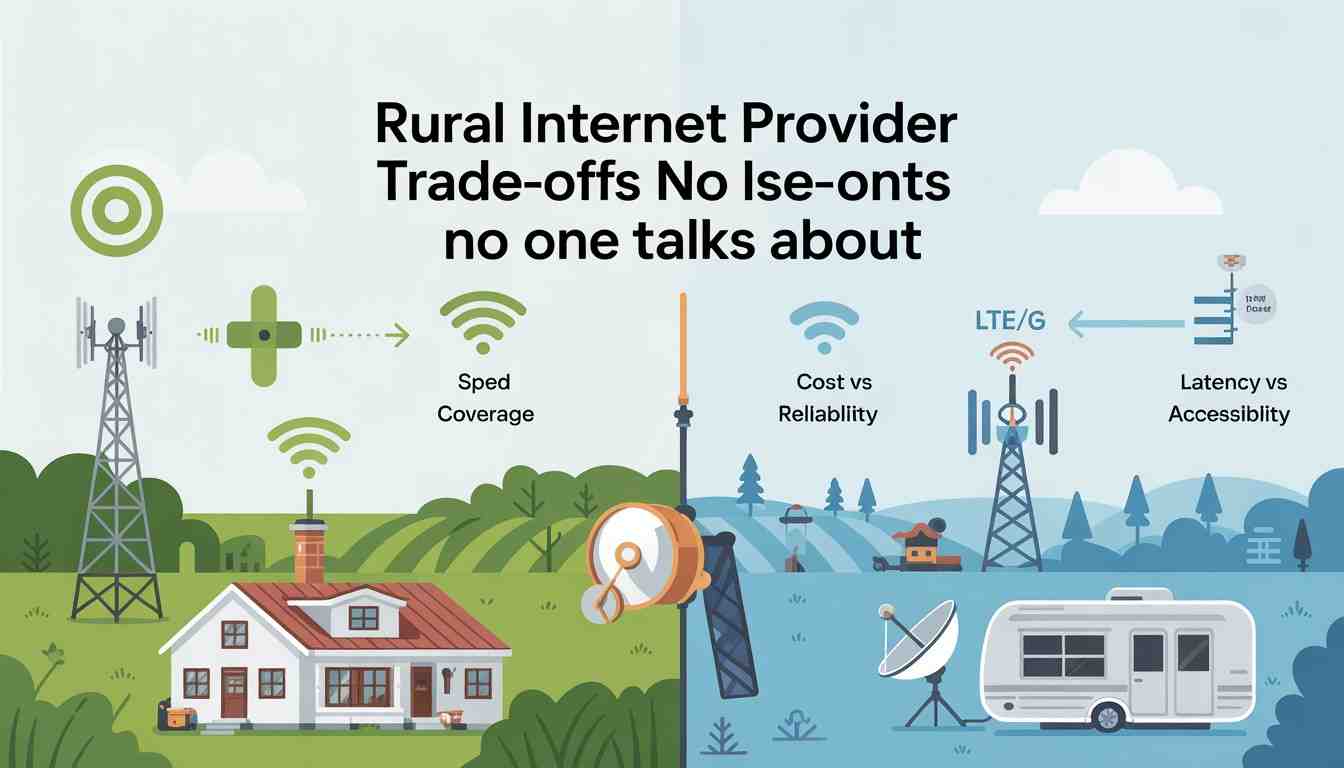
Choosing a rural internet connection is rarely about finding a perfect option. It’s about balancing access, performance, cost, and reliability against real-world limitations. These trade-offs shape how rural internet operates daily and explain why expectations and reality often do not match.
Many providers promote wide coverage, but coverage doesn’t guarantee reliability. Satellite and fixed wireless options often reach places fiber cannot. That’s a big win for accessibility, but it brings a cost: inconsistent performance.
You may notice:
This is typical for wireless internet in rural areas, especially when terrain or distance impacts signal strength. The reality is that coverage gets you online, but consistency determines whether you can stay productive.
The phrase high speed internet for rural areas sounds promising. But “high speed” is often relative.
In urban areas, it might mean 500 Mbps or more. In rural contexts, it may mean:
For streaming movies, that might be okay. But for developers, remote workers, or gamers, it’s a different situation. The speed listed on paper doesn’t always match what you experience in practice.
Speed gets all the attention. Latency rarely does.
Latency is the delay between your action and the response. High latency makes:
Satellite services are particularly affected by this because data has to travel long distances. If you’re selecting an internet provider in rural areas for work, latency is often more important than raw download speed, yet it seldom appears in marketing materials.
Unlimited internet sounds great until you read the fine print.
Some rural plans include:
This can be stressful if you:
Many rural users find themselves constantly monitoring their usage instead of just using the internet. That mental load is a trade-off few discuss.
Some services are incredibly easy to install; you just plug it in and aim an antenna.
But an easy setup doesn’t always mean long-term stability. Weather exposure, equipment alignment, and signal interference can gradually reduce performance. Fiber, when available, offers much more stability, but is often out of reach.
Most internet providers in rural areas make users choose between quick setup and lasting reliability.
Small regional providers sometimes offer excellent customer service. They understand the terrain. They know the challenges.
Larger providers may offer:
Support can often feel distant or scripted. There’s no clear winner here; it’s a balance between personalized service and scalable systems.
Having worked remotely and depended on the rural internet, I found that the toughest challenge wasn’t speed, but unpredictability. You can plan for slower speeds.
You can’t plan for sudden outages, fluctuating performance, or unexplainable slowdowns.
Most reviews focus on:
They rarely talk about the day-to-day experience of actually living with rural internet.
That’s the gap most new users fall into.
Some providers try to bridge the gap by emphasizing mobility, flexibility, and rural-first connectivity models. UbiFi often comes up in discussions about rural tech, not because it’s perfect, but because it approaches rural connectivity in a different way than traditional wired providers.
It’s one of several options people consider when fiber isn’t an option and mobile lifestyles or remote work require more flexibility. It’s not a silver bullet, just another method in a field full of compromises.
Instead of asking, “What’s the best rural internet?” ask:
The right rural internet provider depends entirely on your priorities, not marketing promises.
Currently, there’s no perfect solution for rural connectivity. Every internet provider in rural areas involves trade-offs that urban users rarely think about.
The key is honesty, both from providers and from ourselves. When you grasp the real limitations tied to coverage, speed, latency, and reliability, frustration can shift to informed decision-making. Rural internet may not be ideal, but with the right expectations, it can still support work, learning, and connection.
And until infrastructure truly keeps up, understanding these trade-offs is the closest thing to having an advantage.
Rural areas lack dense infrastructure, making it harder and more expensive to provide consistent high-speed connections.
It can be, but performance often depends on terrain, distance, and network congestion.
Latency is often more important, especially for video calls, cloud tools, and real-time collaboration.
Yes, many plans have usage limits or throttle speeds after reaching certain thresholds.
Gradually, yes, but expanding infrastructure takes time, funding, and long-term planning.

© 2025 Crivva - Hosted by Airy Hosting Managed Website Hosting.