


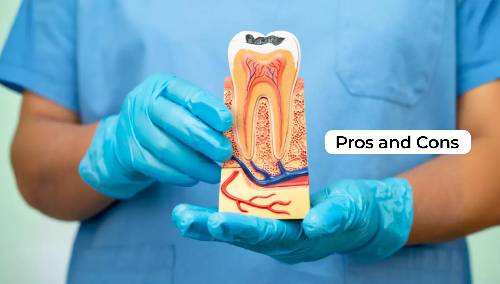
Root Canal Treatment has a reputation it doesn’t deserve. For many Australians, the idea alone causes anxiety, even though it is one of the most effective ways to relieve dental pain and save a natural tooth.
In simple terms, a root canal treats infection inside a tooth. When bacteria reach the inner pulp, pain, swelling and abscesses can follow. Root canal treatment removes the infected tissue, cleans the canals, seals the tooth, and restores its strength so it can function normally again.
At Bigger Smiles, we see firsthand how this procedure stops pain, prevents further complications, and helps patients avoid tooth loss. Below is a clear, honest breakdown of how it works, what recovery looks like, the real pros and cons, and what it costs in Australia.
Root canal treatment is a dental procedure used to remove infected or inflamed pulp from inside a tooth. The pulp contains nerves and blood vessels. Once it becomes infected due to decay, cracks, or trauma, the infection cannot heal on its own.
The process involves:
Removing infected pulp
Cleaning and disinfecting the canals
Filling and sealing the space
Restoring the tooth with a filling or crown
Once completed, the tooth is no longer infected and can continue to function like a regular tooth.
Not all tooth pain requires a root canal, but specific symptoms are strong indicators:
Persistent toothache that does not settle
Pain when biting or chewing
Sensitivity to hot or cold that lingers
Swollen or tender gums
A pimple-like bump on the gums
Tooth discolouration
History of deep fillings or dental trauma
If these symptoms are ignored, infection can spread beyond the tooth and cause more serious problems.
While every case is different, root canal treatment usually follows a predictable structure.
Your dentist examines the tooth, takes X-rays, and confirms the diagnosis. A local anaesthetic is used to keep you comfortable. A small opening is made to access the infected pulp, and the canals are cleaned.
In more complex infections, medication may be placed inside the canals to eliminate remaining bacteria. This stage may occur on the same day or during a follow-up appointment.
Once the infection is cleared, the canals are filled and sealed. A permanent filling or crown is then placed to protect the tooth and restore strength.
Recovery is usually straightforward.
Mild discomfort or tenderness for a few days is normal
Most people return to work or daily activities within 24 hours
Pain typically decreases rather than increases
The tooth is considered fully restored once the final filling or crown is placed. Until then, the tooth may be more fragile, especially for chewing.
Most patients feel normal again within a week.
Good aftercare plays a significant role in long-term success.
Chewing on the treated tooth until it is fully restored
Hard, crunchy or sticky foods
Smoking, which can slow healing
Skipping follow-up appointments
Stick to soft foods for a few days
Maintain good oral hygiene
Take recommended pain relief if needed
Contact your dentist if pain worsens or swelling develops
Understanding both sides helps you make an informed decision.
Saves your natural tooth
Eliminates infection at the source
Relieves dental pain
Prevents infection spreading
High long-term success rate
Preserves normal chewing and bite
Maintains jaw alignment
Less invasive than tooth replacement
More cost-effective than implants long term
May require multiple appointments
Temporary tenderness after treatment
A crown is often required
Small risk of complications
Treated teeth can become brittle
Retreatment may be needed in rare cases
Cost varies by tooth type and complexity
Not suitable for teeth with severe structural damage
Overall, when a tooth can be saved, the benefits of root canal treatment usually outweigh the drawbacks.
The cost of root canal treatment in Australia varies depending on several factors.
Front teeth: lower end of the range
Molars: higher cost due to multiple canals
Overall range: approximately $900 to $2,500 or more
Number of canals
Severity of infection
Need for specialist care
Whether a crown is required
Imaging and follow-up visits
Private health insurance may reduce out-of-pocket costs depending on your level of cover.
In most cases, yes.
Keeping your natural tooth:
Maintains chewing efficiency
Prevents neighbouring teeth from shifting
Avoids jawbone shrinkage
Reduces the need for costly replacements
Extraction is usually considered only when a tooth cannot be restored safely.
If you are searching for root canal treatment in Sydney, it’s essential to choose a clinic that prioritises accuracy, comfort, and long-term results.
At Bigger Smiles, treatment plans are based on preserving your natural teeth wherever possible and ensuring the restored tooth lasts for years, not months.
Root canal treatment may not be recommended if:
The tooth has fractured below the gum line.
There is insufficient tooth structure remaining
Advanced gum disease has compromised support
In these cases, alternative options are discussed to protect your overall oral health.
If you suspect a tooth infection:
Book an assessment promptly
Avoid delaying treatment
Follow aftercare instructions carefully
Complete the final restoration
Early action often means simpler treatment and better outcomes.
Most people recover within a few days, with full comfort returning in under a week.
Avoid chewing on the treated tooth, smoking, and hard foods until it is fully restored.
Costs usually range from $900 to $2,500, depending on the tooth and its complexity.
Modern techniques mean most patients experience slight discomfort during treatment.
If the tooth can be saved, a root canal is usually the better option for long-term oral health.
Know more https://biggersmiles.com.au/root-canal-treatment-pros-and-cons/

© 2025 Crivva - Hosted by Airy Hosting Managed Website Hosting.