


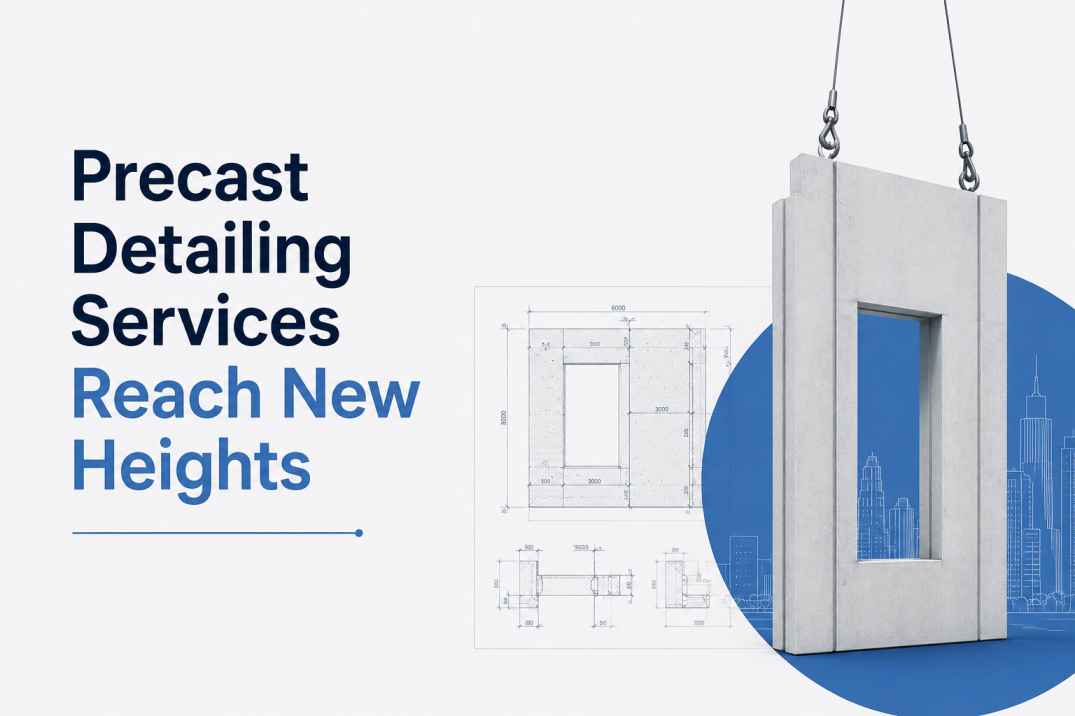
The demand for faster project delivery has changed the way buildings are designed, manufactured, and constructed. Across the architecture, engineering, and construction industry, prefabrication has become a preferred approach for improving efficiency without compromising quality. At the center of this transformation is precast concrete, a construction method that allows structural and architectural components to be manufactured in controlled environments before arriving on site. While the advantages of precast systems are widely recognized, their success depends on something that often goes unnoticed—accurate and well-developed precast panel detailing.
To support this growing need, Silicon Engineering Consultants continues to provide Precast Panel Detailing Services that help architects, engineers, contractors, and precast manufacturers work from clear, fabrication-ready documentation. By preparing detailed precast shop drawings that reflect project specifications and practical construction requirements, the company enables project teams to move confidently from design approval to manufacturing and installation.
Construction projects today involve far more coordination than they did a decade ago. A single building may include hundreds of precast components, each with unique dimensions, reinforcement layouts, embedded hardware, openings, connection details, and lifting arrangements. Every one of these elements must fit precisely with surrounding structural systems while meeting engineering requirements and production standards.
This growing complexity has elevated the importance of precast detailing. Instead of simply documenting design information, today’s detailing process serves as a communication bridge between designers, manufacturers, project managers, and installation teams. A well-prepared drawing package gives every stakeholder a common understanding of how each panel should be fabricated, transported, and installed, reducing uncertainty before work begins.
As projects continue to become larger and more technically demanding, expectations for documentation have also changed. Contractors and manufacturers are looking for drawing packages that are not only technically accurate but also practical to interpret during production and field operations. Clear dimensions, reinforcement placement, embedded components, panel identification, and connection details help fabrication facilities organize production while allowing erection teams to prepare for installation with greater confidence.
Precast shop drawings also contribute to smoother planning across multiple project stages. Fabricators can review manufacturing requirements early, engineers can verify structural details, contractors can evaluate installation sequences, and project managers can coordinate schedules more effectively. Having this information available before production begins helps minimize uncertainty and supports better decision-making throughout the project.
The construction industry has also seen significant advances in digital engineering technologies. Building Information Modeling (BIM), cloud collaboration platforms, and coordinated digital workflows have changed how project information is developed and shared. Rather than relying on isolated drawing files, project teams increasingly work within connected digital environments where information can be reviewed by multiple disciplines before fabrication starts.
These digital workflows have strengthened the role of precast detailing. Detailers can reference coordinated models, verify dimensions against project data, and identify potential coordination concerns earlier in the process. This allows drawing packages to reflect a more complete understanding of the project while supporting communication between architects, structural engineers, MEP consultants, and precast manufacturers.
Another factor driving the growth of precast detailing services is the industry’s increasing focus on predictable project delivery. Owners expect tighter schedules. Contractors face greater pressure to maintain productivity. Manufacturers require organized documentation that supports efficient production planning. Accurate detailing contributes to each of these objectives by providing reliable information before fabrication activities begin.
Comprehensive precast shop drawings typically include panel layouts, reinforcement details, openings, embedded items, lifting inserts, structural connections, dimensions, and identification marks. Together, these drawings become an important reference throughout manufacturing, transportation, site coordination, and installation. They help different teams work from the same information, reducing the need for repeated clarification during active construction.
The benefits extend beyond fabrication as well. Organized documentation supports logistics planning by helping teams understand panel sequencing, transportation requirements, and installation priorities. Since precast elements are often manufactured away from the project site, careful planning becomes essential to maintaining project schedules. Reliable detailing plays a valuable role in supporting these activities.
As sustainability becomes an increasingly important consideration in construction, prefabrication continues to gain attention for its ability to reduce material waste and improve manufacturing efficiency. Accurate detailing supports these objectives by providing clear production information before manufacturing begins. Better documentation contributes to better planning, allowing manufacturers to optimize production while maintaining project quality standards.
The demand for specialized detailing expertise is also increasing as buildings become more architecturally ambitious. Modern projects frequently incorporate unique panel shapes, custom façade systems, textured finishes, and complex connection requirements. These designs require experienced detailing teams capable of translating engineering intent into practical fabrication documents while maintaining consistency across hundreds of components.
Communication remains another important advantage of professional precast detailing. Construction projects involve numerous organizations, each with different responsibilities and priorities. Architects focus on design intent, engineers verify structural performance, manufacturers prepare production, contractors coordinate installation, and owners monitor overall project progress. Clear documentation helps connect these groups by presenting technical information in a structured and understandable format.
As digital construction practices continue to mature, precast detailing is becoming an even more integrated part of project delivery. Improved collaboration between design teams, manufacturers, and contractors allows potential issues to be discussed earlier, reducing interruptions later in the construction process. Instead of reacting to problems in the field, project teams are increasingly working to resolve questions during planning and detailing stages.
Industry experts expect this trend to continue as projects become more data-driven and collaborative. Technologies such as BIM coordination, laser scanning, cloud-based document management, and digital quality control are expanding the role of detailing beyond traditional drafting. Future detailing workflows will likely become even more connected with manufacturing automation, digital fabrication, and integrated construction management systems.
The continued growth of precast construction reflects a broader shift toward smarter project delivery methods. Success is no longer measured solely by how quickly components are produced or installed. It is also measured by how effectively information moves between project participants. Accurate detailing helps create that connection by translating design requirements into documentation that manufacturers and field teams can confidently use throughout the project.
As construction projects continue to evolve, dependable detailing remains an essential part of delivering high-quality precast systems. By investing in organized documentation and experienced detailing professionals, project teams can improve communication, support efficient fabrication, and maintain greater consistency across every stage of construction.
With the industry’s expectations continuing to rise, Silicon Engineering Consultants remains committed to delivering Precast Panel Detailing Services that align with modern construction practices and project requirements. Through detailed precast shop drawings, technical expertise, and a practical understanding of fabrication and installation processes, the firm continues to support architects, engineers, contractors, and manufacturers with documentation that helps transform complex designs into well-executed construction projects.
For more info visit https://www.siliconec.com

© 2025 Crivva - Hosted by Airy Hosting Managed Website Hosting.