


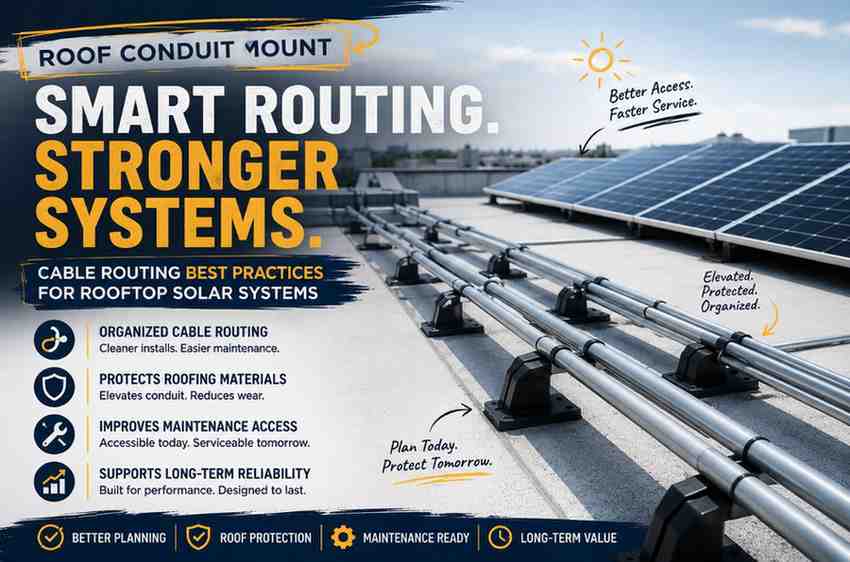
Cable routing rarely gets the same attention as modules, inverters, or mounting systems.
Most project discussions focus on production goals, attachment layouts, and electrical equipment. Wire routing is often addressed later in the design process, once the major components are already in place.
The problem is that poorly planned cable routing tends to show up years later. Contractors performing maintenance on older rooftop solar systems often encounter wiring pathways that have become difficult to access, conduit runs that interfere with service work, or electrical infrastructure not designed for long-term maintenance.
That’s one reason experienced installers pay close attention to cable routing from the beginning.
A well-organized routing strategy helps improve installation quality, simplify future service work, and support the long-term reliability of the entire photovoltaic (PV) system.
Every rooftop solar system relies on electrical pathways connecting modules, inverters, combiner boxes, monitoring equipment, and other system components.
Without a clear routing strategy, electrical infrastructure can quickly become difficult to manage.
Contractors often evaluate cable routing based on:
These factors become increasingly important as rooftop solar projects grow larger and more complex.
A roof conduit mount for solar installations helps support and organize conduit above the roof surface.
Rather than allowing conduit to rest directly on roofing materials, mounting solutions elevate electrical pathways and create separation between the conduit and the roof assembly.
On commercial projects, contractors frequently integrate solutions for pv wire management alongside conduit support planning to create cleaner and more maintainable electrical layouts.
The goal is not simply to support conduit. The goal is to create organized rooftop infrastructure that remains accessible throughout the life of the solar installation.
One reason wire routing deserves more attention is that rooftop environments are rarely simple.
Installers often work around:
Each obstacle creates potential routing challenges.
Without proper planning, conduit pathways can become congested, difficult to access, or vulnerable to future maintenance conflicts.
This becomes especially noticeable on large commercial rooftops where electrical infrastructure spans long distances.
The value of organized cable routing becomes obvious during maintenance and reroofing work.
Technicians frequently encounter systems where conduit and wiring pathways have become difficult to navigate because routing decisions were based solely on installation convenience.
Common issues include:
These problems rarely appear during system commissioning.
More often, they become noticeable years later when service work is required.
Commercial roofing professionals often view conduit routing through a different lens.
From a roofing perspective, electrical infrastructure should be installed to minimize unnecessary interaction with the roof surface.
Poorly supported conduit may contribute to:
A properly positioned roof conduit mount for solar installations can help reduce these concerns while supporting cleaner rooftop organization.
This is one reason conduit support is increasingly viewed as part of overall roof protection planning.
Experienced installers typically approach rooftop solar cable routing with long-term maintenance, roof protection, and system accessibility in mind.
Conduit runs should remain accessible after the array is installed. Technicians may need to inspect conductors, troubleshoot circuits, or replace equipment years after commissioning. Routing pathways that remain visible and reachable can significantly reduce service time.
Consistent conduit layouts make future troubleshooting easier. Labeling circuits, grouping conduit runs, and maintaining logical routing patterns help technicians quickly identify system components during maintenance visits.
Most commercial roofs will be replaced before the solar system reaches the end of its service life. Planning conduit pathways with reroofing in mind can simplify the removal of temporary systems and reduce labor costs during future roof replacement projects.
Electrical infrastructure should be supported above the roof surface whenever possible. Direct contact between conduit and roofing membranes can contribute to abrasion, drainage issues, and maintenance complications over time, particularly on large commercial rooftops exposed to thermal movement.
Long conduit runs experience expansion and contraction as temperatures fluctuate throughout the year. Installers should consider movement, rooftop obstacles, and environmental exposure when planning conduit support locations and routing paths.
Many rooftop solar systems eventually incorporate additional equipment such as energy storage, monitoring hardware, or communications infrastructure. Leaving room for future conduit pathways can help accommodate upgrades without disrupting existing electrical systems.
Today’s rooftop solar systems frequently include:
As projects become more sophisticated, cable routing becomes more important.
Industry research from the National Renewable Energy Laboratory (NREL) continues to emphasize the importance of system reliability, maintainability, and long-term performance throughout photovoltaic installations. Organized electrical infrastructure contributes to those goals by supporting safer and more serviceable rooftop systems.
A roof conduit mount for solar installations is designed to support and elevate electrical conduit above the roof surface while creating organized pathways for photovoltaic wiring. Proper conduit support helps keep electrical infrastructure accessible for inspections, maintenance, and future system modifications.
On commercial rooftops, conduit mounts also help reduce direct contact between conduit and roofing materials, thereby minimizing abrasion, improving drainage around electrical pathways, and simplifying rooftop service activities. When incorporated into a broader PV cable management strategy, conduit support systems contribute to cleaner installations and more maintainable rooftop solar infrastructure.
For contractors, the goal extends beyond simply supporting conduit. A well-planned solar conduit support system helps improve wire organization, protect the roof assembly, and create electrical pathways that remain serviceable throughout the life of the solar installation.
Cable routing may not be the most visible part of a rooftop solar system, but it often becomes one of the most important during maintenance and service work.
Experienced contractors understand that organized electrical pathways contribute to better accessibility, roof protection, and long-term system reliability.
A roof conduit mount for solar installations helps support those goals by creating cleaner, more manageable routing pathways that continue delivering value long after the project is complete.
A roof conduit mount is a support solution designed to elevate and secure conduit above rooftop surfaces while maintaining organized electrical pathways.
Proper cable routing improves maintenance access, supports safety, protects roofing materials, and helps create more organized electrical infrastructure.
By elevating conduit above the roof surface, mounting solutions help reduce abrasion, membrane wear, and unnecessary contact with roofing materials.
Common challenges include rooftop obstacles, equipment congestion, service accessibility, conduit organization, and future reroofing considerations.
Organized routing makes inspections, troubleshooting, repairs, and future modifications significantly easier.
Yes. Poorly planned conduit pathways often create additional work during solar removal and reinstallation. Organized routing typically simplifies reroofing activities.

© 2025 Crivva - Hosted by Airy Hosting Managed Website Hosting.