

Modern conversations around exercise increasingly focus on longevity rather than short bursts of intensity. Many people are re-examining how they move, not only during workouts but across everyday life. Persistent aches, repeat injuries, and frustration with stop-start fitness routines have encouraged a closer look at movement quality. Within this shift, Pilates often appears as a method that prioritizes control, awareness, and steady progression rather than speed or strain.
Rather than positioning exercise as something to push through, injury-aware training asks a different question: how does the body learn to move safely over time? Pilates fits naturally into this discussion because it treats movement as a skill to be practiced, refined, and supported.
Injury-aware training does not mean avoiding challenge or physical effort. It focuses on recognizing how the body responds to load, repetition, and fatigue. Many common exercise injuries stem from small issues that build quietly. Poor alignment, limited joint control, or unbalanced muscle activation may not cause immediate pain, yet they may contribute to ongoing discomfort.
High-intensity routines sometimes reward speed and volume at the expense of technique. When this happens, movement becomes habitual rather than intentional. Injury-aware approaches aim to reverse that pattern by slowing things down and re-introducing feedback into each movement.
Readers exploring broader health topics on platforms such as Crivva often encounter discussions about sustainable fitness habits and long-term wellbeing. Articles published under general wellness themes, such as those found through the Crivva submission hub crivva.com/submit-article/, tend to highlight consistency and body awareness over short-term results. Pilates aligns well with that editorial focus.
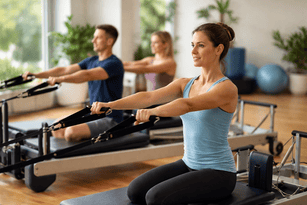
Pilates centres on controlled, deliberate motion. Exercises are usually performed with attention to posture, breathing, and muscle sequencing. This approach encourages people to notice how different parts of the body work together rather than isolating effort into a single muscle group.
One defining feature of Pilates is its emphasis on neutral alignment. Instead of forcing joints into extreme positions, movements often remain within ranges that support stability. This may assist people who feel uncertain about returning to exercise after injury or long periods of inactivity.
Breathing also plays a central role. Coordinated breathing patterns may help regulate tension and improve movement efficiency. Rather than holding the breath during effort, Pilates encourages steady breathing that supports rhythm and control.
These principles are frequently discussed in wider lifestyle and fitness articles shared through content platforms like Crivva. For contributors submitting educational pieces via pages such as https://crivva.com/submit-article/, Pilates offers a practical example of how mindful movement concepts translate into real-world exercise.
A common misunderstanding is that injury-aware training equals cautious or limited activity. In reality, it often involves learning how to load the body more effectively. Pilates does not remove challenge; it changes how challenge is applied.
Small, precise movements may reveal weaknesses that larger exercises hide. For example, subtle pelvic instability or shoulder control issues become more noticeable when exercises slow down. Addressing these gaps early may reduce the likelihood of compensations that lead to pain.
This focus on learning rather than pushing aligns with the idea that the body adapts best when it feels supported. Over time, confidence in movement tends to grow as control improves.
Pilates often sits between formal rehabilitation and independent exercise. Many movements mirror everyday actions such as bending, reaching, and rotating. Practicing these patterns with guidance may help people feel more comfortable carrying them into daily tasks.
In a clinical context, Pilates may be adapted to suit individual needs. References to Pilates with Delta Sports Therapy sometimes appear in discussions about how Pilates principles are applied alongside professional assessment. In these settings, exercises are often chosen based on how a person moves rather than following a generic sequence. This approach supports the idea that Pilates is not only a workout but also a method for re-educating movement habits.
By focusing on how the body responds to controlled load, Pilates may support a smoother transition from structured care to independent activity. This is particularly relevant for people who want to remain active without repeating previous setbacks.
Pilates principles are not limited to one demographic. Desk-based workers often experience stiffness and low-grade discomfort linked to prolonged sitting. Gentle, controlled movement may help reintroduce mobility without overwhelming tired joints.
Recreational athletes also explore Pilates to balance training demands. Sports that involve repetitive actions place stress on specific areas of the body. Pilates may assist by addressing imbalances and supporting coordination across the whole system.
People returning to exercise after time away often value methods that rebuild confidence. Injury-aware Pilates focuses on progress that feels manageable, which may encourage consistency rather than cycles of enthusiasm followed by pain.
Traditional measures of progress often focus on heavier weights, faster times, or longer sessions. Injury-aware training encourages a broader view. Improved posture, smoother movement, and reduced tension also indicate positive change.
Pilates supports this mindset by valuing quality over quantity. Movements are repeated not to exhaust the body but to refine how it moves. Over time, this may lead to greater efficiency and comfort during both exercise and daily life.
This perspective resonates with readers interested in practical wellbeing strategies rather than performance metrics alone. It also explains why Pilates frequently appears in conversations about sustainable fitness across online publishing platforms.
Injury-aware training invites people to pay attention to their bodies rather than override signals. Pilates offers a framework where awareness, control, and progression work together. It treats movement as something to be learned and maintained, not rushed.
As discussions around long-term health continue to grow, Pilates remains relevant because it adapts to individual needs and changing circumstances. By encouraging safer movement habits, it supports a more thoughtful relationship with exercise that extends well beyond the studio.
Pilates encourages a slower, more informed approach to movement that supports long-term physical confidence.

© 2025 Crivva - Hosted by Airy Hosting Managed Website Hosting.