

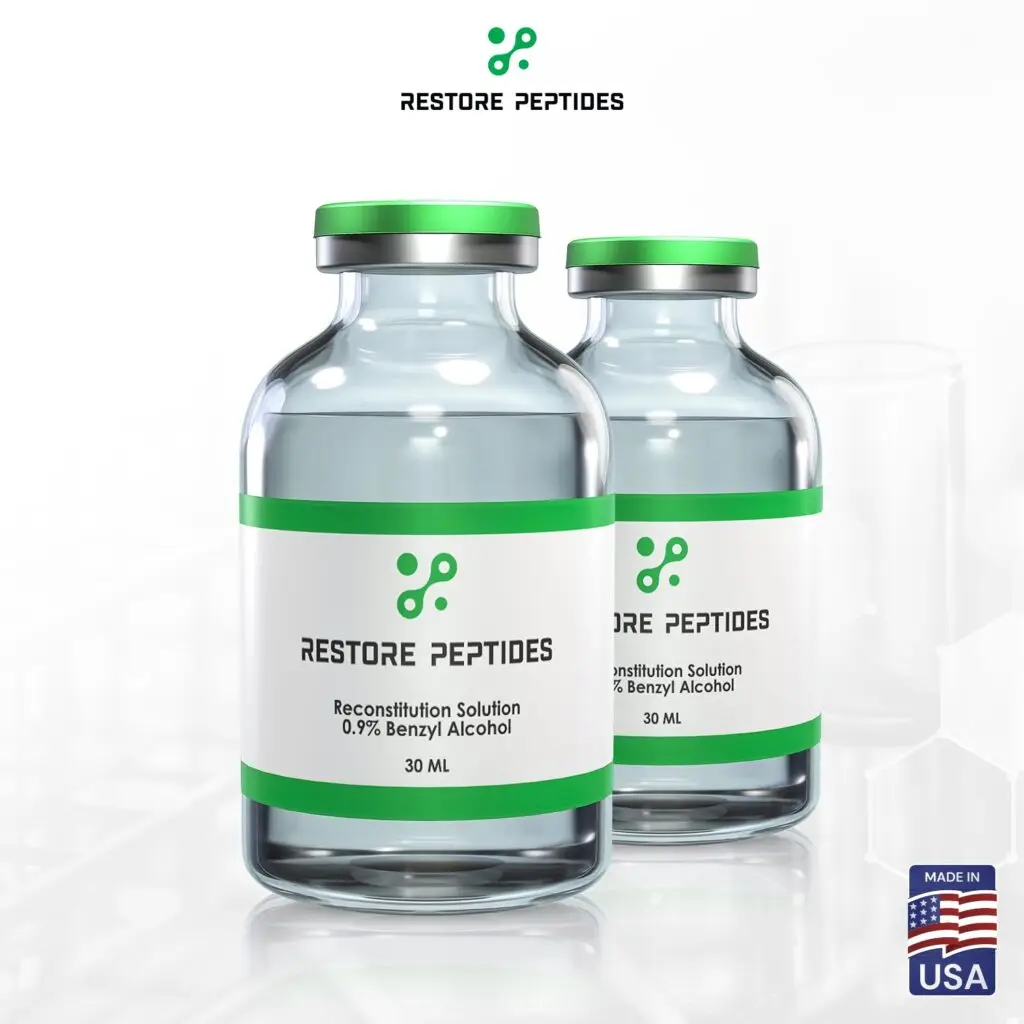
Peptide reconstitution is the essential process of dissolving lyophilized (freeze-dried) powder into a precise liquid volume so that every research dose is consistent. Peptides are shipped as a powder to maintain molecular stability, ensure easier transport, and allow for dosing flexibility.
This guide from Restore Peptides covers the necessary supplies, concentration mathematics, the differences between bacteriostatic and sterile water, and a rigorous 8-step mixing method. We also include specific protocols for BPC-157, semaglutide, tirzepatide, and other common research compounds.
Research Focus: This content is strictly for educational and laboratory research purposes. It does not constitute medical advice, diagnosis, or treatment.
Peptide reconstitution involves dissolving freeze-dried peptide powder into bacteriostatic water to create a measurable solution. To perform this correctly: sanitize vial tops with alcohol, slowly introduce the liquid down the inside wall of the vial, gently swirl until clear, then label and refrigerate.
A professional setup prevents avoidable errors. Prepare these items before puncturing any seals to maintain a sterile environment.
|
Supply |
Purpose |
Essential? |
|
Lyophilized Peptide |
The research compound to be dissolved. |
Yes |
|
Bacteriostatic Water |
A sterile solvent containing a preservative for multi-dose use. |
Yes |
|
Insulin Syringes (29-31G) |
Used for drawing precise doses and measuring units. |
Yes |
|
Mixing Syringe (18-22G) |
Used to transfer larger volumes of water into the peptide vial. |
Yes |
|
Alcohol Prep Pads |
Sanitizing vial stoppers to prevent contamination. |
Yes |
|
Nitrile Gloves |
Maintaining a clean handling environment. |
Recommended |
|
Labels & Marker |
Tracking concentration, date, and compound name. |
Recommended |
|
Sharps Container |
Safe disposal of used needles. |
Yes |
For a full list of high-quality tools, visit Restore Peptides.
Choosing the right solvent is a critical step in maintaining the integrity of your research.
Restore Peptides recommends using bacteriostatic water for almost all reconstitution workflows unless the specific peptide documentation requires otherwise. According to the USP <797> standards, bacteriostatic water is designed for multiple entries, whereas sterile water is for single-use only.
Accurate math ensures repeatable results. Use the following formula to determine your concentration:
Total Peptide (mg) / Diluent Volume (mL) = Concentration (mg/mL)
|
Peptide (mg) |
BAC Water (mL) |
Concentration (mg/mL) |
Per 10 Units (0.1 mL) |
|
5 mg |
1 mL |
5 mg/mL |
500 mcg |
|
5 mg |
2 mL |
2.5 mg/mL |
250 mcg |
|
10 mg |
2 mL |
5 mg/mL |
500 mcg |
|
15 mg |
3 mL |
5 mg/mL |
500 mcg |
Clean a flat surface with 70% isopropyl alcohol. Wash your hands thoroughly and wear nitrile gloves. Ensure you are in a low-traffic area to minimize airborne particles.
Confirm your math before touching the vials. Note the peptide mass (mg), the volume of water (mL), and the resulting mcg per unit.
Remove the plastic flip-caps. Use a fresh alcohol pad to wipe the rubber stoppers. Let them air dry for 15 seconds; do not blow on them.
Draw air into your mixing syringe equal to the amount of water you need. Inject the air into the water vial to equalize pressure, then slowly withdraw the liquid.
Insert the needle into the peptide vial, angling the tip toward the inside glass wall. Slowly let the water trickle down the glass. Never spray the liquid directly onto the powder “puck,” as high-pressure impact can denature fragile peptide chains.
If you added more than 1 mL, the vial may have positive pressure. Briefly insert a second empty needle into the stopper to allow the compressed air to escape. This makes future draws much smoother.
Most peptides dissolve within minutes. If powder remains, gently swirl the vial or roll it between your palms. Never shake the vial, as this can cause agitation-induced aggregation.
Label the vial with the name, concentration, and date. Store at 2°C to 8°C (36°F to 46°F) and protect it from light.
|
Form |
Temperature |
Shelf Life |
|
Lyophilized (Powder) |
–60°C to 4°C |
1-5 Years |
|
Reconstituted (Liquid) |
2°C to 8°C |
Up to 28 Days |
“Peptides are susceptible to chemical and physical degradation. Maintaining a consistent cold chain is necessary to preserve the primary structure of the amino acid sequence.”
Lyophilized powder often forms a very thin film or a small “cake” at the bottom. This is normal and does not mean the vial is empty.
What if the solution is cloudy?
A cloudy solution may indicate that the peptide has “crashed” or temporarily aggregated after reconstitution. In many cases this can occur if the vial was exposed to cold temperatures during shipping or storage.
Allow the vial to sit in the refrigerator for approximately 30 minutes and gently swirl the solution. Do not shake the vial aggressively, as this can damage the peptide structure.
If the solution remains cloudy after settling, the vial may be compromised and should not be used.
Some peptides such as AOD-9604 are known to occasionally appear cloudy due to their origin from the HGH fragment chain. In these cases, the solution can sometimes be allowed to rest at room temperature for a short period to allow the peptide to fully dissolve and return to a clear solution.
If cloudiness persists or particles remain visible, discontinue use of the vial.
When a peptide is already dissolved in bacteriostatic water or sterile water:
Freezing works best when the peptide is still lyophilized (powder).
That’s actually how most labs store them long-term.
Typical stability approach:
|
State |
Storage |
|
Lyophilized powder |
Freezer (−20°C) for long-term |
|
Reconstituted peptide |
Refrigerator (2–8°C) |
|
Room temp |
Short term only |
Most peptides once reconstituted:
Some research labs freeze aliquots of reconstituted peptides in small sterile tubes so they only thaw once. That requires proper lab handling and sterile technique.
Freeze:
Refrigerate:
Avoid:
Know more https://restorepeptides.io/reconstitute-peptides-guide/

© 2025 Crivva - Hosted by Airy Hosting Managed Website Hosting.