


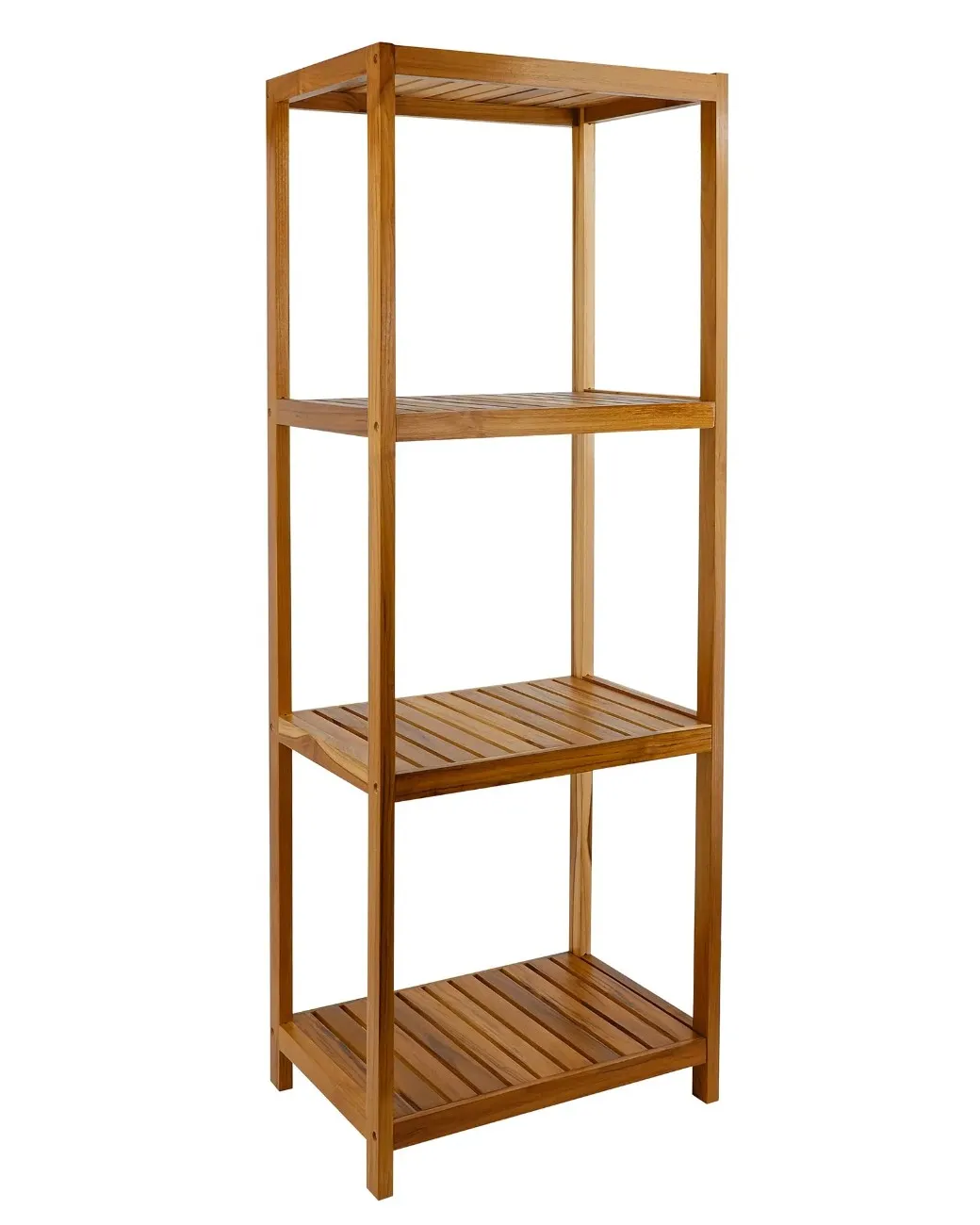
Teak shelves for bathroom spaces have become a top choice among homeowners and interior designers alike — and for good reason. Teak wood is naturally dense, rich in silica and natural oils, and boasts a unique resistance to moisture that most other wood species simply cannot match. Whether you have a sleek floating teak shelf above your sink or a full teak rack in your shower niche, proper maintenance is the key to ensuring these beautiful pieces last for decades.
This complete care guide walks you through everything you need to know — from understanding why teak thrives in wet environments, to daily habits, deep cleaning routines, oiling schedules, and long-term protection strategies.
Before diving into maintenance, it helps to understand what makes teak so well-suited for the bathroom environment. Bathrooms are among the most challenging spaces for any wood product — high humidity, temperature fluctuations, steam, soap residue, and direct water contact can warp, rot, or stain most woods within months.
Teak stands apart for several key reasons:
One of the most common surprises for new teak shelf owners is the wood’s natural color change over time. Fresh teak is a warm honey-gold. Left untreated in a bathroom environment, it will gradually weather to a silvery-grey patina. This patina is entirely natural and not a sign of damage — in fact, many people prefer this weathered look for its rustic elegance.
If you want to preserve the original golden color, regular oiling and finishing is necessary. If you prefer the grey patina, maintenance is still required — but focused more on cleanliness and structural integrity rather than color preservation.
Consistent, simple habits will do more for your teak shelves for bathroom use than any single deep cleaning session. Here’s what to incorporate into your routine:
Every one to three months (depending on use), your teak shelves will benefit from a deeper cleaning to remove built-up soap scum, hard water deposits, and any surface mildew.
Oiling is arguably the most important maintenance step for teak shelves for bathroom use. Even though teak has natural oils, these oils diminish over time — particularly in the dry-wet cycle of a bathroom environment. Regular oiling replenishes moisture, restores color, and keeps the wood supple.
Teak oil (often a blend of linseed oil or tung oil) penetrates the wood and nourishes it from within. It enhances the natural golden color and is easy to apply. However, it requires more frequent reapplication — typically every 2–4 months for bathroom shelves.
Teak sealers, on the other hand, form a protective surface layer. They last longer (often 6–12 months) and offer superior water repellency. However, they can slightly alter the appearance and may require sanding between applications. For high-use bathroom shelves, many experts recommend starting with a sealer for primary protection.
Black spots are typically caused by mildew or tannin reactions with metal fixings. For mildew, apply a solution of one part bleach to ten parts water, scrub gently with the grain, rinse thoroughly, and let dry completely before re-oiling. For tannin stains from metal contact, use an oxalic acid-based teak cleaner, which is specifically formulated to neutralize these reactions. Avoid excessive bleach use, as it can dry out the wood and lighten it unevenly.
Light water rings can often be buffed out with fine steel wool (0000 grade) or 220-grit sandpaper, always working with the grain. Follow up immediately with teak oil to restore the surface. Deeper stains may require more sanding, but teak’s thickness means there is typically plenty of material to work with.
If your teak shelves have grayed and you’d like to restore the original golden tone, use a dedicated teak brightener (typically containing oxalic acid) after cleaning. Apply it to the dry wood, allow it to work for the time directed on the product label, then rinse and dry completely. Follow with teak oil or sealer once fully dry.
Over time, repeated wetting and drying can cause the wood grain to rise, creating a rough texture. A light sanding with 220-grit sandpaper, followed by a finer 320-grit pass, will smooth the surface. Always sand with the grain, not against it. Finish with a fresh application of teak oil.
If you’re in the market for teak shelves for bathroom spaces, not all products are created equal. Here’s what to look for when shopping:
Teak shelves for bathroom environments are among the most durable and beautiful storage solutions available — but they do require thoughtful, consistent care to perform at their best. The good news is that teak is remarkably forgiving. With regular wiping, periodic deep cleaning, and a sensible oiling or sealing schedule, your teak shelves will reward you with decades of service and improving character over time.
Whether your goal is to preserve that warm honey-gold finish or to let the wood age gracefully to a silver patina, the principles of care remain the same: keep the wood clean, keep it nourished, and keep moisture from becoming trapped.

© 2025 Crivva - Hosted by Airy Hosting Managed Website Hosting.