

Paint Protection Film, commonly known as PPF, has become one of the most effective ways to protect a vehicle’s paint from everyday damage. Car owners considering PPF often ask an important question: how long does PPF last, and when should it be replaced? Understanding the lifespan of paint protection film helps you decide whether it is worth the investment and how to maintain it properly.
This guide explains the average lifespan of PPF, factors that affect its durability, signs that it needs replacement, and how it compares to other paint protection options.
Paint Protection Film is a transparent urethane film applied to a vehicle’s exterior surfaces to shield the paint from rock chips, scratches, bug splatter, road debris, and UV exposure. Modern PPF is engineered with self-healing properties that allow minor scratches to disappear when exposed to heat.
PPF is commonly installed on high-impact areas such as the hood, front bumper, side mirrors, fenders, and door edges, although full-body coverage is also available.
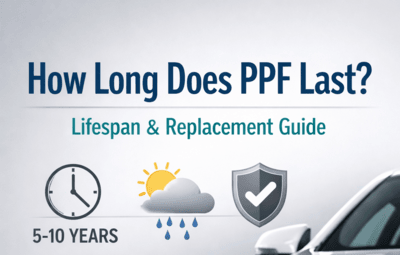
High-quality paint protection film typically lasts 5 to 10 years, depending on the brand, installation quality, and driving conditions. Premium PPF products from reputable manufacturers often come with warranties ranging from 7 to 10 years against defects such as yellowing, cracking, or peeling.
Lower-quality films or improperly installed PPF may start showing signs of wear within 3 to 5 years.
While warranties provide a good benchmark, real-world lifespan depends on maintenance and exposure. A well-maintained PPF installation can outlast its warranty period, while poor care can shorten its lifespan significantly.
Not all PPF products are created equal. Premium films offer better clarity, stronger self-healing properties, and superior resistance to UV rays and stains.
Professional installation plays a major role in how long PPF lasts. Improper stretching, poor edge sealing, or contamination during installation can lead to early lifting or peeling.
Vehicles driven frequently on highways or gravel roads experience more impact damage. Exposure to extreme heat, intense sunlight, snow, and road salt can also accelerate wear.
Regular washing, avoiding harsh chemicals, and following recommended care practices can significantly extend the life of paint protection film.
Over time, older or lower-quality PPF may develop a yellow tint, especially on white or light-colored vehicles.
Edges that lift or peel can trap dirt and moisture, reducing protection and affecting appearance.
As PPF ages, it may lose flexibility and become brittle, leading to cracks that compromise its protective function.
If rock chips or scratches penetrate the film and affect the paint beneath, replacement is usually recommended.
PPF should be replaced when it no longer provides effective protection or begins to detract from the vehicle’s appearance. Most vehicle owners replace PPF between 6 and 10 years, depending on condition.
Replacing worn PPF in time helps preserve the original paint and prevents adhesive residue or difficult removal later.
Many car owners compare PPF vs Ceramic Coating when deciding on paint protection. While both offer benefits, their lifespan and purpose differ.
PPF provides physical protection against impacts and typically lasts longer, especially in high-impact areas. Ceramic coating, on the other hand, enhances gloss and provides chemical resistance but does not protect against rock chips. Ceramic coatings usually last 2 to 5 years, depending on the product and maintenance.
In some cases, applying ceramic coating over PPF can extend ease of maintenance and improve hydrophobic properties.
Hand wash your vehicle using pH-neutral car shampoos and soft microfiber towels. Avoid automatic car washes with abrasive brushes.
Strong solvents and petroleum-based cleaners can damage the film’s surface and adhesive.
Whenever possible, park in shaded or covered areas to reduce prolonged UV exposure.
Periodic inspections by a professional installer can catch minor issues early, preventing the need for premature replacement.
While the upfront cost of PPF can be significant, its long lifespan and ability to preserve factory paint often make it a cost-effective solution. By preventing repainting, touch-ups, and paint correction, PPF helps maintain both appearance and resale value over time.
High-quality paint protection film typically lasts 5 to 10 years, depending on the brand, installation quality, driving habits, and maintenance. Premium films often reach the upper end of this range.
No, professionally installed and properly removed PPF does not damage factory paint. In most cases, it actually preserves the paint underneath and keeps it looking newer.
Lower-quality or older PPF can yellow over time, especially with heavy sun exposure. Modern premium films are designed with UV inhibitors to resist yellowing for many years.
Yes, PPF is worth the investment for many car owners because it helps prevent rock chips, scratches, and paint damage, reducing the need for repainting and maintaining resale value.
PPF should be replaced if you notice yellowing, peeling edges, cracking, hardening, or damage reaching the paint beneath the film.
Yes, vehicles with PPF can be washed normally. Hand washing with pH-neutral shampoo and microfiber towels is recommended to extend the film’s lifespan.
PPF provides excellent protection against rock chips, light scratches, road debris, and bug splatter. While it won’t stop severe impacts, it significantly reduces everyday damage.
Ceramic coating and PPF serve different purposes. PPF offers physical impact protection, while ceramic coating provides gloss and chemical resistance. PPF generally lasts longer and protects better in high-impact areas.
Yes, ceramic coating can be applied over PPF to enhance gloss, hydrophobic properties, and ease of cleaning, without reducing the film’s protective benefits.
Paint Protection Film is a long-lasting and reliable solution for protecting your vehicle’s paint. With proper installation and maintenance, PPF can last up to a decade, providing continuous protection against everyday wear and environmental damage. Understanding its lifespan and knowing when to replace it ensures you get the maximum value from your investment while keeping your vehicle looking its best.

© 2025 Crivva - Hosted by Airy Hosting Managed Website Hosting.