

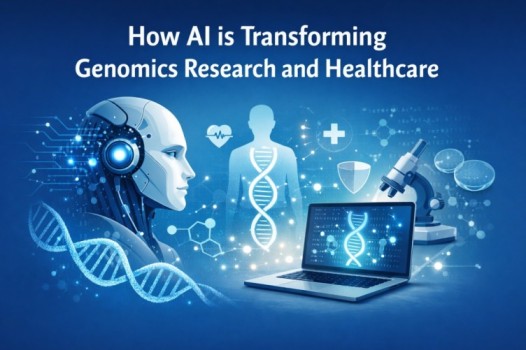
The intersection of artificial intelligence (AI) and genomics is transforming the ways of analysing and utilizing biological information in the context of contemporary healthcare. The analysis of the entire genome of an organism, known as genomics, has conventionally entailed complicated and time-consuming data processing. With the introduction of AI technologies, now scientists can analyse large genomic data more effectively and can discover disease mechanisms, develop drugs, and personalized medicine more quickly.
A recent AI in genomics market analysis conducted across the globe shows a significant growth in the industry, as more people are demanding precision medicine and improved data analytics solutions. As emphasized in the research, the market will develop consistently throughout the forecast period under the influence of the development of machine learning algorithms and the increase in the use of genomic sequencing technology in healthcare systems.
Dealing with large amounts of sequencing data and how to interpret it effectively is one of the biggest problems in genomics. AI, especially machine learning and deep learning algorithms are important in finding patterns in such data that would have been hard to find using the conventional computational techniques. These technologies allow researchers to better examine the genetic variations, forecast the vulnerability to disease, and determine the possible therapeutic targets.
Organisations like the World Health Organization have highlighted the relevance of genomics to world health especially in the context of learning about infectious diseases as well as genetic disorders. AI helps in this ability as it speeds up the analysis process, which makes it possible to implement timely interventions and better patient outcomes.
AI-driven genomics is a cornerstone of precision medicine, an approach that tailors medical treatment to individual genetic profiles. Using AI in combination with genomic information, health professionals can create more tailored treatment options, which minimizes the trial-and-error strategy of the traditional approach to treatment.
As an example, AI algorithms can detect certain gene mutations that are associated with diseases like cancer and provide clinicians with an opportunity to prescribe an individual treatment course. The National Institutes of Health states that precision medicine programs are becoming more active in using genomic understanding to enhance the effectiveness of treatment and patient care.
AI in genomics is also having a positive impact on the pharmaceutical industry. Conventional drug discovery methods may require years of time and require large amounts of money. Artificial intelligence can also assist with this process by processing the genetic data to determine possible drug targets and forecast the effects of various compounds in interacting with biological systems.
AI can also shorten the time of the early-stage research by simulating biological processes and examining genetic variations. This does not only speed up the process of coming up with new therapies but also enhances chances of successful results. The use of AI technologies in drug development to improve efficiency and safety is being supported by institutions such as the U.S. Food and Drug Administration.
Although AI has transformative potential in genomics, there are various challenges to its implementation. The issue of data privacy and security is also significant, and genomic data is the most delicate information which should be strictly regulated. Moreover, AI models also rely on the quality and diversity of training datasets.
Interdisciplinary expertise is also a challenge. Integrating genomics and AI involves the cooperation of biologists, data scientists, and medical practitioners. These technologies have the potential to be very good, but unless there is adequate coordination, the potential will not be achieved.
Moreover, ethical aspects of the genetic information use and AI decision-making procedures have to be addressed. Other organizations like the United Nations Educational, Scientific and Cultural Organization have emphasized the role that ethical frameworks play in using AI and genetic information.
The integration of AI in genomics is unevenly spread across regions, which depends on technological infrastructure, funding of research activities, and regulatory policies. The most advanced areas of the world, such as North America and Europe are in the forefront of research and practice, with good healthcare institutions and biotechnology investment.
In the meantime, the new economies are slowly coming to embrace these technologies, as the healthcare needs are growing, and the governments are working on it. The World Bank states that digital health and biotechnology investments are increasing in developing areas, generating new possibilities of AI-based applications in genomic applications.
The future of AI in genomics is bright, and further developments are likely in the field of data analytics, computational biology, and combination with healthcare. With the development of smarter AI models, they will be able to analyze complex genetic data more easily and provide more precise diagnoses and suitable treatment.
New technologies like the cloud computing and big data analytics are also likely to make genomic research scalable. These advancements will allow more people to have access to genomic knowledge and help in improving healthcare globally and scientific discovery.
To sum up, the development of AI in genomics is leading to an essential change in the use of genetic data in the field of healthcare and research. AI is opening up new opportunities to study human biology by enabling precision medicine discovery and fastening drug discovery. Although these issues are still present, future developments and partnership should continue to enhance the role of AI in genomics, which can help to shape the future of modern medicine in a significant and sustainable manner.

© 2025 Crivva - Hosted by Airy Hosting Managed Website Hosting.