

When you picture a track-mounted crusher, you probably see brute force: a roaring diesel engine, steel jaws gnashing rock, and a cloud of dust. It’s easy to view it as a simple machine of gears and hydraulics. But take a closer look at the newest generation of these mobile plants, and you’ll find a quiet revolution humming beneath the surface. The real story isn’t just about more power or a bigger hopper; it’s about intelligence. Artificial Intelligence, once confined to labs and data centers, is now being embedded directly into the heart of aggregate production. This isn’t science fiction; it’s operational reality, transforming these machines from mindless bashers into perceptive, self-optimizing production partners. The change is subtle from the outside, but for those who operate them, it’s a complete paradigm shift in efficiency, cost control, and reliability.
The first layer of this revolution is about perception and autonomous decision-making. Modern track crushers are festooned with sensors—vibration monitors, pressure transducers, amperage clamps, and even cameras. In a basic machine, these might trigger a simple alarm. With an AI layer, they become a sensory nervous system that informs a thinking brain.
One of the most impactful applications is in managing the crusher’s cavity—the space where rock is broken. An operator traditionally sets the closed-side setting (CSS) and hopes the feed material is consistent. AI changes this. By continuously analyzing power draw, pressure, and even acoustic data, the system can detect the real-time density and crushability of the material entering the chamber. If it senses a batch of softer, easier-to-break sandstone, it might automatically adjust the crusher’s dynamics to increase throughput. If it encounters a surge of extremely hard granite, it can momentarily modulate the feed rate or adjust settings to protect the liners from excessive stress, preventing damage and optimizing particle shape. It’s like having an expert process engineer inside the control panel, making micro-adjustments every second to match the machine’s operation to the rock’s behavior.
Breakdowns are the nightmare of any crushing operation. AI is turning unplanned downtime into scheduled maintenance. Advanced systems don’t just monitor vibration levels; they perform a kind of mechanical sonography. The AI is trained on the unique vibration “fingerprint” of a perfectly healthy crusher—the specific frequencies and amplitudes of a true-running main shaft, healthy bearings, and properly tensioned belts. It constantly compares the live data against this healthy baseline. The magic is in its ability to discern the subtle, early-stage signature of a failing bearing (often weeks before a human operator would notice) from the normal rumble of crushing stone. This allows for genuinely predictive maintenance, where you replace a component on a planned weekend instead of during peak production on a Tuesday afternoon.
The AI’s learning doesn’t stop at the edge of the machine. When these intelligent crushers are connected, the aggregated data becomes exponentially more valuable, creating a feedback loop that benefits an entire fleet or even an entire industry.
Liner wear is a major cost. Traditional replacement is based on hours or tonnage, a blunt instrument that often wastes usable liner life or risks running them too thin. AI models, fed with data from hundreds of crushers across different sites and materials, learn to forecast wear with stunning accuracy. The system on your machine might advise, “Based on current feed abrasiveness and your power utilization, your mantle has 47 operational hours remaining.” This transforms parts logistics from a guessing game into a precise science. You can order the exact part to arrive just in time, reducing on-site inventory costs and ensuring maximum utilization of every wear component. This data-driven approach squeezes unnecessary cost out of every ton of aggregate produced.
Imagine pulling onto a new site with a unfamiliar quarry face. Instead of spending half a day tuning the portable crusher plant through trial and error, the operator could select “Limestone with high clay content” from a preset menu. This preset isn’t static; it’s a dynamic starting point refined by the AI from thousands of hours of crushing similar material elsewhere in the fleet. Furthermore, this connectivity allows for anonymous, fleet-wide performance benchmarking. Is your crusher’s fuel consumption per ton 15% higher than the fleet average for processing the same material? The AI can help diagnose why, suggesting adjustments or flagging potential inefficiencies, pushing every machine toward its optimal performance envelope.
This technological shift does not render the operator obsolete. Instead, it redefines their role from a manual controller to a strategic manager and exception handler. The AI handles the relentless, second-by-second optimization, freeing the operator to focus on higher-order tasks.
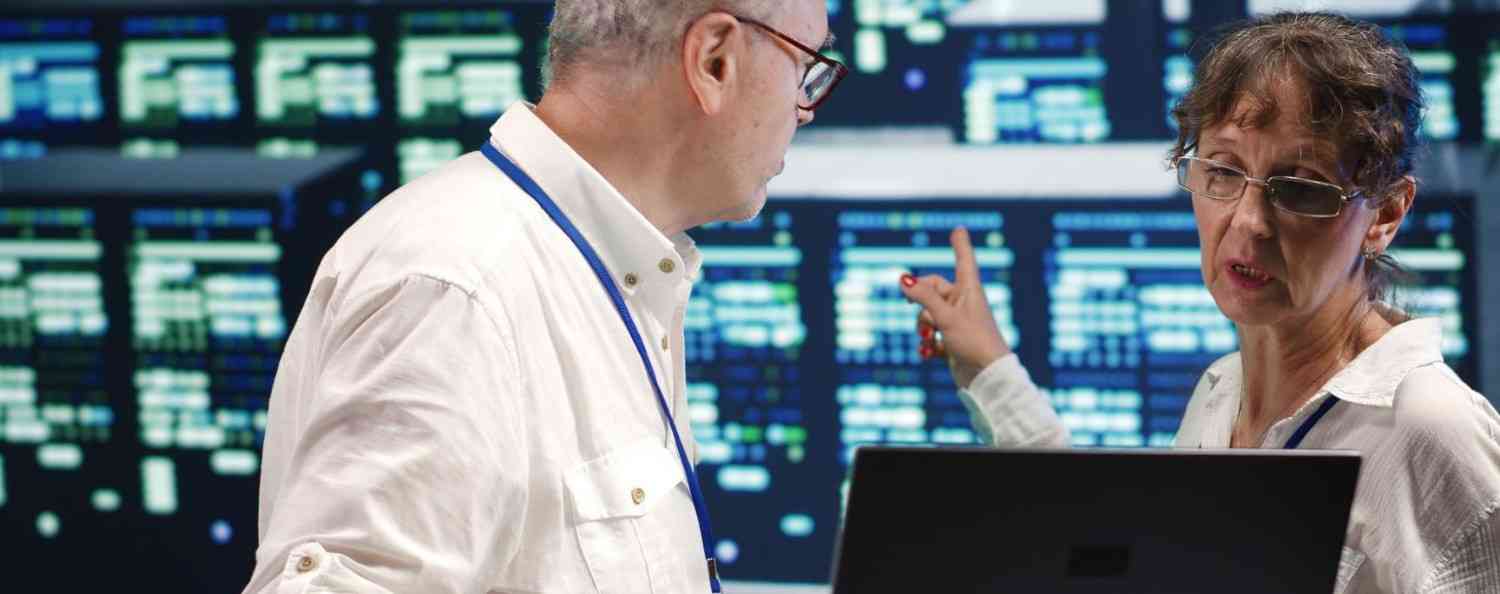
The control cabin is changing. While physical levers remain for direct control, the primary interface is increasingly a digital dashboard. This screen doesn’t just show numbers; it presents insights. It might highlight a trend of increasing energy use per ton, suggest an optimal time to rotate the feed for even liner wear, or visually indicate which screen deck is becoming the bottleneck in the circuit. The operator’s skill shifts from reflexive lever-pulling to interpreting these insights and making strategic decisions about overall site flow and production goals. They manage the AI’s parameters, not the cylinder’s stroke.
This creates a demand for a new kind of crushing professional—one who understands both mechanical fundamentals and data literacy. The most valuable team member will be the one who can couple the AI’s recommendation (“adjust the CSS by 2mm”) with their own site knowledge (“but we need a slightly coarser product for the 3pm asphalt plant order”). They become a true technician, overseeing a sophisticated cyber-physical system. Training programs are already evolving beyond hydraulics manuals to include modules on data interpretation and system diagnostics. This elevates the profession, making it more engaging and technically demanding, while also delivering vastly superior operational results. The hidden technology, therefore, is not just making machines smarter; it’s making the people who run them more powerful and productive than ever before.

© 2025 Crivva - Hosted by Airy Hosting Managed Website Hosting.