

Empty slots are not just annoying. They cost you real money every single day.
A grooming salon with 2 groomers, charging an average of $75 per appointment, loses $150 for every hour that sits empty. Do that three times a week and you lose $450. Over a month, that is $1,800 gone with no extra staff cost, no supplies used, and no way to get it back.
Most owners think they have a booking problem. They actually have a capacity problem. There is a big difference. A booking problem means not enough clients.
This guide gives you the grooming salon capacity formula step by step so you can calculate what you actually have, find where you are losing it, and fix it without hiring a single extra person.
Most owners define capacity as open hours on the calendar. That is wrong, and it costs them money.
True capacity is the number of productive, sellable grooming hours your team can actually deliver after you account for breaks, cleaning, transitions, and realistic service times.
You are not managing one thing. You are managing three at once:
Groomer time capacity: How many hours each groomer can work productively in a day, after subtracting breaks, setup, and end-of-day cleaning.
Schedule capacity: The actual appointment slots on your calendar, including the buffers between them. This is where most salons lose the most time.
All three interact. A bottleneck in any one area shrinks the others.
A groomer working 8 hours does not deliver 8 hours of grooming. A realistic breakdown for a single groomer looks like this:
Now factor in that one dog took 30 minutes longer than planned. That delay pushes every appointment back by 30 minutes. By appointment four, you are running late, the client is annoyed, and you are scrambling to catch up.
An empty slot feels like a small thing. It is not.
Here is a simple way to put a real number on what each gap costs you:
Empty slot value = average ticket price x likelihood it would have been booked
If your average ticket is $80 and you have a 70% fill rate, each empty slot costs you $56 in lost revenue. Now add idle staff time you are still paying your groomer whether they groom or not.
Most gaps come from the same six problems:
Fix these six things and most salons recover 15 to 25 percent of lost capacity within 30 days.
This is the core of the system. Work through each step once, then review it monthly.
Start with raw numbers:
Total capacity = number of groomers x productive hours per day x working days per week
Example: 3 groomers x 7 hours productive time x 5 days = 105 hours per week
Do not use scheduled hours. Use productive hours after breaks and transitions. If you are not sure, track one week and count actual grooming time. Most salons find their real number is 10 to 15 percent lower than they assumed.
Divide your productive hours by your real average service time, not the one you wish was true, but the one your records show.
If your average full groom takes 90 minutes, divide your weekly hours by 1.5. For 105 productive hours, that gives you 70 sellable slots per week.
Separate this by service type:
|
Service Type |
Average Time |
Slots Per 7-Hour Day (Per Groomer) |
|
Full groom (small dog) |
60 min |
7 |
|
Full groom (medium dog) |
90 min |
4–5 |
|
Full groom (large/complex) |
120–150 min |
3–4 |
|
Bath and dry only |
45 min |
9 |
|
Puppy intro session |
30 min |
14 |
Use this table to build your daily schedule template. Stop guessing at durations and build them into your system.
No schedule runs perfectly. You need to plan for the imperfect version.
Add a 10-minute buffer after every appointment longer than 60 minutes. Add a 15-minute catch-up block at midday. This sounds like lost time. It is actually protection time that keeps your afternoon on track.
Rules are not restrictions. They are protection for your revenue.
Set a cap on new clients per day no more than 2 new clients per groomer per day until you know their dog’s behavior and coat condition.
Limit large or complex coats to morning slots only, so overruns do not blow up your afternoon.
The most common leak is also the simplest to fix. Salons set service durations based on a best-case scenario: a calm dog, a clean coat, no matting. Real dogs are rarely best-case.
Audit your last 30 appointments. Find the average real completion time for each service type. If your system shows 60 minutes for a full groom but your groomers consistently take 75, you are starting every appointment 15 minutes behind. Fix the duration in your system, and you immediately recover that gap.
Bath and drying stations are the most common bottleneck in multi-groomer salons. A groomer who finishes a bath cannot move forward if the dryer is occupied. That groomer stands still. The next client waits. The afternoon falls apart.
Map your station flow. If two groomers regularly hit the dryer at the same time, stagger your morning start times by 30 minutes. One groomer starts at 8:00 AM, the next at 8:30 AM. Problem solved with zero extra equipment or staff.
A 15-minute gap between appointments does not feel like much. Four of them in a day is a full hour of lost revenue every single day.
Fragmentation happens when you allow bookings to land wherever clients want them, rather than where your schedule needs them. Time blocking fixes this. Group shorter services in the morning, longer ones in the middle of the day, and shorter ones again at the end. Build your schedule like a puzzle where every piece fits, not like a free-for-all.
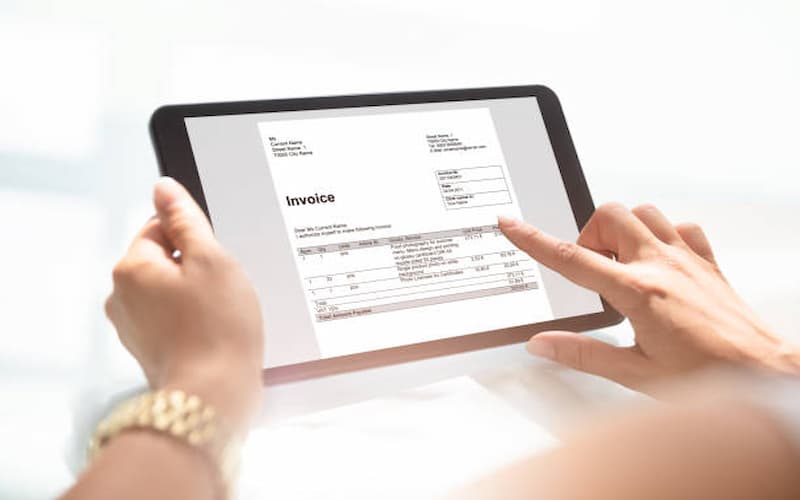
Manual scheduling works when you have one groomer and 20 clients. It breaks down fast after that.
A good pet salon scheduling software removes human error from capacity management. It should handle:
Not all scheduling tools are built for grooming salons. Look for these specific features:
A tool that does not let you set buffer times or service-specific durations will always leave you managing the gaps manually.
The easiest slot to fill is one you book before the client leaves. At every pickup, ask: “Want to lock in your next appointment now?” Most regular clients say yes. A dog on a 6-week grooming cycle booked at pickup never shows up in your gap report.
Do not discount during your busy periods. Offer small promotions only for your slow slots on Tuesday and Wednesday mornings, or early afternoon blocks that consistently run empty.
Keep three messages ready for your front desk team:
Policy message: “We require 24-hour notice for cancellations. Same-day cancellations or no-shows will result in a charge to the card on file.”
Waitlist message: “We have a spot open on [date] at [time]. Reply YES within 1 hour to confirm and we will hold it for you.”
Here is your checklist. Work through it once this week:
The grooming salon capacity formula is not complicated. Capacity equals available groomer hours, adjusted for real service times, protected by rules and buffers, and stabilized by no-show protection and a working waitlist.

© 2025 Crivva - Hosted by Airy Hosting Managed Website Hosting.