

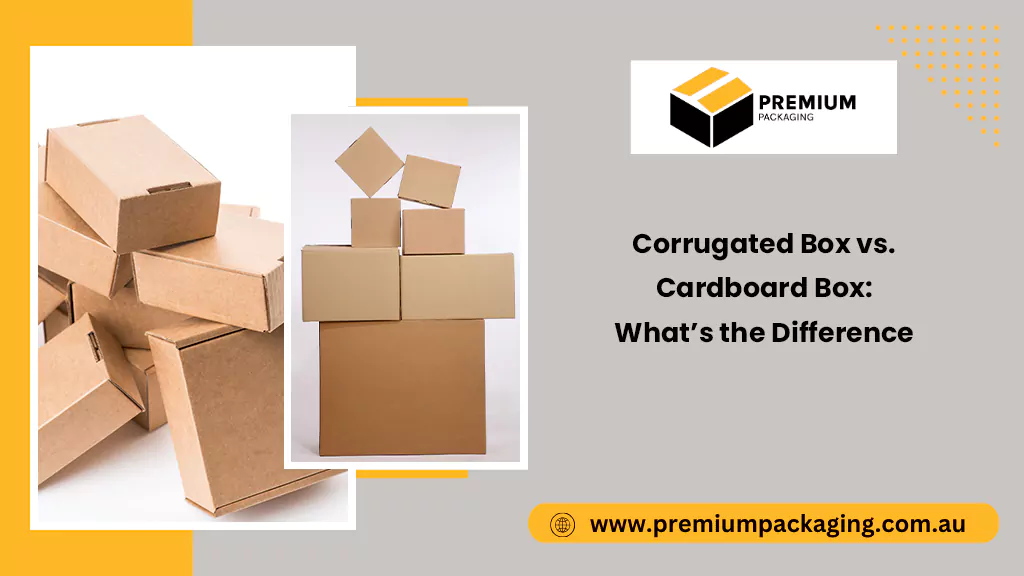
All corrugated boxes are made from cardboard, but not all cardboard boxes are corrugated. The difference lies in structure, strength, and intended use. Understanding this distinction helps businesses choose packaging that properly protects products, controls costs, and meets customer expectations.
This guide is written for Australian businesses sourcing packaging for shipping, storage, or retail.
The terms cardboard and corrugated are often used interchangeably, but they describe different forms of paper-based packaging materials.
Cardboard is a broad term for thick paper-based materials. Corrugated cardboard is a specific type of cardboard engineered for strength and durability. Most shipping cartons used in eCommerce and logistics are corrugated, even if people casually call them cardboard boxes.
This confusion often leads businesses to select the wrong box for their needs, resulting in damaged goods or unnecessary packaging costs.
A cardboard box is typically made from a single layer of thick paperboard. It has a smooth, flat structure without internal fluting.
Cardboard boxes are commonly produced using:
These boxes are lightweight and easy to print on, which makes them popular for retail packaging.
Cardboard boxes work well when products are:
Because cardboard lacks internal reinforcement, it is not designed to absorb impact or support heavy loads.
A corrugated box is made from corrugated cardboard, which consists of three layers:
The fluted layer is the defining feature that gives corrugated boxes their strength.
So when people ask what a corrugated box is or what it means, the answer is a box made with a layered structure that improves rigidity, cushioning, and stacking strength.
Corrugated boxes are designed to withstand:
This makes them the preferred option for shipping and logistics.
Corrugated boxes get their name from the wavy fluted sheet inside the box walls. This fluting acts like a built-in shock absorber.
The practical meaning of corrugated boxes is durability through structure. The flutes create air pockets that:
Different flute sizes can be used depending on the required strength or cushioning.
Understanding the difference between a corrugated box and a cardboard box comes down to structure, performance, and application.
These differences matter most when packaging products for shipping rather than display.
While both box types have a place, corrugated packaging offers clear advantages for most commercial shipping applications.
Choosing the wrong option often costs more in the long run through damaged stock or customer dissatisfaction.
For eCommerce businesses, corrugated boxes are almost always the better choice.
Shipping exposes parcels to:
Cardboard boxes are not designed for these conditions. Corrugated boxes are.
That is why most packaging suppliers recommend corrugated cartons for online orders, even for lightweight products.
Choosing between cardboard and corrugated depends on how the box will be used.
Many businesses use both types together, with cardboard for inner packaging and corrugated for outer shipping cartons.
Corrugated cardboard is popular because it balances strength, cost, and sustainability.
Key reasons for its widespread use include:
Corrugated boxes also adapt well to branding, with options for printing, die-cutting, and custom inserts.
Corrugated boxes are available in several formats, each suited to different needs.
Understanding these options helps businesses avoid under- or over-packaging.
Both cardboard and corrugated packaging are widely recyclable in Australia.
Corrugated boxes often contain:
Many businesses choose corrugated cardboard as part of their sustainability strategy because it offers protection without relying on plastics.
Premium Packaging supplies corrugated and cardboard solutions that support recycling and responsible material sourcing.
Packaging is evolving, driven by e-commerce growth, sustainability demands, and automation.
Manufacturers are developing lighter corrugated boards that maintain strength while reducing material use.
Custom box sizing reduces void fill and shipping costs.
Water-based inks and minimal coatings improve recyclability.
Combining cardboard aesthetics with corrugated strength for premium shipping experiences.
These innovations help businesses improve efficiency without sacrificing protection.
Both cardboard and corrugated boxes can be printed, but the results differ.
Cardboard:
Corrugated:
For many brands, the box itself becomes a marketing asset.
Corrugated is a type of cardboard, but not all cardboard is corrugated.
They may cost less upfront, but often cost more through damage and returns.
They are suitable for lightweight items that need protection during shipping.
Selecting the right packaging supplier matters as much as choosing the correct box.
Look for suppliers who offer:
Premium Packaging works with businesses to match packaging solutions to real-world use, not assumptions.
Before choosing between cardboard and corrugated boxes, consider:
Testing packaging under realistic conditions is often the best way to confirm suitability.
The difference between cardboard vs corrugated is not about preference, but performance. Each material serves a purpose, and using the right one protects products, improves customer experience, and reduces long-term costs.
For most shipping and storage needs, corrugated boxes offer reliability that plain cardboard boxes cannot match.
Know more https://premiumpackaging.com.au/blog/corrugated-vs-cardboard-boxes/

© 2025 Crivva - Hosted by Airy Hosting Managed Website Hosting.