

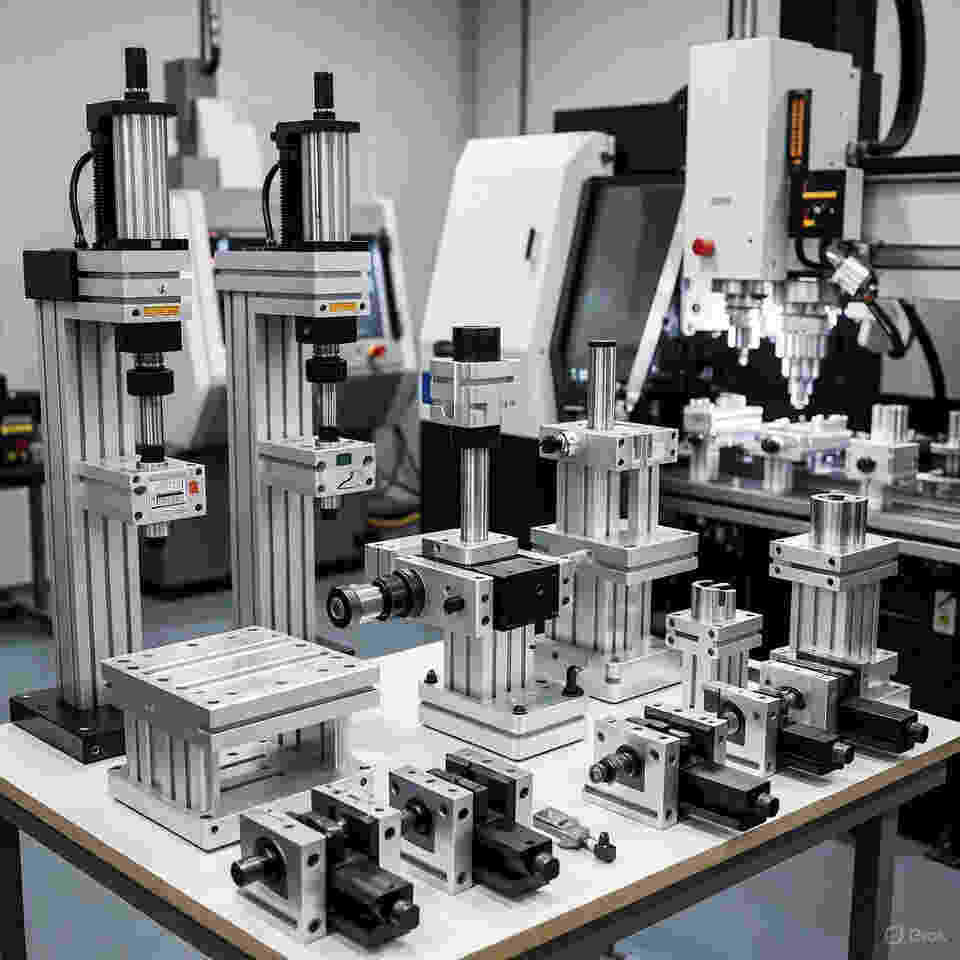
In the CNC manufacturing industry, precision is never accidental; it is engineered through controlled processes, stable setups, and carefully planned production systems. Even the most advanced CNC machines depend heavily on how components are held, aligned, and supported during machining. This is why jig and fixture design remains a critical factor in achieving dimensional consistency, reducing rework, and maintaining production efficiency across complex machining operations. When tooling is engineered with purpose and accuracy, CNC machines can operate at their full potential without compromising quality.
As global manufacturing standards continue to rise, companies must focus on process reliability rather than relying solely on machine capability. Intelligent tooling systems form the backbone of repeatable machining, ensuring that every part is produced under controlled conditions regardless of batch size or production volume. This makes tooling not just a support element, but a strategic asset in modern CNC environments.
Workholding tools are fundamental to securing components during machining and resisting the forces generated by cutting operations. In CNC machining, cutting forces vary depending on material type, tool geometry, and machining strategy, making stable part retention essential. Without effective workholding, even minor movement can lead to dimensional inaccuracies, surface defects, or tool breakage. Beyond stability, workholding systems contribute to operational efficiency by enabling consistent setups across multiple production runs. When components are positioned accurately and repeatably, setup time is reduced, operator dependency is minimized, and production becomes more predictable. These advantages are particularly important in high-mix manufacturing environments where flexibility and repeatability must coexist.
CNC fixture design focuses on controlling the precise location and orientation of a workpiece throughout the machining process. A well-engineered fixture establishes reliable datum references, distributes clamping forces evenly, and ensures accessibility for cutting tools. These factors work together to maintain accuracy during multi-step machining operations. In advanced CNC workflows, fixtures are often designed to support multiple machining stages within a single setup. This reduces the need for repositioning and lowers the risk of cumulative errors. By maintaining consistent alignment throughout the process, precision fixture solutions enable manufacturers to meet tight tolerances while improving overall productivity.
Machining support tooling plays a vital role in reinforcing components that are prone to deflection or vibration during cutting. Thin-walled parts, long components, or complex geometries often require additional support to maintain structural integrity under machining loads. Proper support reduces chatter, which is a common cause of poor surface finish and premature tool wear. Stable cutting conditions also allow manufacturers to optimize machining parameters without risking part distortion. When vibration is minimized, cutting tools experience more uniform loading, extending tool life and improving process consistency. As a result, machining support systems directly influence both quality outcomes and operational costs.
Precision locating devices ensure that components are aligned correctly with machine coordinates before machining begins. These devices establish repeatable reference points, enabling consistent part positioning across multiple setups and production batches. Accurate location control is essential in CNC machining, particularly for multi-axis operations where alignment errors can quickly compound. By integrating precision locating mechanisms into tooling systems, manufacturers can reduce setup variability and improve overall dimensional control. These devices also support modular tooling approaches, allowing fixtures to be adapted for different parts while maintaining accuracy. This adaptability is increasingly important as manufacturers respond to shorter product life cycles and customized production demands.
High-performance tooling systems are the result of careful engineering decisions that balance strength, usability, and longevity. Material selection plays a critical role, as tooling must withstand cutting forces, repeated loading cycles, and environmental conditions without degrading. Structural rigidity is equally important, as flexible tooling can introduce unwanted movement that affects accuracy. Ease of operation is another key consideration. Tooling that simplifies loading and unloading reduces cycle time and minimizes the risk of human error. Thermal behavior must also be addressed, especially in high-speed CNC operations where heat generation can influence dimensional stability. When these factors are considered holistically, tooling systems deliver reliable performance over extended production periods.
The adoption of digital engineering tools has transformed the development of CNC tooling systems. CAD and CAM platforms allow engineers to visualize fixture concepts, simulate machining forces, and identify potential issues before physical manufacturing begins. This approach reduces trial-and-error during development and accelerates time to deployment. Simulation-based design also enables optimization by testing multiple concepts virtually. Engineers can refine clamping strategies, improve accessibility, and enhance rigidity without the cost of physical prototypes. Digital workflows have become an essential part of modern tooling development, supporting precision and efficiency from concept to production.
Precision tooling is indispensable across industries that rely on CNC machining for critical components. Aerospace manufacturing demands tooling systems capable of maintaining tight tolerances on structural and engine parts. Automotive production relies on repeatable tooling solutions to support high-volume manufacturing while maintaining consistent quality standards. Medical device manufacturing also depends on precision tooling, where dimensional accuracy and regulatory compliance are mandatory. Across these sectors, the success of CNC machining operations is closely tied to the reliability and accuracy of the tooling systems that support them.
Improved dimensional accuracy through stable and repeatable part positioning
Reduced setup time and faster changeovers between production runs
Enhanced surface finish quality and extended cutting tool life
Lower scrap rates and improved overall manufacturing efficiency
Managing complex part geometries and thin-walled components
Maintaining accuracy across multi-axis machining operations
Reducing operator-dependent variability in part setup
Supporting scalable production without sacrificing quality standards
As CNC manufacturing evolves toward automation and data-driven processes, tooling systems are adapting to support smarter production environments. Modular tooling designs, quick-change mechanisms, and sensor-integrated fixtures are increasingly used to enhance flexibility and monitoring capabilities. These innovations allow manufacturers to respond quickly to changing requirements while maintaining precision.In intelligent manufacturing systems, tooling is becoming an active contributor to process control rather than a passive support element. By integrating tooling data with machine monitoring platforms, manufacturers gain deeper insights into machining conditions, predictive maintenance needs, and overall process optimization.
A strong understanding of tooling fundamentals is essential for manufacturers seeking long-term success in CNC machining. The principles behind jigs and fixtures, including their functional roles and classifications, are clearly outlined in technical references such as Wikipedia’s overview of jigs and fixtures, which provides valuable context on their importance within manufacturing systems.
As CNC technology continues to advance, access to research-based insights and engineering studies becomes increasingly important. Additional perspectives on machining accuracy, tooling optimization, and manufacturing innovation can be explored through authoritative technical resources available via Google, supporting informed decision-making and continuous improvement in modern CNC production environments.

© 2025 Crivva - Hosted by Airy Hosting Managed Website Hosting.