

In modern marketing, links play a much bigger role than most teams realize. Every campaign eventually leads audiences to a destination, a landing page, signup form, product page, or content download. The link connecting users to that destination is the final step between interest and action.
Despite this, many companies still treat links as simple technical elements instead of measurable marketing assets. Long tracking URLs may work technically, but they often look unprofessional, reduce trust, and create messy analytics.
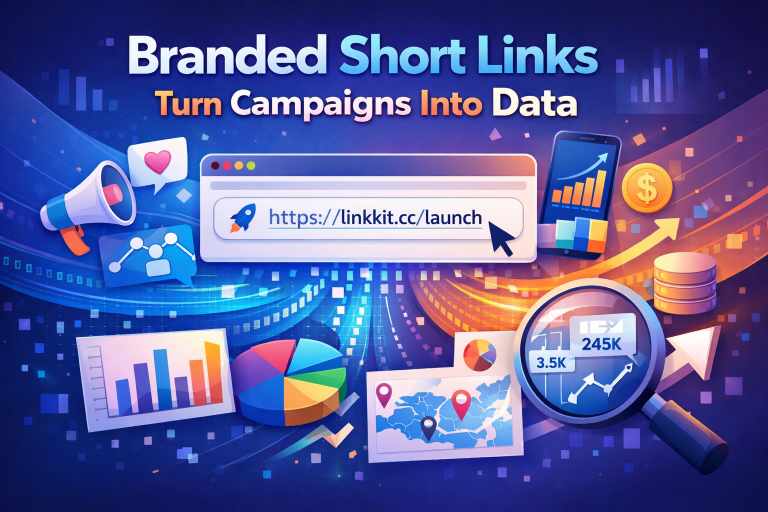
Branded short links solve this problem by turning ordinary URLs into structured marketing tools that improve engagement and provide meaningful campaign data.
Every digital marketing channel depends on links.
Email campaigns use links to drive subscribers to product pages. Social media posts use links to direct followers to content or promotions. Ads rely on links to convert attention into measurable actions.
However, when these links appear long, complex, or unfamiliar, they can negatively affect engagement. A complicated tracking URL may make users hesitate before clicking.
Branded short links simplify this experience. Instead of displaying a long, cluttered URL, companies can share a clean link using their own domain. This makes links easier to read, easier to remember, and easier to trust.
A branded short link is a shortened URL that uses a company’s own domain name.
For example, instead of sharing a long campaign link like:
example.com/product-launch/?utm_source=email&utm_campaign=launch
A branded link may appear as:
brand.co/launch
This simple change transforms a long tracking link into a clean, recognizable URL. The result is a link that supports branding while still directing users to the correct destination.
Beyond appearance, branded links also allow marketing teams to track campaign performance more effectively.
Trust is one of the most important factors influencing whether someone clicks a link.
Users often hesitate when they see unfamiliar shorteners or unclear URLs. A branded domain signals that the link belongs to a legitimate company.
When audiences recognize the domain name, they feel more confident about clicking. This small improvement in trust can significantly impact engagement across campaigns.
Branded links also help maintain consistency. Each time someone shares a link, the company’s domain remains visible, reinforcing brand awareness across different channels.
Clean, recognizable links tend to perform better than long tracking URLs.
There are several reasons for this:
Short links are easier to read
Branded domains appear more trustworthy
Clear URLs communicate where the link leads
These factors combine to improve click-through rates in many campaigns.
This is especially important in crowded environments such as social media feeds, email inboxes, and paid advertisements where users make quick decisions about what to click.
The real power of branded links comes from analytics.
When marketing teams track link performance, they gain valuable insights into how audiences interact with campaigns. Instead of guessing which channels work best, they can measure results directly.
Key insights from link analytics include:
This metric shows how many people interacted with a specific campaign link.
Tracking clicks over time reveals patterns such as peak engagement hours and campaign momentum.
Understanding where clicks originate helps marketers determine which channels perform best.
For example, teams may discover that most engagement comes from email campaigns rather than social media.
Location data helps marketers understand where audiences are engaging and where campaigns are performing best.
Many marketing platforms provide extremely complex dashboards filled with dozens of metrics. While detailed data can be useful, too much information often slows down decision-making.
Most teams focus on a few essential questions:
How many people clicked the link?
Which campaign performed best?
Where did the traffic come from?
When did engagement occur?
Clear and simple analytics dashboards allow teams to answer these questions quickly and adjust campaigns faster.
Marketing is no longer limited to digital channels. Events, packaging, posters, and printed materials all play a role in customer engagement.
QR codes have become a powerful tool for connecting offline experiences with online content.
When QR codes link to trackable URLs, businesses can measure real-world engagement. Instead of guessing how many people interacted with a printed campaign, teams can track scans in real time.
Common uses include:
Event banners linking to registration pages
Product packaging linking to tutorials
Restaurant menus linking to digital ordering
Posters linking to product launches
This approach allows marketers to measure both online and offline campaign performance.
Different teams use branded links for different purposes.
Campaign managers use trackable links to compare performance across ads, emails, and social media posts.
Agencies managing multiple clients can organize campaigns and track results using structured link management tools.
Startups experimenting with different marketing channels can use tracked links to identify which strategies generate the most engagement.
Retail brands, restaurants, and event organizers can measure customer interactions using QR codes connected to trackable links.
When selecting a link management platform, marketing teams should focus on a few essential capabilities:
Support for branded domains
Clear and simple analytics dashboards
QR code generation and tracking
Organized campaign management
Exportable data for reporting
Tools that prioritize simplicity and actionable insights often provide the most value for growing teams.
Links may seem like a small technical detail, but they sit at the center of nearly every marketing campaign. When managed strategically, they become powerful sources of insight.
Branded short links help companies build trust, increase engagement, and measure the effectiveness of their campaigns across multiple channels and accurately measure the effectiveness of their campaigns.
Modern marketing teams are increasingly turning simple URLs into structured data points that reveal how audiences interact with their campaigns. Platforms like Linkkit help make this process easier by allowing teams to create branded short links, track clicks, and measure marketing performance through clear and actionable link analytics.

© 2025 Crivva - Hosted by Airy Hosting Managed Website Hosting.