


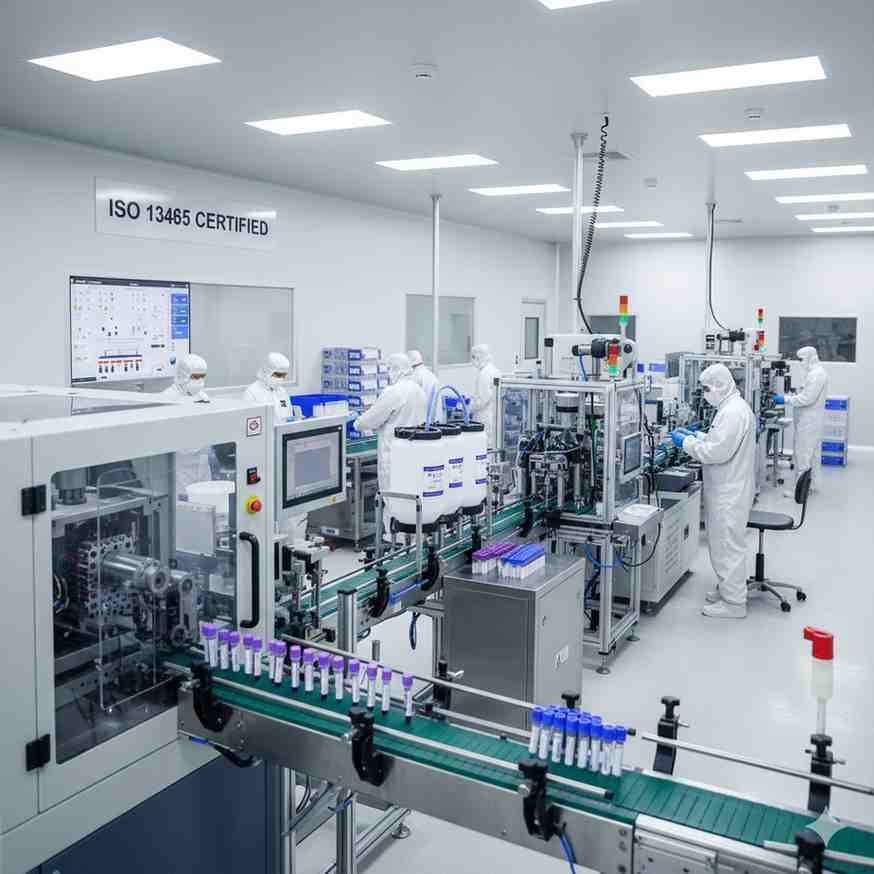
In the ecosystem of modern diagnostics, the blood collection tube is often an underrated component. However, as an essential In-Vitro Diagnostic (IVD) device, its role is critical. These tubes do more than just hold a sample; they are precision-engineered vessels designed to preserve the biochemical integrity of blood from the moment of phlebotomy to the point of analysis.
For manufacturers and IVD startups, understanding the complexities of blood collection tube manufacturing is vital for ensuring clinical accuracy and patient safety. This article explores the technical nuances of production, from raw material selection to the stringent regulatory frameworks that govern the industry.
The transition from open-syringe methods to closed vacuum systems revolutionized clinical diagnostics. Vacuum blood collection tubes are designed to draw a predetermined volume of blood automatically, reducing the risk of needle-stick injuries and minimizing pre-analytical errors.
Whether used for serum separation, hematology, or coagulation studies, these devices must maintain a stable internal environment. Any deviation in the manufacturing process—such as inconsistent vacuum pressure or improper additive coating—can lead to hemolysis, micro-clots, or skewed analyte concentrations, directly impacting patient diagnosis.
Different diagnostic tests require different blood components (whole blood, plasma, or serum). To facilitate this, manufacturers produce a variety of tubes distinguished by color-coded caps and specific chemical additives:
Clot Activators: Typically used in red or gold-topped tubes to accelerate the separation of serum.
Anticoagulants: Substances like EDTA, Heparin, or Sodium Citrate are used to prevent clotting for plasma or whole blood analysis.
Gel Separators: Thixotropic gels that form a physical barrier between cells and serum/plasma during centrifugation.
Glycolytic Inhibitors: Such as Sodium Fluoride, used primarily for glucose stabilization.
The production of these devices requires a highly controlled environment, typically a Class 100,000 (ISO 8) cleanroom, to prevent particulate and microbial contamination.
The process begins with the injection molding of the tube body. Most modern tubes are made from Polyethylene Terephthalate (PET) or Polypropylene (PP). PET is favored for its glass-like transparency and excellent gas barrier properties, which are essential for maintaining the vacuum over the product’s shelf life.
Precision is paramount during the chemical dosing stage. Additives are either sprayed as a fine mist onto the inner walls or dispensed as a liquid/powder. This ensures a high surface area for the blood to interact with the reagent. Advanced automated systems are utilized in the blood collection tube manufacturing process to ensure microliter-level accuracy in additive volume.
Once the additives are applied, the rubber stopper and plastic cap are assembled. The vacuum is then introduced. This is perhaps the most sensitive stage; the level of vacuum determines the draw volume. Manufacturers must calibrate the vacuum based on altitude and atmospheric pressure to ensure the tube pulls the exact amount of blood required for the additive ratio.
Labels are applied with high-speed precision, often including barcodes for traceability. The labels must be durable enough to withstand centrifugation and refrigeration without peeling or fading.
The quality of the final product is a direct reflection of the raw materials used. Manufacturers must vet suppliers for:
Medical Grade Plastics: Resins must be USP Class VI compliant to ensure no chemicals leach into the blood sample.
Butyl Rubber Stoppers: Stoppers must be self-sealing and chemically inert to prevent contamination.
Chemical Purity: Additives like EDTA or Heparin must meet pharmaceutical-grade standards to ensure they do not interfere with enzymatic reactions in the lab.
Maintaining high medical device quality control standards is a non-negotiable aspect of production. Quality checks occur at every stage of the lifecycle:
Dimensional Inspection: Ensuring tube diameter and length are compatible with automated laboratory analyzers.
Vacuum Stability Testing: Accelerated aging tests are conducted to ensure the vacuum remains intact throughout the labeled shelf life.
Additive Efficacy: Random samples are tested with blood or blood analogs to verify that clotting or anticoagulation occurs within the specified timeframes.
Centrifugation Testing: Tubes are spun at high RCF (Relative Centrifugal Force) to ensure the plastic does not crack and the separator gel migrates correctly.
While not all blood collection tubes are required to be sterile internally, many global markets and specific applications (such as blood culture or molecular diagnostics) demand it. Gamma irradiation is the most common sterilization method, as it can penetrate the packaging and the tube itself without leaving chemical residues.
Packaging must provide a secondary barrier against moisture and gas exchange. If the gas barrier is compromised, the vacuum will dissipate over time, rendering the tube useless for precise volume collection.
Navigating the regulatory landscape is a core challenge for any manufacturer. In the United States, these are regulated by the FDA as Class II medical devices. In the European Union, they fall under the In-Vitro Diagnostic Regulation (IVDR 2017/746).
Adherence to IVD manufacturing standards such as ISO 13485 (Medical Devices – Quality Management Systems) is essential. This standard ensures that every step of the manufacturing process is documented, traceable, and subject to risk management protocols. Furthermore, ISO 6710 provides specific guidance on the requirements and testing methods for single-use containers for human venous blood specimen collection.
Consultancies like Operon Strategist often assist firms in aligning their technical files and manufacturing layouts with these international benchmarks to ensure seamless market entry.
Manufacturing these devices is not without its hurdles. One of the most common issues is “premature loss of vacuum,” often caused by microscopic defects in the injection molding process or poor-quality rubber stoppers. To mitigate this, manufacturers implement automated vision inspection systems that detect hairline cracks or sealing flaws in real-time.
Another risk is “cross-contamination” during the additive spraying process. If traces of EDTA end up in a serum tube, it can lead to false potassium elevations and false calcium decreases in patient results. Strict physical separation of production lines and rigorous cleaning validations are the primary defenses against such risks.
The transition from a startup to a scale-up in the IVD space requires a shift from “functional” manufacturing to “quality-driven” manufacturing. This means moving beyond simply making a product that works to creating a system that ensures every single tube out of millions performs identically.
A robust Quality Management System (QMS) ensures that if a failure occurs, the manufacturer can trace the issue back to a specific batch of raw material or a specific hour of production. This level of accountability is what builds trust with healthcare providers and diagnostic laboratories worldwide.
Blood collection tube manufacturing is a sophisticated blend of chemical engineering, polymer science, and mechanical precision. As the diagnostic industry moves toward more sensitive molecular and genetic testing, the demands on these “simple” tubes will only increase. By focusing on high-grade materials, rigorous vacuum calibration, and strict adherence to international regulatory standards, manufacturers can ensure that the first step in the diagnostic journey is a reliable one. Success in this field is measured not just by production volume, but by the consistency and integrity of the clinical data these tubes help protect.

© 2025 Crivva - Hosted by Airy Hosting Managed Website Hosting.