

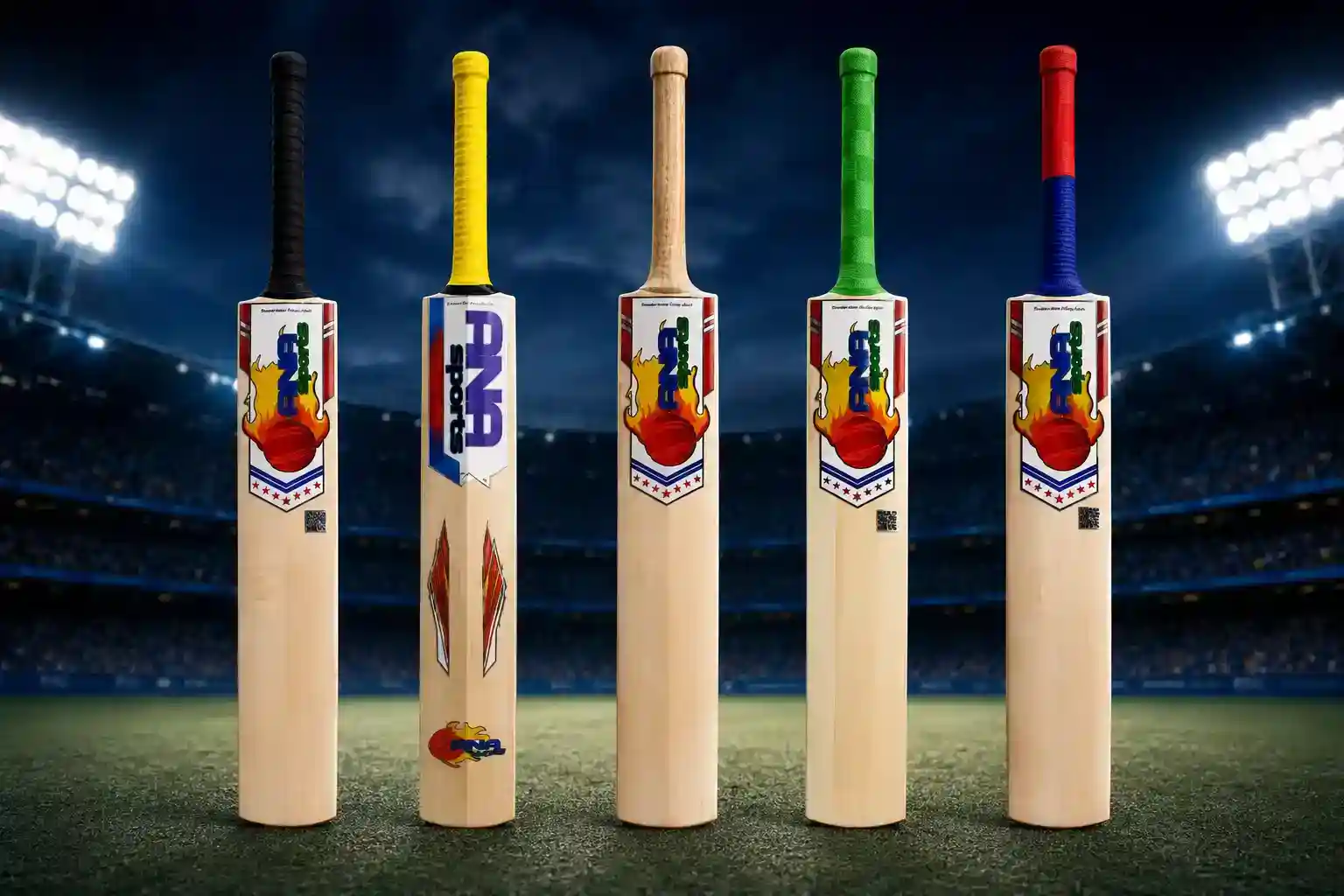
Picking up a bat for the first time is exciting. But walk into a cricket shop — or scroll through an online store — and the options can feel genuinely bewildering. Different willow types, grades, weights, profiles, and handle sizes. It’s a lot to process when you’re just trying to get started. A good cricket bat for beginners doesn’t need to be expensive or technically complex — but it does need to be right for your size, skill level, and how seriously you’re likely to take the game.
This guide cuts through the noise and tells you exactly what to look for, what to avoid, and how to make a smart first purchase.
Before we talk about wood grades or bat profiles, here’s the one truth that should shape every beginner’s buying decision:
You don’t need an expensive bat to learn cricket.
In fact, buying a premium Grade 1 English willow bat as a first-time player is one of the most common and costliest mistakes in the sport. High-grade willow is softer, more reactive, and more delicate — it rewards an experienced player’s timing and technique. In the hands of a beginner still developing their game, it’s simply more likely to get damaged.
Start smart. Buy appropriately. Upgrade when your game demands it.
Every cricket bat blade is made from one of two types of willow. This is the first and most important distinction.
Kashmir willow is grown in the Kashmir Valley of India. It’s denser, heavier for its size, and more resistant to rough use than English willow. It doesn’t have the same natural spring or responsiveness, but for someone still learning footwork, grip, and shot-making, that difference is largely irrelevant.
Why Kashmir willow makes sense for beginners:
For school players, young beginners, or anyone trying cricket for the first time, a good Kashmir willow bat is the right choice — full stop.
If you’ve been playing for a season or two, you’re training regularly, and you’ve developed basic technique, then stepping up to a lower-grade English willow (Grade 3 or Grade 4) is a reasonable investment. At this stage, you’ll start to notice the difference in how the ball comes off the bat.
Don’t rush this transition. Technique first, then equipment.
An incorrectly sized bat will actively hamper your development. A bat that’s too heavy causes you to push at the ball rather than swing through it. A bat that’s too long makes it impossible to play naturally.
Method 1: The Drop Test
Stand upright in your batting stance and hold the bat by your side with your arm straight. The toe of the bat should just touch the ground — or be within a couple of centimetres of it.
Method 2: Height-Based Sizing Chart
|
Player Height |
Recommended Bat Size |
|
Under 4’3″ (130cm) |
Size 0 or 1 |
|
4’3″–4’6″ (130–137cm) |
Size 2 |
|
4’6″–4’9″ (137–145cm) |
Size 3 |
|
4’9″–5’0″ (145–152cm) |
Size 4 |
|
5’0″–5’3″ (152–160cm) |
Size 5 |
|
5’3″–5’6″ (160–168cm) |
Size 6 |
|
5’6″–5’9″ (168–175cm) |
Harrow |
|
5’9″ and above (175cm+) |
Full / Short Handle |
These are guidelines, not rigid rules. If in doubt, always go one size smaller rather than larger — a slightly smaller bat is easier to control and helps build better technique.
Heavier bats look impressive. Some beginners — particularly adults — assume a heavier bat will hit the ball harder. This thinking is understandable, but it’s wrong.
Power in cricket comes from bat speed, not bat weight.
A beginner struggling to swing a 1350g bat will not hit the ball as hard as an experienced player whipping through a 1200g bat with proper technique and timing.
Recommended weights for beginners:
When you pick up a bat, take a full backlift and a complete drive swing. If it feels heavy after five swings, it’s too heavy. You should be able to bat for 20 minutes in the nets without your wrists and forearms fatiguing.
Modern cricket bats come in all sorts of exotic profiles — mega edges, concave spines, scoop backs. For a beginner, most of this is irrelevant and some of it is counterproductive.
What a beginner should look for in a bat profile:
Avoid bats marketed as “power hitting” or “T20 bats” in the early stages. These extreme profiles suit players who have already mastered the basics and are looking to add power. They’re harder to control and actively teach bad habits.
For most beginners, a semi-oval handle is the ideal starting point. It provides a small amount of natural guidance for bat face alignment — which is genuinely helpful when you’re still developing your grip and stance — while still feeling natural in the hand.
Key handle considerations:
Yes — even Kashmir willow bats benefit from basic preparation before use.
You don’t need to spend 6 hours with a mallet like a professional would with Grade 1 willow, but a basic preparation routine will extend your bat’s life significantly:
This basic preparation takes an afternoon and can double the lifespan of your bat.
Buying online without checking size. Always verify the bat sizing against your height before purchasing. Return policies on cricket equipment can be restrictive, especially once a bat has been used.
Going for the most expensive option. Premium bats require premium technique to use properly. A Grade 1 English willow bat in the hands of a beginner is genuinely more fragile than a quality Kashmir willow bat.
Prioritising brand over fit. Famous brand names are appealing, but a well-sized, appropriate Kashmir willow bat will serve you better than a premium bat that’s the wrong weight or size.
Ignoring the grip. A worn or hard grip makes the bat harder to control and increases the likelihood of blisters. Always check grip condition before buying — and replace it the moment it starts to feel smooth or slick.
Buying a bat to “grow into.” A bat that’s too big right now will teach poor technique. The short-term cost of buying the right size is worth every rupee or penny.
|
Player Level |
Bat Type |
Expected Cost (India) |
Expected Cost (UK) |
|
Absolute beginner / school |
Kashmir willow |
₹500–₹2,500 |
£15–£50 |
|
Recreational / club beginner |
Kashmir willow / Grade 4 EW |
₹2,000–₹5,000 |
£40–£90 |
|
Developing club player |
Grade 3–4 English willow |
₹4,000–₹8,000 |
£70–£130 |
|
Committed club player |
Grade 2 English willow |
₹8,000–₹18,000 |
£130–£250 |
There’s no point spending more than you need to at the beginning. The bat you use in your first season is not the bat you’ll use in your fifth — and that’s perfectly fine.
“Pick it up before you buy it.” More experienced players consistently say the same thing: feel the bat in your hands. Pick-up and balance matter more than any number on a spec sheet.
“Start lighter than you think.” Almost every adult beginner overestimates the bat weight they can handle effectively. Lighter and faster beats heavy and sluggish.
“Don’t ignore the toe.” The toe of the bat is the most vulnerable area for a beginner — it absorbs yorkers, hits the ground on big drives, and gets knocked around in kit bags. Protect it with a toe guard from day one.
“Buy from a cricket specialist.” General sports retailers often carry limited stock and less knowledgeable staff. A dedicated cricket shop — physical or online — is more likely to give you the right advice and appropriate options.

© 2025 Crivva - Hosted by Airy Hosting Managed Website Hosting.