

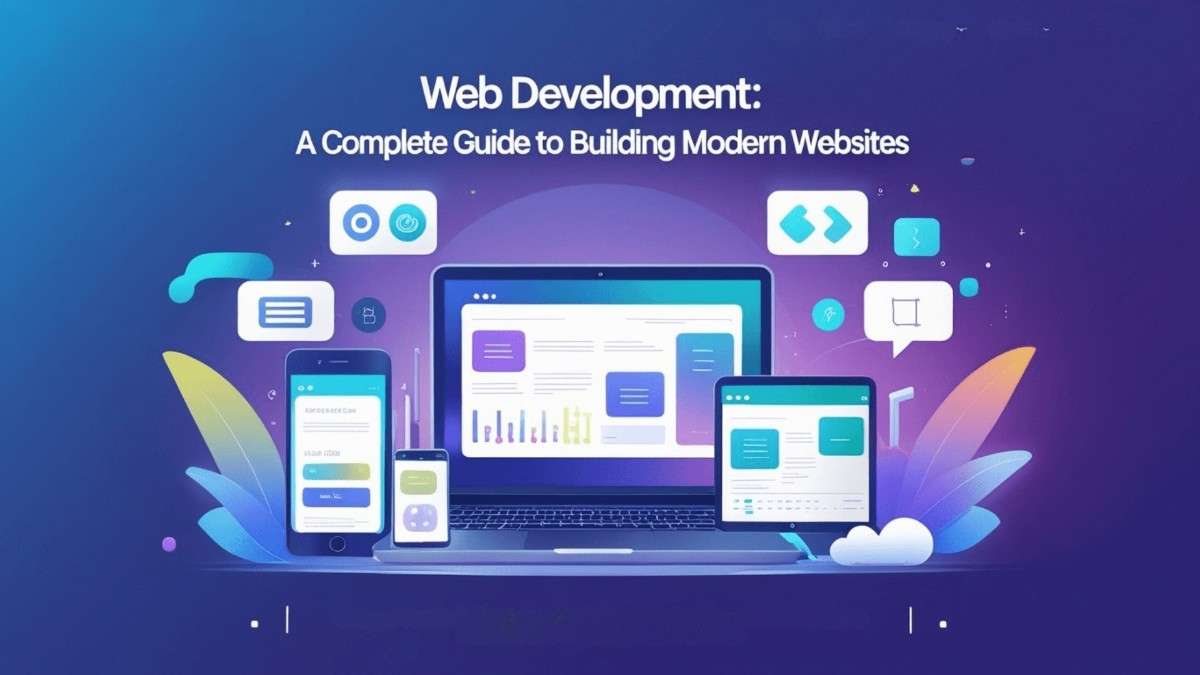
In today’s digital landscape, web development plays a pivotal role in shaping how we interact with information, services, and each other online. From personal blogs to complex e-commerce platforms, the ability to build modern websites has become an essential skill for individuals and businesses alike. This comprehensive guide aims to demystify the web development process, covering key technologies, design principles, and best practices that empower developers to create engaging, responsive, and high-performing websites. Whether you’re a newcomer looking to embark on your web development journey or an experienced developer seeking to refresh your knowledge, this guide will provide you with the foundational knowledge and insights needed to thrive in the ever-evolving world of web development.
Web development is the process of creating and maintaining websites. It encompasses everything from simple static pages to complex web applications. Think of it as constructing a digital house; you need a solid foundation (back-end), stylish decor (front-end), and a good street address (domain) for visitors to find you!
In today’s world, having a website is as essential as having a phone number. Web development acts as the bridge between businesses and customers in the digital marketplace. A well-developed website can boost credibility, enhance customer engagement, and ultimately drive sales. In short, if you want to stay relevant in the digital jungle, mastering web development is akin to having a trusty map.
Front-end frameworks are like the foundation of a great house, only instead of bricks and mortar, they’re made of code and creativity. Popular frameworks such as Bootstrap, React, and Vue.js help developers build user interfaces efficiently. Bootstrap offers a grid system and pre-designed components, making responsive design a breeze. React, backed by Facebook, allows for the creation of interactive UIs, while Vue.js is praised for its simplicity and versatility. Choose your weapon wisely, and let your front-end dreams flourish!
While front-end frameworks handle the cosmetics of a website, back-end frameworks like Node.js, Django, and Ruby on Rails serve as the brains behind the operation. These frameworks manage server-side logic, database interactions, and user authentication, ensuring your website runs smoothly. With features like rapid development, security, and scalability, they make your life easier and your website smarter. So, go ahead and pick your favorite—just remember, a well-fed back-end yields a happy user experience!
If your website takes longer to load than a snail crossing a finish line, you’re in trouble. Users expect instant gratification, so optimizing your site’s load times is key. Techniques like image compression, lazy loading, and minimizing HTTP requests can work wonders. Using Content Delivery Networks (CDNs) can also help deliver your content faster by distributing it across multiple servers worldwide. Remember, a speedy website is a happy website—and happy users are more likely to return!
What’s the use of a stellar website if no one can find it? That’s where SEO comes in. SEO is the art and science of optimizing your site so it ranks higher in search engine results. Start with keyword research to figure out what terms your audience is searching for, and then sprinkle those keywords throughout your content (but don’t overdo it or you’ll sound like a robot). Also, focus on meta descriptions, header tags, and mobile optimization to give your site the best shot at climbing those search results.
AI is not just for sci-fi movies anymore—it’s taking the web development world by storm! From personalized user experiences to chatbots that handle customer queries, AI is becoming an integral part of modern web development. Tools powered by machine learning can analyze user behavior, helping you optimize your site and improve customer engagement. Embracing AI can give your website that extra flair—think of it as the cherry on top of your digital sundae!
Web development is a rapidly evolving field, and emerging technologies like blockchain, IoT (Internet of Things), and 5G are all set to make waves. Blockchain can enhance security and transparency, particularly for e-commerce, while IoT devices open new avenues for interactivity and automation. Meanwhile, 5G offers lightning-fast connectivity—perfect for real-time applications. Keeping up with these trends is essential for developers looking to future-proof their skills and deliver cutting-edge websites!As we conclude this comprehensive guide on web development, it’s clear that the field continues to evolve, presenting both challenges and opportunities for developers. By understanding the essential technologies, design principles, and best practices outlined in this article, you are equipped to build modern websites that not only meet user expectations but also stand out in a competitive digital landscape. Embrace the journey of continuous learning and experimentation, and you’ll be well on your way to becoming a proficient web developer. Happy coding!
To begin your web development journey, you should have a basic understanding of HTML, CSS, and JavaScript. Familiarizing yourself with version control systems like Git and learning about responsive design principles can also be beneficial.
The time it takes to become proficient in web development varies based on your prior experience, the amount of time you dedicate to learning, and the complexity of the projects you undertake. Generally, with consistent effort, one can become proficient within 6 months to 2 years.
Front-end development focuses on the visual elements and user interface of a website that users interact with directly, using technologies like HTML, CSS, and JavaScript. Back-end development, on the other hand, involves server-side programming, databases, and application logic, ensuring that everything on the front end works correctly.
#webdevelopment #webapp #webservice #andswitchtech #webbusiness #webdesign

© 2025 Crivva - Hosted by Airy Hosting Managed Website Hosting.