

If you’ve ever signed a supplier agreement and seen a clause about “rebates” hidden on page 9, you’re not alone. Most businesses deal with vendor rebates regularly, but few truly understand how they work, what they’re worth, or how much money is being left on the table. Let’s change that.
A vendor rebate is a payment from a supplier to the buyer, usually after certain purchasing milestones are reached. Think of it as a reward for loyalty or volume. Unlike a discount, which lowers your price right away, a rebate is paid afterward, often monthly, quarterly, or annually.
This is where many buyers get confused. A discount reduces your invoice immediately. A vendor rebate, however, comes after you’ve already paid the full price once you’ve met a purchase threshold or other agreed-upon conditions. This timing difference affects your cash flow in real ways.
Don’t count rebates in your budget as guaranteed income unless the rebate agreement is signed and your volume targets are realistic.
Not all vendor rebates work the same way. Common types include: volume rebates (triggered when you reach a purchase threshold), growth rebates (based on your spending that increases year after year), product-specific rebates (tied to specific SKUs), and marketing rebates (in exchange for promotional support). Knowing which type you have is important for planning.
Many buyers see vendor rebate terms as unchangeable because they come pre-written in supplier contracts. They aren’t. The thresholds, percentages, payment schedules, and eligible products can all be negotiated. Entering that conversation informs businesses to recover more value.
Before signing, ask your vendor what top buyers in your category typically earn in rebates. Use that as a guide in your negotiation.
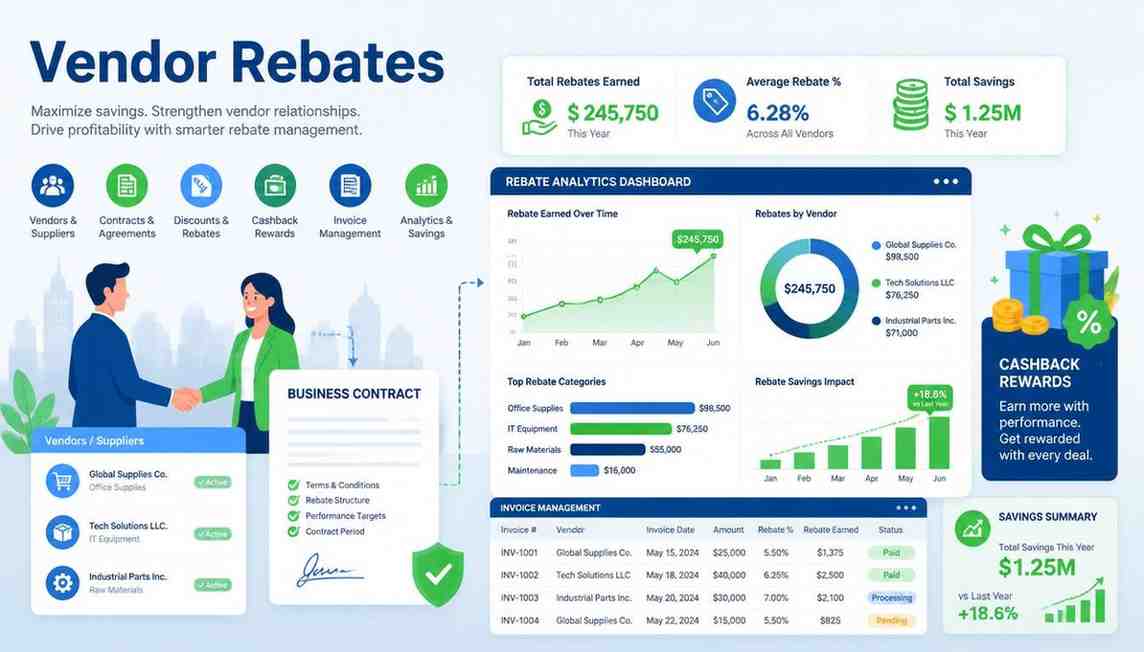
Here’s an uncomfortable truth: many companies lack a reliable way to track the rebates they’re owed, the thresholds they’re close to, or whether they’ve been paid. Spreadsheets can quickly become unmanageable with multiple suppliers. Dedicated rebate management tools exist for this reason.
When you account for rebates, your effective cost of goods is lower than the amount on the invoice. This means that decisions made without considering vendor rebates like pricing products, assessing supplier competitiveness, or calculating profitability may rely on inaccurate figures. Finance and procurement need to communicate on this.
Some suppliers pay rebates monthly, others quarterly, and some annually or only after a formal claim is made by the buyer. If your finance team isn’t tracking the rebate payment schedule, you might miss a late or missing payment. Incorporate a reconciliation process into your accounts receivable workflow.
Unclaimed rebates are more common than you might think. Suppliers don’t always remind you when they owe you money.
Rebate structures can inadvertently push buyers to buy more than they need to meet a threshold. This is called “over-buying,” and it can lead to inventory issues. On the other hand, a well-designed rebate program can effectively align the interests of the supplier and the buyer. The key is recognizing when a rebate genuinely rewards smart purchases versus when it pushes you into a poor decision.
From an accounting perspective, vendor rebates are typically recognized as a reduction in purchase costs, not as revenue. How and when they’re recognized on your financial statements depends on the rebate type and your accounting standards (ASC 606 under US GAAP, or IFRS 15 internationally). Check with your accountant if you’re unsure how to categorize them correctly.
Manually managing vendor rebate agreements across multiple suppliers is tedious and prone to errors. Rebate management software can automate tracking, notify you as you approach thresholds, flag unclaimed payments, and generate reports for finance. The return on investment is often immediate; businesses often find they have been missing out on thousands in unclaimed rebates.
Even smaller businesses can benefit from a simple shared spreadsheet that lists supplier names, rebate terms, thresholds, and payment dates.
Vendor rebates are one of the most underused tools in procurement and supply chain finance. Whether you’re a small business with a few suppliers or a large enterprise managing hundreds, having a clear strategy for negotiating, tracking, and reconciling rebates directly affects your profits. Businesses that prioritize rebate management often find money they didn’t know they were earning.
A trade discount reduces the price on the invoice before you pay. A vendor rebate is paid to you after the purchase, usually once you meet certain conditions, like a volume threshold. The timing and conditions are the key differences, affecting cash flow and accounting.
Generally, vendor rebates are considered a reduction in the cost of purchases (cost of goods sold), not as separate revenue. Under US GAAP (ASC 606) and IFRS 15, the timing of recognition depends on whether the rebate is certain or contingent. Always consult an accountant knowledgeable in procurement accounting to ensure this is correctly managed.
In most places, vendor rebates are seen as a deduction from the purchase cost instead of taxable income. However, tax treatment can vary based on how the rebate is structured, your country’s tax laws, and the nature of the agreement. Consult a tax advisor for specific guidance.
Eligibility is defined in your supplier contract or rebate agreement. Review the terms to identify purchase thresholds, qualifying product categories, measurement periods (monthly, quarterly, annual), and any conditions like compliance with payment terms. If you don’t have a formal rebate agreement, it’s worth asking your supplier directly; many will provide one when requested.
Start by reviewing your rebate agreement to confirm the payment terms and amount owed, then formally notify your supplier in writing. Many missed payments result from administrative errors rather than bad faith. If you can’t resolve the issue, consider escalating through your account manager, citing the contract’s dispute resolution clause, or getting legal counsel involved in serious cases.

© 2025 Crivva - Hosted by Airy Hosting Managed Website Hosting.