

Modern businesses move fast. Teams travel across borders, remote employees log in from different time zones, and operations depend on uninterrupted connectivity. Yet many companies are still relying on outdated mobile infrastructure – physical SIM cards, fragmented carrier plans, and unpredictable roaming charges.
At first, these systems seem manageable. But as your business grows, the cracks begin to show. Costs rise, inefficiencies pile up, and managing connectivity becomes a burden rather than a support system.
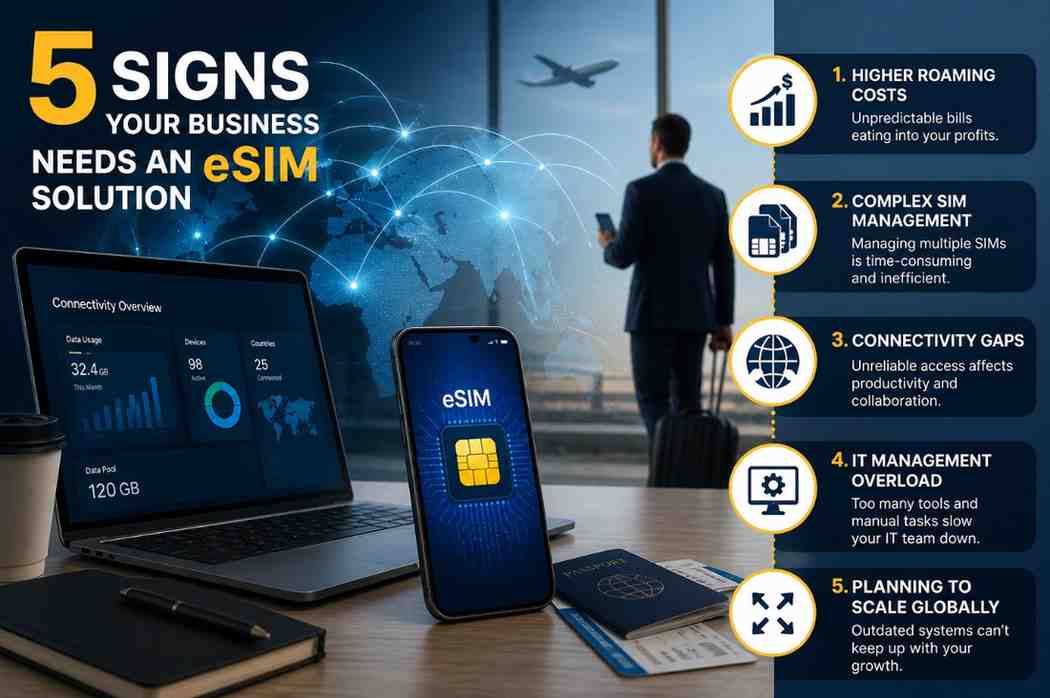
If any of this sounds familiar, it may be time to consider a smarter approach. Here are five clear signs your business is ready for a more advanced connectivity solution.
What many organizations don’t realize is that connectivity is no longer just an operational necessity – it’s a competitive advantage. Slow, unreliable, or expensive mobile access can directly impact decision-making, customer experience, and team responsiveness.
As digital transformation accelerates, businesses that fail to modernize their connectivity risk falling behind more agile competitors. Investing in smarter infrastructure today not only solves current challenges but also prepares your organization for future growth, ensuring your teams stay connected, productive, and ready to perform in any environment.
One of the biggest red flags is a lack of control over mobile expenses. If your company regularly deals with fluctuating roaming bills, you’re not alone.
Traditional telecom models often include:
For businesses with traveling employees or global operations, this creates a budgeting nightmare. Finance teams struggle to forecast expenses, and unexpected charges eat into profits.
An eSIM-based system offers a more predictable cost structure. Instead of juggling multiple carriers and plans, businesses can centralize data usage and gain better visibility into spending patterns.
Physical SIM cards might work for small setups, but they quickly become inefficient as your team grows.
Consider the challenges:
This manual process consumes time and increases the risk of errors. IT teams often find themselves handling logistical issues instead of focusing on strategic tasks.
A digital approach eliminates these bottlenecks. With remote provisioning, businesses can activate and manage connectivity without needing physical access to devices.
In today’s work environment, reliable connectivity is non-negotiable. Whether your team is working remotely, traveling internationally, or operating across regions, they need seamless access to mobile data.
However, traditional setups often lead to:
These issues don’t just frustrate employees – they directly impact productivity and performance.
When businesses adopt a more flexible connectivity model, teams can stay connected without interruption. This is where the shift toward an eSIM business approach becomes especially valuable, enabling global coverage without constant switching or delays.
As businesses scale, so does the complexity of managing devices and connectivity. IT departments often juggle:
This fragmented system creates unnecessary workload and limits efficiency. Instead of having a centralized view, IT teams are forced to manage disconnected processes.
With a streamlined solution, IT teams can:
This shift reduces operational overhead and allows IT professionals to focus on higher-value initiatives.
Growth is exciting – but it also exposes the limitations of outdated systems. If your business is expanding into new markets, your connectivity infrastructure needs to keep up.
Relying on traditional SIM cards in a global environment often leads to:
A scalable solution is essential for supporting expansion without adding complexity.
By adopting a modern connectivity framework, businesses can:
An eSIM-driven model aligns with the needs of growing companies, offering flexibility without the logistical challenges of traditional systems.
The move toward digital connectivity isn’t just a trend – it’s a response to how work has evolved. Companies are no longer confined to a single office or region. Teams are distributed, operations are global, and expectations are higher than ever.
In this environment, connectivity must be:
Traditional SIM-based systems struggle to meet these demands. That’s why more organizations are rethinking their approach and investing in solutions that align with modern workflows.
Transitioning to a new connectivity model doesn’t have to be complicated. Businesses can start by identifying key areas where current systems fall short – such as high roaming costs or device management challenges – and implementing targeted solutions.
A phased approach often works best:
This allows businesses to see measurable benefits without disrupting existing operations.
Voye Data Pool provides a centralized solution that simplifies how businesses manage mobile connectivity. By enabling shared data access across teams and devices, it reduces the complexity associated with traditional telecom systems.
With a structure focused on flexibility and cost efficiency, Voye Data Pool supports businesses in transitioning toward a more streamlined model. It aligns with the needs of companies operating across multiple regions, helping them maintain control while improving overall connectivity.
If your business is dealing with rising roaming costs, operational inefficiencies, or connectivity challenges, it’s worth taking a closer look at your current setup. These issues are often signs that your infrastructure is no longer keeping pace with your needs.
Recognizing these signals early allows you to make a strategic shift – one that supports growth, improves productivity, and reduces unnecessary expenses.
In a world where connectivity drives business success, staying ahead means choosing solutions that are built for how modern teams work.

© 2025 Crivva - Hosted by Airy Hosting Managed Website Hosting.