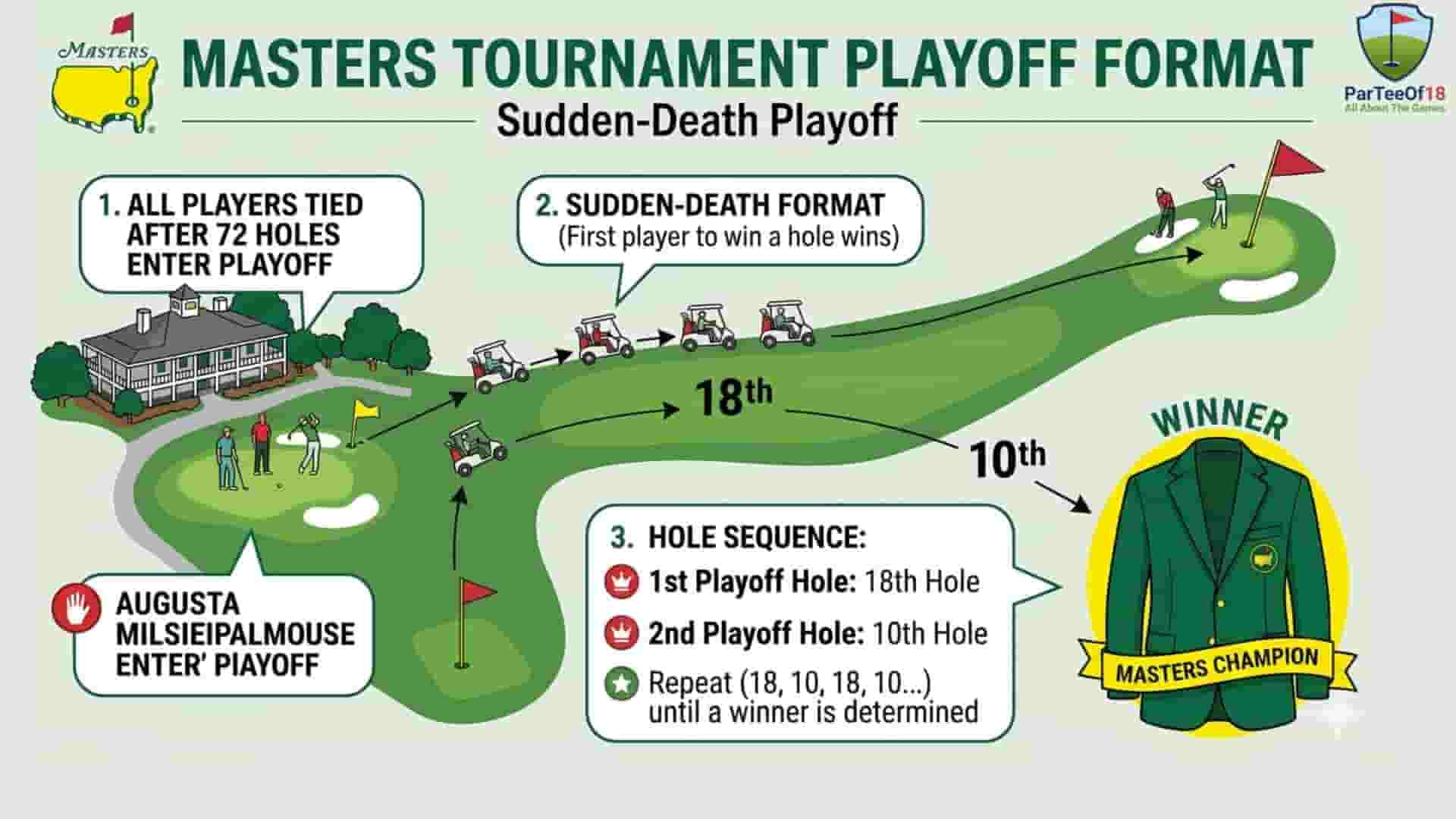
Golf fans around the world know that the Masters Tournament delivers some of the most dramatic moments in the sport. But when the competition ends in a tie after 72 holes, the excitement doesn’t stop it intensifies. This is where the masters playoff format comes into play, deciding the ultimate champion in a thrilling and pressure-filled finish.
In this blog, we’ll break down exactly who wins, how the process works, and why this playoff system creates unforgettable moments in golf history.
At the end of four rounds, if two or more players are tied at the top of the leaderboard, the tournament doesn’t rely on scorecards, statistics, or past performance to determine the winner. Instead, players enter a playoff.
This playoff is designed to be simple, fair, and highly competitive. It ensures that the champion is decided based on performance under pressure rather than technicalities.
Once the final round concludes and a tie is confirmed, the tied players are informed immediately. There is typically a short break, giving them time to regroup mentally and physically.
The playoff then begins on a predetermined hole usually the 18th hole at Augusta National. From that point forward, every shot matters even more than before.
The Masters uses a sudden death playoff system. This means:
This process continues until one player emerges with a clear advantage.
Unlike aggregate playoffs (where scores over multiple holes are combined), sudden death delivers instant results, making it one of the most exciting formats in golf.
The winner is the golfer who scores better than all others on a playoff hole.
For example:
There are no second chances once a better score is posted. It’s a direct, head-to-head battle where precision and composure decide everything.
The playoff environment is entirely different from regular rounds. Even the most experienced golfers feel the intensity.
Here’s why:
There’s no room for recovery. A single mistake like a missed putt or a poor drive can end a player’s chances.
Golfers must stay calm despite the high stakes, roaring crowds, and global attention.
Players often take more calculated risks. For example, going for a birdie instead of playing safe for par.
Over the years, playoffs at the Masters have produced iconic moments that fans still talk about today.
These moments highlight why the playoff system is so compelling it creates a stage where legends are made.
Traditionally, the playoff starts on the 18th hole and may move to the 10th hole if needed. These holes are carefully selected because they challenge every aspect of a golfer’s game:
This ensures that the winner truly earns the title through skill and composure.
Winning a playoff is not just about skill it’s also about smart decision-making.
Some players choose to go aggressive, aiming for birdies to secure a quick win. Others prefer a safer approach, hoping their opponents make mistakes.
Putting becomes even more critical. A single missed putt can cost the championship.
The ability to stay focused often separates winners from runners-up.
In modern golf, players and fans alike rely on digital tools to analyze performance and understand scoring patterns. Using a golf scoring app, players can track their statistics, identify strengths, and prepare better for high-pressure situations like playoffs.
These tools don’t replace skill, but they provide valuable insights that can make a difference in tight competitions.
The masters playoff format stands out because of its simplicity and excitement. There’s no confusion about scoring or rules everyone understands that the lowest score on a hole wins.
This clarity benefits both players and spectators, making the final moments of the tournament easy to follow and incredibly engaging.
Not all tournaments use sudden death. Some rely on:
However, the Masters keeps it straightforward. This approach ensures:
Winning a Masters playoff requires a unique combination of skills:
Accurate shots are essential, especially under pressure.
Players must trust their instincts and commit fully to every shot.
Golfers who have faced high-pressure situations often perform better.
Staying calm can make the difference between winning and losing.
The Masters Tournament is already one of the most prestigious events in golf, but when it goes to a playoff, it reaches another level of excitement. The sudden death format ensures that the winner is decided in the most direct and thrilling way possible.
Ultimately, the champion is the player who performs best when it matters most delivering under pressure, making smart decisions, and executing shots with precision.
Whether you’re a casual fan or a dedicated golfer, understanding how the playoff works adds a new layer of appreciation to the game. And the next time you see a tie at the top, you’ll know that the real drama is just beginning.
The Masters uses a sudden-death playoff format to decide the winner if players are tied after 72 holes. In this system, golfers play one hole at a time, and the player with the lowest score on a hole wins immediately.
There is no fixed number of holes. The playoff continues hole-by-hole until one player scores better than the others on a single hole.
The playoff usually starts on the 18th hole at Augusta National. If needed, it then moves to the 10th hole and continues alternating until a winner is decided.
If all players have the same score on a playoff hole, they move on to the next hole and continue playing until one player wins outright.
No, the Masters previously used an 18-hole playoff format. Since 1976, it has switched to the sudden-death system for quicker and more exciting finishes.

© 2025 Crivva - Hosted by Airy Hosting Managed Website Hosting.