

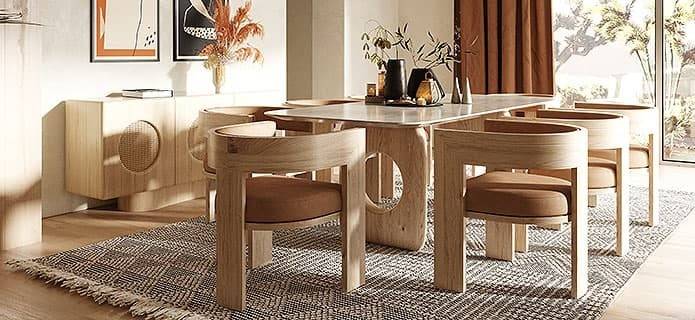
According to IMARC Group’s report titled “Indonesia Furniture Market Size, Share, Trends and Forecast by Material, Application, Distribution Channel, and Region, 2026-2034“, The report offers a comprehensive analysis od the industry, including market forecast, growth, share, and regional insights.
The Indonesia furniture market size was valued at USD 9.1 Billion in 2025 and estimates the market to reach USD 15.2 Billion by 2034, exhibiting a CAGR of 5.82% during 2026-2034.
Catalyzed by rapid digital adoption and a surging domestic middle class, the Indonesia Furniture Market Gains from E-Commerce Boom represents a highly lucrative convergence of traditional artisanal manufacturing and modern digital distribution. This structural shift is actively transforming Southeast Asia’s home and commercial furnishing landscape into a high-velocity, tech-enabled retail ecosystem.
Accelerated Valuation Trajectory: The market is positioned to scale aggressively from USD 9.1 billion in 2025 to USD 15.2 billion by 2034, registering a robust compound annual growth rate (CAGR) of 5.82%.
Digital Channel Dominance: The proliferation of online platforms is effectively eliminating geographic barriers, accelerating transaction volumes, and connecting localized furniture manufacturers directly with digitally native urban consumers.
Raw Material Supremacy: A distinct competitive advantage is maintained through the abundant localized supply of premium teak and rattan, securing resilient and cost-effective supply chains for both domestic retail and global export.
High-Volume Export Ecosystem: Bolstered by streamlined logistics and rigorous international certifications, Indonesia’s furniture exports surpassed USD 2.37 billion in 2024, cementing its role as a premier global sourcing hub.
➤ Request Sample Report – Access Key Market Statistics and Actionable Insights
Global Export Hub Establishment: The Indonesian government is aggressively positioning the nation as a central hub for global furniture sourcing, streamlining export logistics and reducing bureaucratic friction to capture high-value market share in the United States and Europe.
MSME Integration into Global Supply Chains: Strategic initiatives, such as the 2025 Ministry of Trade memorandums integrating local micro, small, and medium enterprises (MSMEs) into major global retail networks, are designed to elevate domestic manufacturing capabilities to international commercial standards.
Mandating Sustainable Resource Utilization: Through the strict enforcement of the Timber Legality Assurance System (SVLK), the state is strategically aligning its vast raw material reserves with stringent global ESG mandates, ensuring long-term ecological compliance and premium international market access.
Massive Consumption Base: Rapid urbanization and a burgeoning middle-class demographic across Java and Sumatra are fueling explosive demand for residential housing. This continuous architectural expansion guarantees a high-volume, resilient consumption base for interior furnishings, ensuring highly sustainable, long-term ROI for retail investors.
Policy Support & Subsidies: The government actively stimulates the sector through export-oriented policies, strategic trade fair facilitation, and streamlined international logistics. These robust state interventions significantly de-risk foreign direct investment, ensure global compliance, and grant immediate access to lucrative Western B2B markets.
Premiumization & Tech Upgrades: As consumer preferences shift toward sophisticated, customized aesthetics, manufacturers are heavily investing in modern design software and precision CNC machinery. This rapid technological integration enables the mass production of premium, artisanal-quality goods, significantly widening operational profit margins for distributors.
Supply Chain Efficiencies: The strategic centralization of manufacturing hubs alongside newly established, dedicated international testing laboratories drastically reduces compliance bottlenecks. These localized, optimized supply chain infrastructures guarantee rapid time-to-market, minimize transit friction, and lower operational overhead costs for high-volume corporate exporters.
Aggressive Shift Toward Space-Saving Modularity: Driven by high-density urban living in metropolitan hubs like Jakarta and Surabaya, product pipelines are heavily pivoting toward multifunctional, modular, and foldable furniture systems optimized for shrinking residential footprints.
Mainstream Adoption of SVLK-Certified Eco-Materials: Global corporate procurement mandates are forcing a structural shift toward eco-friendly production. The market is increasingly dominated by SVLK-certified sustainable wood, recyclable finishes, and low-VOC materials to meet strict Western ESG compliance.
Deep Omnichannel Retail Integration: The historical divide between brick-and-mortar and digital commerce is collapsing. Forward-looking brands are heavily investing in AR-assisted room visualization and seamless online-to-offline (O2O) purchasing pathways to capture the digitally savvy consumer demographic.
Proliferation of Smart and Ergonomic Office Solutions: The intersection of hybrid work models and interior design is creating a lucrative niche for integrated “smart furniture.” Upcoming product lines featuring IoT connectivity, automated adjustability, and built-in power solutions will increasingly capture high-value corporate procurement contracts.
➤ Request Full Brochure – Discover the Complete TOC and Data Coverage: https://www.imarcgroup.com/request?type=report&id=13864&flag=A
Covering an in-depth analysis of the competitive landscape, market structure, key player positioning, competitive dashboards, top winning strategies, and detailed profiles of all major industry participants you will gain access to all these exclusive insights within the full research report.
Analysis by Material:
Analysis by Application:
Analysis by Distribution Channel:
Regional Insights:
Note: If you need specific information that is not currently within the scope of the report, we can provide it to you as a part of the customization.
1. What is the projected market size of the Indonesia furniture industry by 2034?
The Indonesia furniture market is forecast to reach USD 15.2 billion by 2034, expanding from USD 9.1 billion in 2025 at a CAGR of 5.82%, driven by rapid digital adoption, surging middle-class urbanization, and aggressive e-commerce channel proliferation.
2. Which material segment dominates the Indonesia furniture market?
Wood commands the dominant material segment, leveraging Indonesia’s abundant localized supply of premium teak and rattan, which ensures resilient, cost-effective supply chains for both domestic retail and high-volume global export operations.
3. Which application segment leads furniture consumption in Indonesia?
Home furniture represents the largest application segment, fueled by explosive residential growth, rapid urbanization across Java and Sumatra, and a burgeoning middle-class demographic driving sustained demand for interior furnishings and modern living solutions.
4. Which distribution channel is experiencing the fastest growth?
Online channels are experiencing the fastest growth, effectively eliminating geographic barriers and connecting localized manufacturers directly with digitally native urban consumers through seamless e-commerce platforms, AR-assisted room visualization, and omnichannel retail integration.
5. What emerging trends are reshaping the Indonesia furniture market?
Aggressive shift toward space-saving modular and multifunctional designs for high-density urban living, mainstream adoption of SVLK-certified eco-materials meeting global ESG mandates, deep omnichannel retail integration with AR visualization tools, and proliferation of smart ergonomic office furniture with IoT connectivity and automated adjustability are fundamentally transforming the sector’s product development and distribution frameworks.
Having analyzed the structural convergence of digital distribution acceleration and Indonesia’s unrivaled raw material sovereignty, we at IMARC Group have observed that the Indonesia furniture market has transcended conventional artisanal manufacturing cycles it is now operating as a globally integrated, digitally orchestrated home furnishing ecosystem. The expansion from USD 9.1 billion in 2025 to a projected USD 15.2 billion by 2034 is not incremental retail growth; it is the compounding outcome of synchronized MSME integration into global supply chains, SVLK-enforced sustainable resource compliance, and the irreversible shift toward omnichannel e-commerce platforms capturing digitally savvy urban consumers. Stakeholders who aggressively position their portfolios around space-saving modular designs, ESG-certified sustainable materials, AR-powered online retail experiences, and hyper-localized manufacturing hubs in Java will secure unassailable competitive advantages in one of Southeast Asia’s most export-intensive and digitally accelerated interior furnishing verticals.
Tarang, Digital Insights Specialist at IMARC Group: https://www.linkedin.com/in/tarang-chauhan-31a82b265/
Verified Data Source: IMARC Group
Contact Us:
IMARC Group
134 N 4th St. Brooklyn, NY 11249, USA
Email: [email protected]
Tel No:(D) +91 120 433 0800
United States: +1-202071-6302

© 2025 Crivva - Hosted by Airy Hosting Managed Website Hosting.