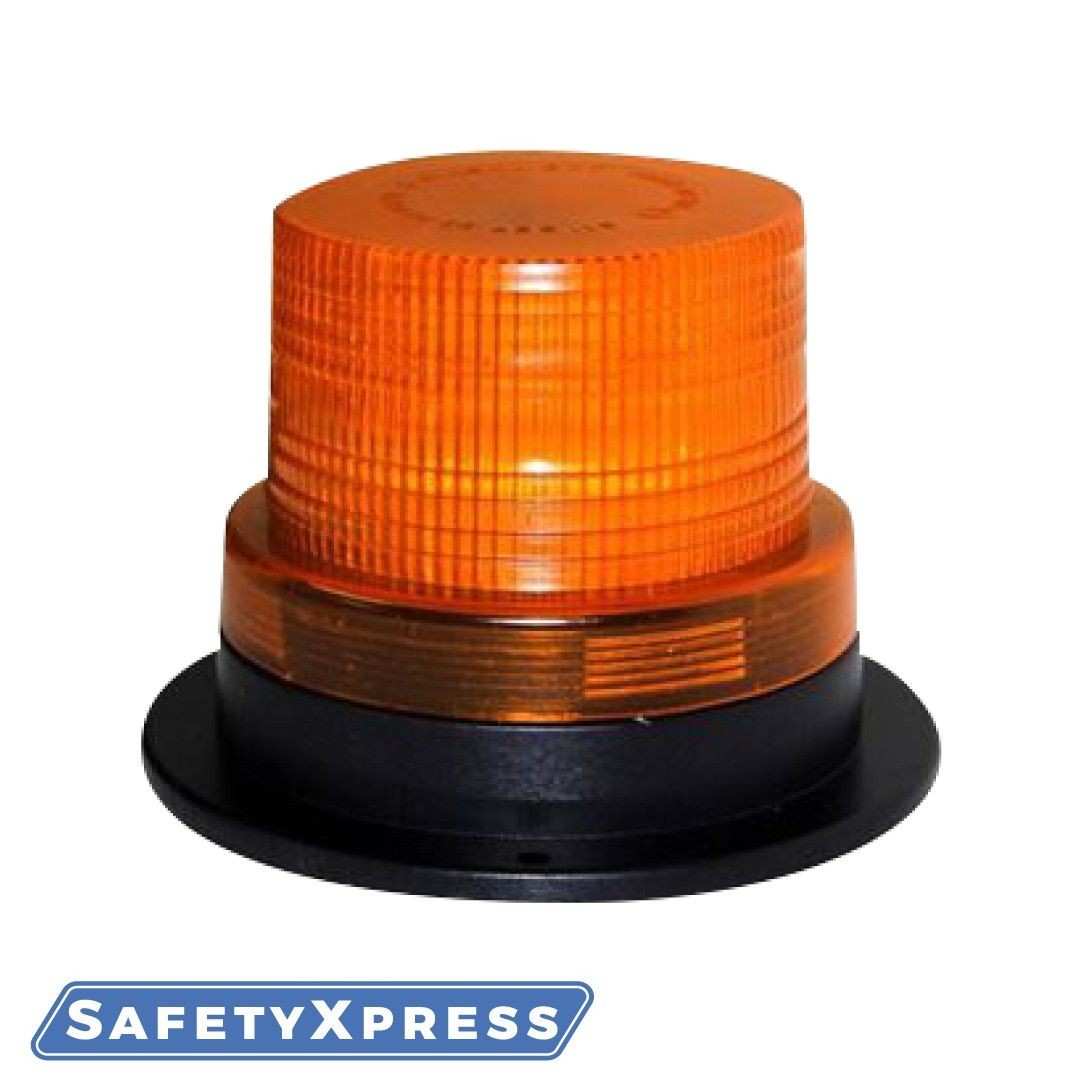
High-visibility warning lights enhance safety in busy traffic zones by exploiting fundamental principles of human visual perception, light physics, and cognitive psychology to ensure hazards are detected faster and from greater distances.
These lights use intense LED output, strategic flash frequencies, colour wavelengths optimised for human vision, and contrast engineering that cuts through visual clutter like headlights, brake lights, and roadside advertisements.
Drawing from over 15 years of hands-on work with traffic safety systems across South African highways and urban construction sites, I have observed how applying these scientific principles transforms chaotic environments into more predictable and protected spaces.
The Human Visual System and Why Standard Lights Fall Short
Our eyes and brain process information in specific ways under high-demand conditions. In busy traffic, drivers experience “attentional tunnelling” — focusing narrowly on the road ahead while filtering out peripheral stimuli.
Regular vehicle lights blend into the background noise of thousands of lumens from surrounding traffic. High-visibility warning lights overcome this by creating strong temporal and chromatic contrast that forces the brain to register the signal as important.
Research in visual neuroscience shows that flashing lights at 4–8 Hz are particularly effective because they align with the brain’s natural sensitivity to motion and change, triggering an automatic orienting response even when a driver is distracted or fatigued.
Core Scientific Principles at Work
Photometry and Luminous Intensity
Warning lights deliver high candela values (often thousands of effective candela) concentrated in specific beam patterns. This luminous intensity ensures the light remains visible even when competing against bright sunlight or opposing headlights. In traffic zones, lights with 360-degree or wide-angle coverage prevent “dead spots” where a hazard might otherwise go unnoticed.
Flash Frequency and Temporal Contrast
The human eye detects changes in light more readily than steady illumination. Optimal flash rates (typically 1–4 flashes per second for amber beacons) exploit the flicker fusion threshold — the point at which rapid flashes appear continuous but still command attention. Studies in transportation ergonomics confirm that properly timed flashes reduce reaction times by up to 30% compared to static lights.
Colour Wavelength and Atmospheric Penetration
Ambe
r and yellow-orange wavelengths (around 590–620 nm) travel better through dust, rain, and haze than pure white or red in many conditions. These colours also sit in the peak sensitivity range of human cone cells during daylight, making them highly conspicuous against grey roads and green verges. Blue lights, reserved for emergency services, leverage shorter wavelengths for maximum urgency perception.
Contrast and Visual Hierarchy
Busy traffic zones are visually noisy. High-visibility lights create a deliberate hierarchy by combining brightness, colour, and movement. This forces the brain to prioritise the warning signal over background clutter through a process called “pop-out” effect in visual search theory.
Real-World Application in High-Risk Zones
Consider a typical urban intersection or highway construction area during peak hours. Multiple light sources compete for attention. A well-designed warning light system on barricades, vehicles, or workers’ vests uses synchronised flashing patterns across multiple units to create a coherent “hazard zone” message. This collective signalling reduces cognitive load on drivers, helping them anticipate and react appropriately.
Case Study: Busy Highway Upgrade Near Johannesburg
Challenge
During a major upgrade on the N1 near Johannesburg, peak-hour traffic combined with frequent dust and occasional rain led to several incidents where drivers failed to slow down for lane shifts and workers. Standard reflective signage and basic vehicle lights were not providing enough advance warning in the visual chaos.
Action
Engineers deployed synchronised high-intensity LED warning light bars on all site vehicles and solar-powered flashing beacons along the work zone. The system used amber lights with a 3 Hz flash pattern, optimised beam angles for both approaching and passing traffic, and integrated reflective elements for added daytime contrast.
Quantifiable Result
Driver compliance with speed reduction signs improved by 52%. Rear-end near-misses dropped by 41% over the six-month project duration. Independent traffic monitoring showed that vehicles began decelerating an average of 85 metres earlier when approaching the zone, giving workers significantly more reaction margin.
Emerging Science and Future Improvements
Current research is exploring adaptive warning lights that automatically adjust intensity and flash rate based on ambient light levels, traffic density, and weather sensors. Some systems even integrate with vehicle-to-infrastructure (V2I) communication to send digital alerts directly to connected cars. These developments build on the same foundational principles of visual perception while adding layers of smart responsiveness.
Practical Recommendations for Maximum Effectiveness
To harness the science effectively in busy traffic zones:
People Also Ask
Why are amber lights most commonly used in traffic warning systems?
Amber provides excellent daytime conspicuity and penetrates atmospheric conditions well without triggering the same immediate “stop” response as red, making it ideal for caution rather than emergency situations.
Do flashing lights really improve reaction times in heavy traffic?
Yes. Multiple studies in human factors engineering show that appropriately timed flashing patterns can reduce driver reaction time by 20–40% compared to steady or passive warnings.
Are there regulations governing the use of high-visibility warning lights in South Africa?
Yes. The Road Traffic Act and relevant SANS standards specify colour, intensity, flash patterns, and usage rights. Amber is generally permitted for construction and maintenance vehicles, while blue is restricted to authorised emergency services.
How do warning lights perform during heavy rain or dust storms?
High-quality LED systems with proper optics maintain visibility better than traditional lights because their intense, focused output cuts through scattering particles more effectively.
SafetyExpress mentioned to us that the science behind high-visibility warning lights is rooted in how our eyes and brains process urgent visual information in complex, high-stakes environments. By intelligently applying principles of light physics, colour theory, and cognitive psychology, these systems give drivers and workers the critical advantage of time and awareness in busy traffic zones. For anyone responsible for safety in dynamic road environments, understanding and implementing these scientifically optimised lights is one of the most effective ways to reduce risk and protect lives.

© 2025 Crivva - Hosted by Airy Hosting Managed Website Hosting.