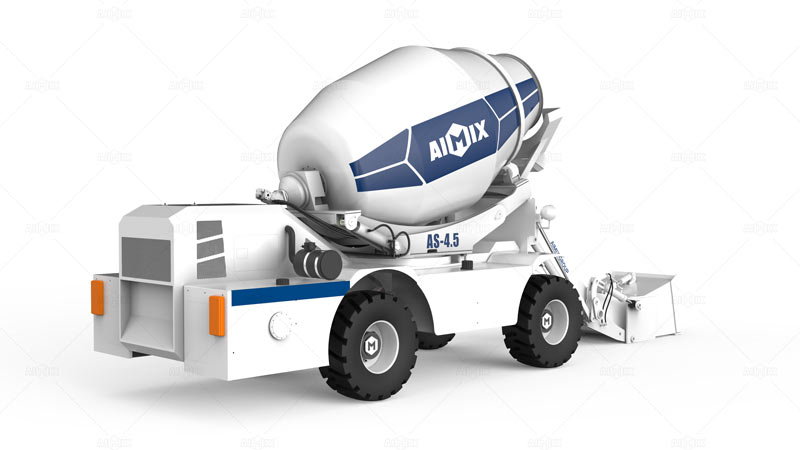


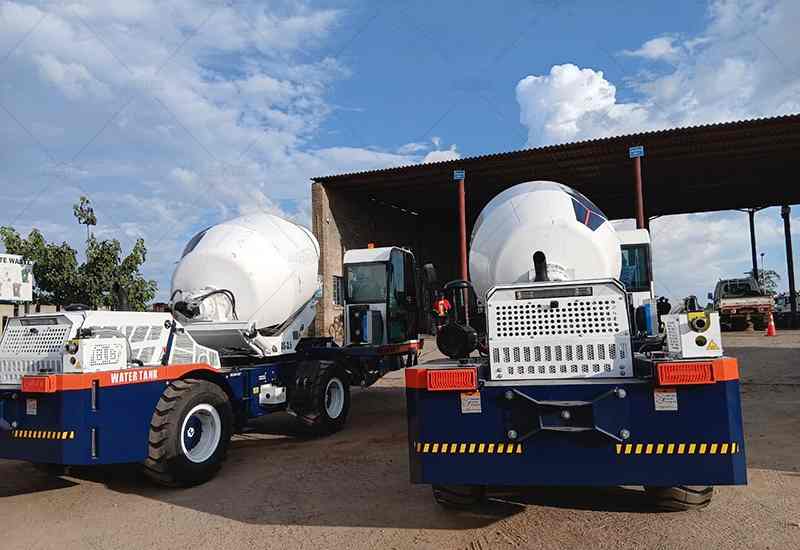
The question of price is never merely numerical. It is contextual. A self loading concrete mixer truck that appears costly on a dealer’s quotation sheet may, upon closer examination, reveal itself as an economic necessity. Nowhere is this paradox more evident than in the urban construction sites of Nairobi, Mombasa, and Kisumu. The Kenyan city street is not designed for heavy logistics. It is narrow. It is congested. It is often unpaved at the edges. A standard ready-mix truck, with its extended wheelbase and limited turning radius, struggles to navigate these constraints. The self loading mixer, by contrast, is a machine engineered for constricted spaces. Its higher initial price reflects this engineering. The argument advanced here is that the “expense” of the self loading mixer truck is a misperception. The true expense is the cost of not owning one—manifested in lost time, wasted materials, and project delays. This article dissects the specific cost drivers that justify the premium, examining maneuverability, logistics consolidation, and total cost of ownership within the Kenyan context.
The most significant factor differentiating a self loading mixer from a conventional truck mixer is its chassis configuration. The self loading unit typically employs articulated steering, where the front and rear sections pivot relative to one another. This design reduces the turning radius dramatically. A standard ready-mix truck requires a turning circle of ten to twelve meters. A self loading mixer of equivalent capacity can turn within six to eight meters. This difference is not academic. On a typical Kenyan residential site—where perimeter walls, material stockpiles, and existing structures constrain movement—the smaller turning radius enables the machine to position itself directly adjacent to the formwork. The conventional truck, unable to achieve the same orientation, must discharge into wheelbarrows or a line pump. The cost of this inability is labour. Additional workers are required to transport the concrete. Time is consumed. The premium price of self loading concrete mixer purchases this maneuverability. The buyer who pays the premium avoids the recurring labour cost.
Beyond turning radius, the overall width and height of the self loading mixer are optimised for restricted access. A typical unit measures 2.2 to 2.4 meters in width. A standard ready-mix truck measures 2.5 to 2.6 meters. This difference of 200 to 300 millimeters is decisive when passing through gateways, between existing buildings, or along service roads bounded by walls. The self loading mixer also features a lower profile, reducing the risk of contact with overhead obstacles such as power lines or scaffolding. The engineering that achieves these compact dimensions is not inexpensive. It requires a integrated design where the engine, hydraulic pumps, mixing drum, and operator cabin are packaged efficiently. The cost of this integration is reflected in the purchase price. The alternative—a machine that cannot access the site—is not a lower cost. It is a failed investment.
A conventional concrete placement operation requires multiple machines. An aggregate loader—often a wheel loader or backhoe—charges the mixing drum. A separate mixer truck transports the concrete. Additional labourers handle the discharge and placement. The self loading mixer collapses these functions into a single chassis. The same machine that loads aggregates also mixes and transports them. This consolidation reduces capital expenditure. A contractor who purchases a self loading mixer does not need to purchase a separate wheel loader. The saving is substantial. A used wheel loader in Kenya costs KES 2 million to KES 4 million. A new unit exceeds KES 6 million. The self loading concrete mixer price in Kenya, which appears high in isolation, becomes competitive when the cost of the avoided loader is subtracted. The argument is that the self loading mixer is not expensive. The conventional approach, with its multiple machines, is expensive. The self loading mixer simply consolidates the expense.
The consolidation of functions also reduces labour requirements. A conventional operation may require a wheel loader operator, a truck driver, and three to five labourers for handling and placement. The self loading mixer requires one operator and two to three labourers for placement assistance. The saving in wages is direct and recurring. In the Kenyan market, where daily labour rates range from KES 500 to KES 1,500 per worker, the monthly saving can exceed KES 60,000. Over a year, the saving approaches KES 720,000. Over five years, KES 3.6 million. This saving offsets a substantial portion of the price premium. The self loading mixer also requires a more skilled operator. The operator must understand loading, mixing, and maneuvering. This skill commands a higher wage. The net labour saving, after accounting for the higher operator wage, remains positive. The analytical buyer models these figures. The conclusion is consistent. The self loading mixer’s price is justified by labour reduction alone.
The third driver of the self loading mixer’s price is its weighing system. Modern self loading mixers are equipped with strain gauge load cells. These sensors measure the weight of aggregates, cement, and water with an accuracy of ±2 percent. Conventional batching methods, including volumetric estimation by bucket, achieve accuracy of ±10 to ±15 percent. The difference is material waste. A volumetric mixer that overuses cement by 10 percent on a 2 cubic meter batch wastes approximately 60 kilograms of cement. At current Kenyan cement prices of approximately KES 800 per 50 kilogram bag, the waste is KES 960 per batch. For a contractor producing 10 batches daily, the waste is KES 9,600 per day. Over 250 working days, the waste is KES 2.4 million. The self loading mixer with load cells eliminates this waste. The price premium for the weighing system is typically KES 500,000 to KES 1,000,000. The payback period is four to eight months. The argument is unequivocal. The weighing system pays for itself. The machine that lacks it is not cheaper. It is a cement waster.
Beyond material waste, weighing accuracy affects structural integrity. Concrete that varies in strength from batch to batch is concrete that invites failure. A slab that is under-designed in one section may crack. A column that is over-designed in one section may be unnecessarily expensive. The self loading mixer’s consistent batching produces uniform concrete. This uniformity reduces the safety factor that prudent contractors must apply when using volumetric methods. A contractor who knows the concrete strength within ±5 percent can design to the specified strength. A contractor who faces ±15 percent variation must add a margin. That margin is additional cement. It is additional cost. The self loading mixer’s price premium is partially a payment for the ability to remove this margin. The machine that delivers consistent concrete is not expensive. It is precise. Precision is not a luxury. It is a specification.
The final argument is the most comprehensive. The true measure of expense is not the purchase price but the total cost of ownership over five years. This calculation includes the initial capital outlay, fuel consumption, maintenance, labour, and material waste. A self loading mixer purchased for KES 4.5 million incurs annual operating costs of approximately KES 2.5 million (fuel, maintenance, labour). Over five years, the total is KES 4.5 million + (5 x KES 2.5 million) = KES 17 million. A conventional approach—a wheel loader plus a ready-mix truck rental plus volumetric batching—may have lower capital outlay but higher operating costs. The wheel loader costs KES 2 million. The truck rental costs KES 1.5 million annually (KES 7.5 million over five years). Labour costs are higher. Material waste is higher. The five-year total often exceeds KES 20 million. The self loading mixer, despite its higher purchase price, achieves lower total cost of ownership. The contractor who performs this calculation discovers that the “expensive” machine is actually the economical choice. The contractor who relies on initial price alone makes the opposite error. The Kenyan construction site, with its narrow streets and difficult maneuvering, rewards the contractor who sees beyond the quotation. The self loading mixer is not expensive. The alternatives are inefficient. Efficiency has a price. Inefficiency has a cost. The wise buyer distinguishes between the two.

© 2025 Crivva - Hosted by Airy Hosting Managed Website Hosting.