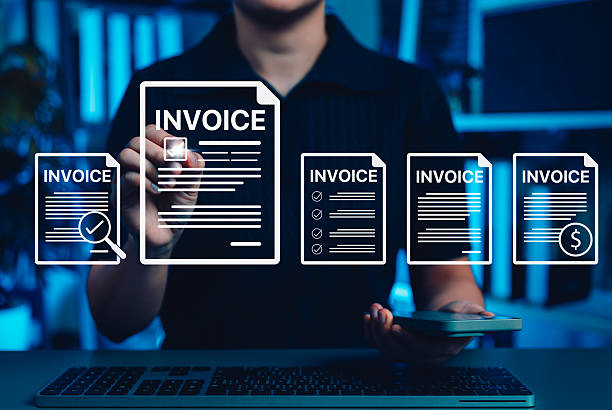
Managing invoices across multiple business locations is a complex challenge for growing organizations. Each branch may have its own sales activities, purchasing processes, vendors, and customers, making it difficult to maintain consistent financial records. Without a centralized system, businesses often struggle with duplicate data, delayed approvals, inconsistent reporting, and limited visibility into company-wide financial performance. This is why many organizations are investing in an e-invoicing ERP solution that centralizes invoice management while automating financial workflows across every branch. A centralized ERP enables businesses to streamline invoicing, improve accuracy, strengthen financial control, and support long-term growth.
As companies expand into new locations, invoice management becomes increasingly complicated.
Each branch may generate hundreds or even thousands of invoices every month. When every location follows different processes or uses separate software, finance teams face numerous operational challenges.
Common issues include:
Without centralized control, these problems become more difficult to manage as the business grows.
A centralized Enterprise Resource Planning (ERP) system stores financial, operational, and business data in one unified platform.
Instead of maintaining separate databases for each branch, every location connects to a single system that updates information in real time.
This allows finance teams, managers, and executives to work with accurate and consistent financial data across the organization.
Invoice creation, approval, payment tracking, and reporting all take place within one integrated environment.
One of the greatest advantages of a centralized ERP is the ability to manage invoices from every branch in one location.
Rather than logging into multiple systems or collecting spreadsheets from different offices, finance teams can:
This centralized visibility improves operational efficiency and reduces administrative work.
Different branches often develop their own invoicing procedures over time.
These inconsistencies can lead to errors, delays, and reporting challenges.
A centralized ERP standardizes invoice management by ensuring every branch follows the same workflow.
Standardization includes:
Consistent processes improve accuracy while making financial reporting much easier.
Business leaders need immediate access to financial information.
With decentralized systems, branch data may take days or weeks to consolidate.
A centralized ERP provides real-time visibility into:
Executives can monitor business operations instantly without waiting for manual reports.
Invoice approval delays are common when multiple branches operate independently.
Documents may pass through several managers before reaching the finance department.
A centralized ERP automates approval workflows by routing invoices to the appropriate personnel based on predefined rules.
Approvers receive notifications, review invoices digitally, and approve them from any location.
This significantly reduces processing time.
Cash flow depends on timely invoicing and payment collection.
When invoice information is scattered across multiple systems, businesses struggle to understand their true financial position.
Centralized ERP systems provide complete visibility into:
With accurate financial insights, businesses can make more informed budgeting and investment decisions.
Many multi-branch companies still rely on manual invoice entry between departments.
This creates unnecessary risks, including:
A centralized ERP automatically synchronizes invoice information across departments, reducing manual work and improving data accuracy.
Finance, sales, procurement, and management teams all rely on invoice data.
When every branch uses different systems, collaboration becomes difficult.
A centralized ERP allows all departments to access the same financial information.
Teams can:
This improves communication while reducing internal delays.
Businesses operating across multiple locations often face strict financial reporting and tax requirements.
Maintaining compliance becomes much easier when invoices are managed through one centralized platform.
The ERP automatically maintains:
These features simplify audits while reducing compliance risks.
Consolidating financial reports from multiple branches manually consumes significant time.
A centralized ERP generates company-wide reports automatically.
Businesses can analyze:
Accurate reporting supports better strategic planning and faster executive decision-making.
Financial information is highly sensitive.
Centralized ERP systems provide advanced security features including:
Each employee accesses only the information relevant to their role while management maintains complete oversight.
As businesses open new branches, invoice volumes increase rapidly.
Without centralized systems, managing additional locations becomes increasingly difficult.
A centralized ERP supports expansion by allowing new branches to connect to the same platform immediately.
There is no need to implement separate invoicing systems for every new location.
This scalability reduces operational complexity while supporting sustainable growth.
Multi-branch organizations often purchase from the same suppliers across different locations.
Without centralized records, businesses may lose visibility into supplier performance.
ERP systems consolidate vendor invoices, enabling organizations to:
Centralized vendor information also supports better contract negotiations.
Finance teams no longer need to manually check invoice status.
A centralized ERP provides real-time tracking for every invoice.
Users can instantly see whether an invoice has been:
This transparency improves financial control and reduces payment delays.
Modern ERP platforms provide valuable analytics that help businesses optimize financial operations.
Management can evaluate:
These insights support smarter business decisions while identifying opportunities for improvement.
When evaluating ERP solutions, businesses should prioritize features that support both current operations and future growth.
Important capabilities include:
Selecting the right ERP ensures businesses can efficiently manage growing invoice volumes while maintaining complete financial visibility.
Managing invoices across multiple branches requires more than basic accounting software. As organizations expand, disconnected systems, inconsistent processes, and manual workflows create unnecessary complexity that affects financial performance and operational efficiency.
A centralized ERP simplifies invoice management by bringing every branch onto one unified platform. With standardized workflows, automated approvals, real-time visibility, accurate reporting, enhanced security, and centralized financial data, businesses gain greater control over their invoicing operations while improving collaboration across departments.
By investing in a centralized ERP, multi-branch companies can streamline financial processes, reduce administrative costs, strengthen compliance, and build a scalable foundation that supports long-term business growth.
© 2025 Crivva - Hosted by Airy Hosting Managed Website Hosting.