


In plastic processing, heat is both a requirement and a risk. While controlled heat enables proper blending and dispersion, excess temperature can quietly compromise material properties long before defects appear on the production floor. For manufacturers working with temperature-sensitive plastic formulations, managing heat during mixing is not a secondary consideration; it is central to product quality, consistency, and yield.
This is where cooling mixers become a critical part of modern plastic processing strategies, helping manufacturers maintain control as formulations become more complex and performance expectations continue to rise.
As industries continue to demand higher performance plastics, manufacturers must also deal with more sophisticated material blends. These blends often include multiple additives, stabilizers, pigments, and fillers that react differently under heat. Without careful temperature management, even a well-designed formulation can become unstable during processing. Cooling mixers provide the control needed to maintain the integrity of these advanced plastic compounds.
Many plastic compounds are sensitive to temperature fluctuations during processing. Excessive heat can lead to premature degradation, color instability, loss of mechanical strength, or uneven dispersion of additives. These issues may not always be immediately visible, but they often surface later as performance inconsistencies, higher rejection rates, or downstream processing challenges.
High-shear mixing, especially during color dispersion or additive blending, can generate significant frictional heat. Without an effective cooling phase, manufacturers risk undoing the benefits achieved during the initial mixing stage.
Manufacturers often encounter several hidden challenges when heat is not properly controlled during mixing:
Premature breakdown of temperature-sensitive polymers
Changes in pigment color or shade consistency
Reduced durability and mechanical performance
Uneven distribution of additives or stabilizers
Increased waste due to rejected batches
Addressing these issues early in the mixing process helps maintain consistent production quality and reduces the risk of costly material losses.
High-intensity mixers play a vital role in achieving homogeneous blends, particularly when pigments, fillers, or stabilizers must be evenly distributed. However, once dispersion is achieved, the material must be stabilized quickly.
This is where the benefits of high-intensity color mixers are fully realized, only when paired with an efficient cooling process. Cooling mixers rapidly remove excess heat, helping materials retain their intended properties and ensuring that batch-to-batch results remain consistent.
Without proper cooling, even well-dispersed compounds can suffer from thermal stress, leading to variations that impact extrusion, molding, or downstream finishing processes.
Rapid stabilization after high-intensity mixing ensures that the compound remains within a safe processing range. When cooling occurs immediately after mixing, the material can maintain its structural stability and chemical balance.
This step is particularly important for formulations that include heat-sensitive additives or specialized pigments, where even slight temperature changes can influence the final product characteristics.
Cooling mixers are specifically designed to manage residual heat generated during mixing. By exposing material to cooled vessel surfaces and controlled agitation, they enable uniform heat dissipation without introducing mechanical stress.
For cooling mixers for temperature-sensitive plastic materials, this controlled approach is especially important. It allows manufacturers to:
Stabilize compounds before extrusion or molding
Preserve pigment integrity and color consistency
Reduce cycle variability across batches
Improve material flow and handling characteristics
By maintaining temperature within safe processing limits, cooling mixers help protect both the formulation and the final product.
Cooling mixers also support better workflow stability within manufacturing plants. When materials reach the correct temperature quickly and consistently, production schedules become easier to manage. Operators can maintain steady processing speeds without worrying about overheating or inconsistent material performance.
This stability is especially valuable in high-volume production environments where even small variations can lead to large-scale inefficiencies.
Not all cooling systems perform equally. The effectiveness of cooling mixers depends on several design factors, including vessel geometry, cooling jacket coverage, discharge efficiency, and internal tool movement.
The shape and design of the mixing vessel affect how the material moves and how much surface contact it has with cooled areas. A well-designed vessel promotes uniform heat transfer throughout the batch.
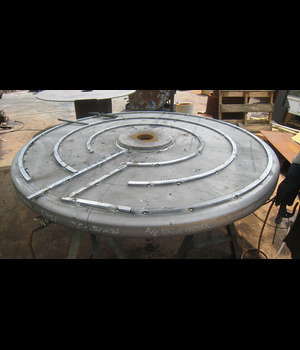
Cooling jackets surrounding the vessel help regulate temperature by circulating coolant. The extent and placement of these jackets can significantly influence cooling speed and efficiency.
The movement of mixing tools inside the vessel ensures that material is constantly exposed to cooled surfaces. Proper tool design prevents hotspots and promotes even temperature reduction.
Fast and reliable discharge systems allow materials to exit the mixer quickly once the desired temperature is reached. This helps reduce dwell time and supports faster production cycles.
Manufacturers exploring advanced cooling mixer designs often evaluate systems that integrate seamlessly with high-intensity mixing operations, creating a continuous and controlled production workflow.
In practical production environments, cooling mixers contribute directly to operational efficiency. Faster stabilization reduces overall cycle times, while improved temperature control minimizes waste caused by overheating or material degradation.
These advantages become increasingly important as plastic formulations evolve to include heat-sensitive additives, specialty pigments, or performance-enhancing compounds. As processing demands grow more precise, cooling mixers provide the stability required to scale production without increasing risk.
In addition to improving material stability, cooling mixers also offer several operational advantages:
More predictable production cycles
Lower material waste and scrap rates
Improved quality control during processing
Greater flexibility when handling specialized formulations
For manufacturers seeking deeper insight into engineered cooling solutions, systems designed specifically for plastic processing applications can be explored through specialized cooling mixer platforms such as those detailed here.
Modern plastic production is moving away from generic equipment toward application-driven system design. Cooling mixers engineered for plastic processing are increasingly viewed as an extension of quality control rather than just auxiliary equipment.
Manufacturers like Reliance Mixers, with decades of experience in industrial mixing systems, focus on integrating cooling solutions that complement high-intensity mixing operations. Their approach emphasizes controlled temperature reduction, repeatable performance, and equipment reliability; these are the key factors for processors working with demanding plastic formulations.
Rather than treating cooling as an afterthought, engineered systems position it as a deliberate and measurable step within the overall mixing process.
Temperature control is not optional in plastic processing; it is foundational. As formulations become more sensitive and quality standards more demanding, cooling mixers play a decisive role in protecting material integrity and ensuring consistent results.
By incorporating purpose-built cooling mixers into the production process, manufacturers can safeguard the gains achieved during high-intensity mixing, reduce variability, and improve overall operational stability. When cooling is engineered with the same precision as mixing, temperature-sensitive plastic materials can be processed with confidence, efficiency, and repeatable quality; batch after batch.

© 2025 Crivva - Hosted by Airy Hosting Managed Website Hosting.