

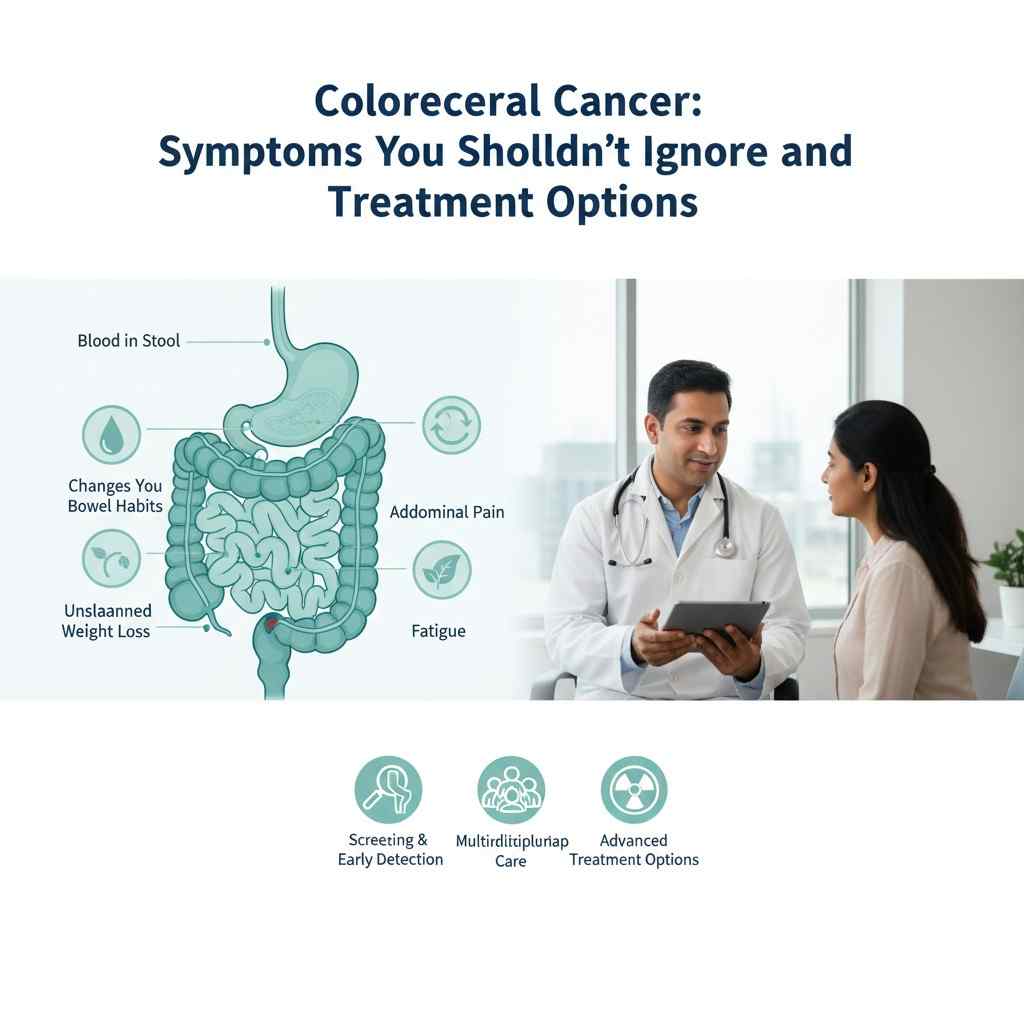
Colorectal cancer, affecting the colon or rectum, is one of the most common cancers in India, with incidence rates rising steadily over the past two decades. The good news is that colorectal cancer is highly treatable when detected early, with survival rates exceeding 90 percent for early-stage disease. Understanding the symptoms, risk factors, and treatment options is essential for early detection and successful treatment.
Understanding Colorectal Cancer
Colorectal cancer begins when cells in the colon or rectum grow abnormally and form tumors. The colon and rectum are parts of the large intestine, responsible for processing waste and absorbing water and nutrients. Most colorectal cancers develop slowly over many years, typically starting as polyps, which are small growths on the inner lining of the colon or rectum. While not all polyps become cancerous, certain types, particularly adenomatous polyps, have the potential to transform into cancer over time.
Several factors increase the risk of developing colorectal cancer. Age plays a significant role, with most cases occurring in people over 50, though younger adults are increasingly being diagnosed. Family history matters, as individuals with close relatives who had colorectal cancer face higher risk. Personal medical history including inflammatory bowel diseases like ulcerative colitis or Crohn’s disease, or previous colorectal polyps or cancer increases risk. Lifestyle factors such as diet high in red and processed meats, low in fiber, lack of physical activity, obesity, smoking, and heavy alcohol consumption all contribute to increased risk.
In India, changing dietary patterns, sedentary lifestyles, and increased life expectancy contribute to rising colorectal cancer rates, particularly in urban areas like Ahmedabad.
Warning Signs You Should Never Ignore
Early colorectal cancer often causes no symptoms, which is why screening is so important. However, as the disease progresses, various symptoms may appear. Persistent changes in bowel habits are often the first noticeable sign. This includes diarrhea, constipation, or changes in stool consistency lasting more than a few days, feeling that the bowel doesn’t empty completely, or narrowing of stool (pencil-thin stools).
Blood in the stool is a serious warning sign, whether bright red or very dark. Abdominal discomfort including persistent cramps, gas, pain, or bloating should not be ignored. Unexplained weight loss without trying to lose weight warrants medical attention. Constant weakness or fatigue that doesn’t improve with rest, and feeling that you need to have a bowel movement when there’s no need to are also important symptoms to watch for.
Many people dismiss these symptoms, attributing them to hemorrhoids, diet changes, or stress. While these conditions can cause similar symptoms, it’s crucial to consult a doctor for proper evaluation. In Indian culture, discussing bowel habits is often considered taboo, leading to delayed diagnosis. Overcoming this hesitation could save your life. Cancer hospitals in Ahmedabad like Zanish Cancer Hospital provide confidential, compassionate evaluation for digestive symptoms.
Diagnosis Process
When symptoms or screening tests suggest colorectal cancer, doctors follow a systematic diagnostic approach. Physical examination includes a digital rectal exam where the doctor manually checks the rectum for abnormalities. Blood tests check for anemia or tumor markers, though these alone cannot diagnose cancer. Colonoscopy with biopsy allows the doctor to examine the entire colon and rectum, take tissue samples from suspicious areas, and remove polyps for examination. Imaging studies such as CT scans, MRI, or PET scans help determine if cancer has spread to other organs.
If cancer is confirmed, staging determines how far it has spread. Stages range from Stage 0 (very early, confined to inner lining) through Stage IV (spread to distant organs like liver or lungs). Staging is crucial for treatment planning and prognosis estimation. Advanced diagnostic capabilities at specialized cancer hospitals in Ahmedabad ensure accurate staging and personalized treatment planning.
The Role of Surgical Oncology in Colorectal Cancer
Surgical oncology expertise is critical for optimal colorectal cancer outcomes. Specialized surgical oncologists bring several advantages. They have extensive experience performing complex colorectal cancer surgeries, can handle complicated cases including recurrent cancers or tumors involving adjacent organs, are skilled in minimally invasive techniques, and understand the nuances of lymph node removal and ensuring clear surgical margins.
The surgeon’s experience significantly impacts outcomes. Studies show that patients treated by high-volume surgeons at specialized centers experience lower complication rates, better functional outcomes, reduced need for permanent colostomy, and improved long-term survival rates.
At Zanish Cancer Hospital in Ahmedabad, the surgical oncology team focuses not just on cancer removal but also on preserving quality of life. Sphincter-preserving surgery maintains bowel control when possible, nerve-sparing techniques preserve sexual and urinary function, and enhanced recovery protocols minimize hospital stays and speed recovery. This comprehensive approach makes Zanish Cancer Hospital one of the preferred cancer hospitals in Ahmedabad for colorectal cancer treatment.
Multidisciplinary Cancer Care
Effective colorectal cancer treatment requires coordination among multiple specialists. A comprehensive team typically includes surgical oncologists performing cancer removal, medical oncologists managing chemotherapy and targeted therapies, radiation oncologists providing radiation treatment, gastroenterologists performing diagnostic procedures and managing digestive issues, pathologists analyzing tissue samples and identifying genetic markers, radiologists interpreting imaging studies, nutritionists addressing dietary needs and managing side effects, stoma nurses helping patients adjust to colostomies if needed, and psychologists and counselors providing emotional support.
Regular multidisciplinary team meetings ensure that treatment plans are optimized for each patient’s unique situation. This collaborative approach at Zanish Cancer Hospital leads to better outcomes and improved quality of life for colorectal cancer patients throughout Gujarat.
When to Consult a Specialist
You should seek consultation with a colorectal cancer specialist or surgical oncologist if you experience persistent bowel habit changes lasting more than two weeks, notice blood in your stool, experience unexplained weight loss or persistent abdominal pain, have a family history of colorectal cancer, are due for screening based on your age or risk factors, or have been diagnosed with colorectal cancer and need treatment planning.
Early consultation ensures access to comprehensive diagnostic evaluation, expert surgical care, coordinated multidisciplinary treatment, and the latest treatment options including clinical trials.
Conclusion
Colorectal cancer is a serious but highly treatable disease when detected early. With increasing awareness, accessible screening options, and advanced treatment modalities available at specialized facilities like Zanish Cancer Hospital, a trusted cancer hospital in Ahmedabad, survival rates continue to improve. The key is recognizing warning signs, undergoing regular screening, and seeking prompt treatment from experienced specialists.
Don’t let embarrassment or fear prevent you from discussing bowel symptoms with your doctor. What might seem like a minor issue could be an early warning sign. Regular screening and early detection save lives, and modern treatments offer excellent outcomes with good quality of life.

© 2025 Crivva - Hosted by Airy Hosting Managed Website Hosting.